

 5.0
5.0


How Often to Refinish Hardwood Floors?
Updated: 09/01/2026
Reading Time ~ 15 minutes

Table of Contents
- Do You Need Recoating, Refinishing, Repair, or Replacement?
- How Often Should You Refinish Hardwood Floors?
- Signs It Is Time to Refinish Hardwood Floors
- What Affects How Often Hardwood Floors Need Refinishing?
- Solid vs. Engineered Hardwood: Why Floor Type Changes Refinishing Timing
- Recoat or Refinish: How Floor Condition Changes the Timeline
- How to Make Hardwood Floor Refinishing Last Longer
- DIY vs. Professional Hardwood Floor Refinishing
Most hardwood floors need refinishing every 7 to 10 years, but we never judge by age alone. If the floor only looks dull and the wood is still sealed, a fresh coat may be enough. If you see bare wood, deep scratches, gray traffic lanes, water stains, or pet stains, the floor usually needs sanding and a full refinish.
Key Takeaways
- Most hardwood floors need refinishing every 7 to 10 years, but floor condition matters more than the calendar.
- High traffic areas wear faster, especially entryways, kitchens, hallways, stairs, and family rooms.
- A dull floor does not always need sanding. If the wood floor’s finish is still intact, a new coat may be enough.
- Bare wood, deep scratches, gray traffic lanes, pet stains, or water stains usually mean it is time to refinish hardwood floors.
- Solid hardwood can usually be refinished several times, while engineered hardwood depends on the thickness of the wear layer.
- Do not refinish over active moisture problems. Cupping, buckling, soft floorboards, or movement should be repaired before sanding and refinishing.
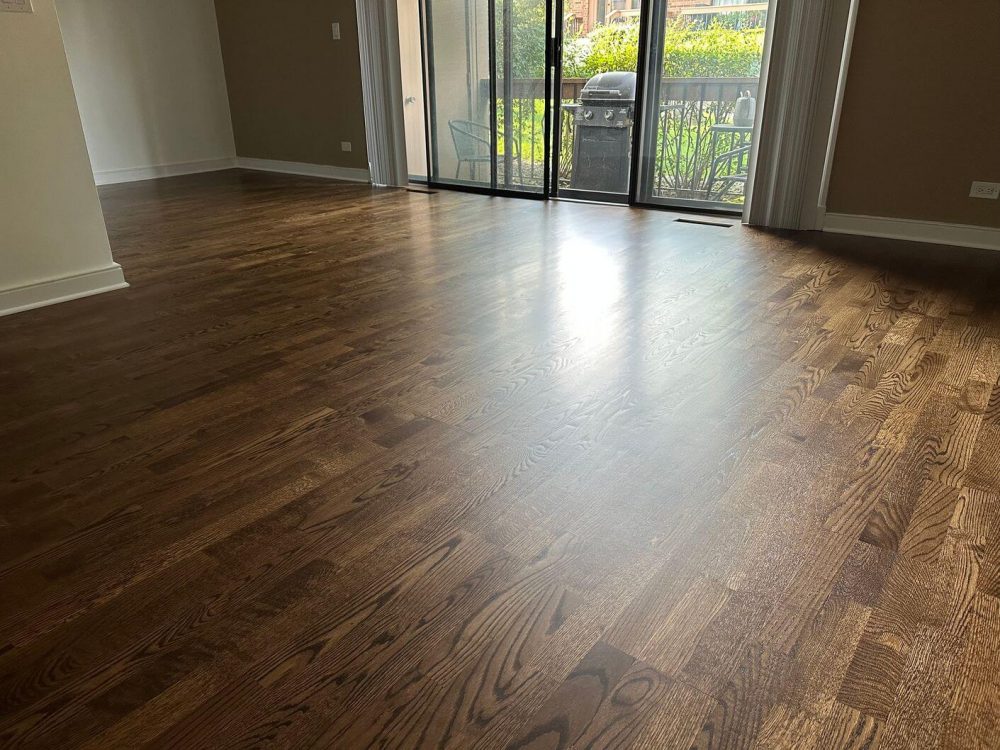
Do You Need Recoating, Refinishing, Repair, or Replacement?
The fastest way to decide when to refinish hardwood floors is to look at what failed first: the coat, the wood, or the floor structure. A dull surface is usually not an emergency. Bare wood or moisture damage is different.
| Floor Condition | Best Option |
| Dull finish, light surface scuffs, no exposed wood | Recoat with a new coat before the finish wears through |
| Bare wood in walkways or high traffic areas | Refinish before dirt and moisture get into the boards |
| Deep scratches or dents | The floor has been sanded too many times |
| Pet stains, water stains, or dark marks | Inspect first, repair if needed, then start the floor refinishing work |
| Cupping, buckling, soft boards, or moving floorboards | Fix the moisture problem before any sanding |
| Very thin engineered hardwood | Check the wear layer before sanding |
| Floor has been sanded too many times | Check the remaining thickness before quoting a full refinish |
A recoat protects the existing finish. A refinish removes the old surface and creates a fresh one. Repair comes first when the problem is under the finish, not on top of it.
How Often Should You Refinish Hardwood Floors?
Most hardwood floors need a full refinish every 7 to 10 years. In busy homes, high-traffic areas can wear out faster, so the real answer depends on the condition of the wood floor’s finish, not just the age of the floor.

Due for a Refinish?
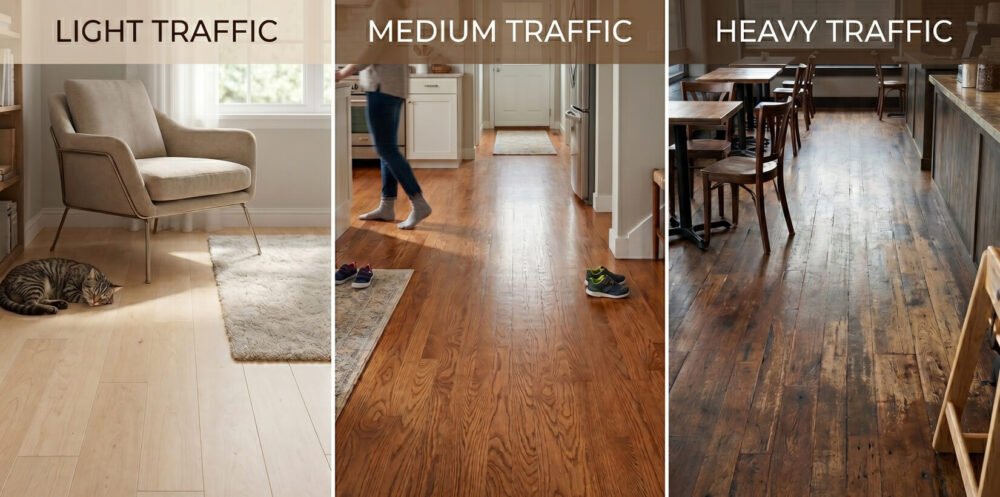
Refinishing Schedule by Room and Traffic
Some rooms take daily abuse from shoes, grit, pets, chairs, and spills. That is why how often to refinish hardwood floors can change from one room to another inside the same house.
| Room or Situation | Typical Timing | What to Watch For |
| Entryways and mudrooms | 3 to 5 years | Dirt, wet shoes, winter salt, and worn finish near doors |
| Hallways and stairs | 3 to 7 years | Heavy foot traffic, dull walk paths, and early bare wood |
| Kitchens | 5 to 8 years | Chair movement, spills, dropped items, and finish wear near the sink |
| Living rooms and family rooms | 7 to 10 years | Daily use, pets, kids, furniture movement, and visible scratches |
| Bedrooms | 10 to 15 years | Light wear, fewer shoes, and less dirt on the surface |
| Guest rooms and low-use spaces | 10 to 15+ years | Slow finish wear and little need for aggressive sanding |
| Homes with dogs or kids | 5 to 8 years | Claw marks, toys, spills, and faster wear in walking paths |
| Rental properties | 3 to 7 years | Heavy use, inconsistent maintenance, and more frequent floor refinishing |
| Well-maintained homes | 10+ years | Rugs, felt pads, regular cleaning, and stable indoor humidity |
What We See on Real Floors
After 500+ hardwood floor projects, we are sure about one thing: if you do the work on time, hardwood floors usually need only very light sanding. We do not have to take much from the board. Just enough to clean the surface and get it ready for a new finish.
That is a big deal. Every sanding removes a little bit of wood. So the less we remove now, the more life the floor has later. This is why we always tell homeowners not to wait until the floor is fully worn out. When bare wood, dark stains, or rough traffic lanes already took over, the job becomes heavier, more expensive, and harder on the floor.
Signs It Is Time to Refinish Hardwood Floors
The clearest signs that you need to refinish hardwood floors are exposed wood, gray wear lanes, stubborn stains, rough boards, and damage that cleaning no longer hides. Once the floor’s finish is gone, the wood starts taking the abuse directly.
Bare Wood or Gray Traffic Lanes
Bare wood is one of the strongest signs that hardwood floor refinishing should not wait. The protective finish is already worn through, so dirt, moisture, and daily wear can move into the board itself.
You usually see this first in walkways, around kitchen work zones, near exterior doors, or in front of favorite chairs. The color may look gray, washed out, or dirty even after cleaning. That is not just dullness. That is exposed wood.
Once the surface reaches this point, a new coat may not bond or protect evenly. Sanding and refinishing is usually the cleaner fix.
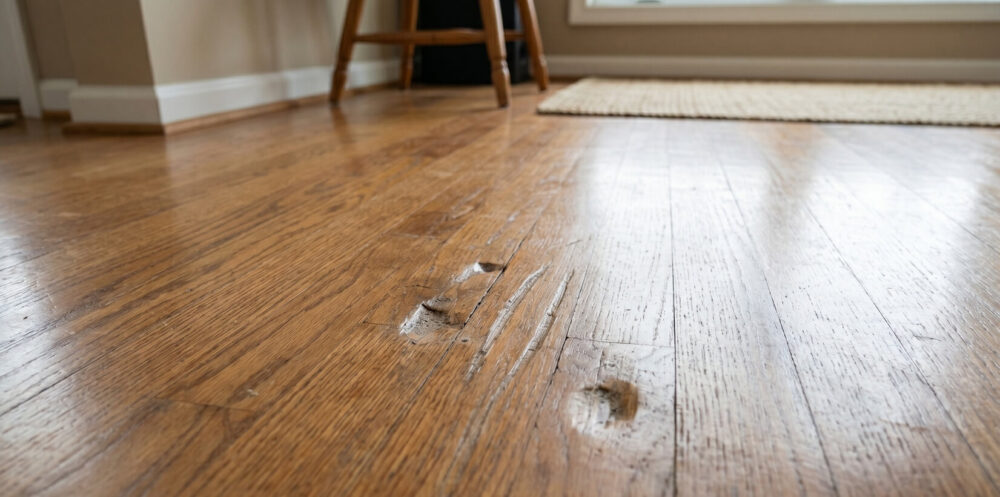
Deep Scratches, Gouges, or Dents
Deep scratches, gouges, and dents are a refinishing concern when they break through the finish and reach the wood. A simple test helps: if your fingernail catches in the scratch, it is more than light surface wear.
Small surface marks can often be handled with maintenance. Deeper damage is different. It can hold dirt, darken over time, and make the floor harder to restore evenly if you wait too long.
If the marks are limited to a small area, spot repair may be enough. If they run through several rooms, a full refinish usually creates a more even result.
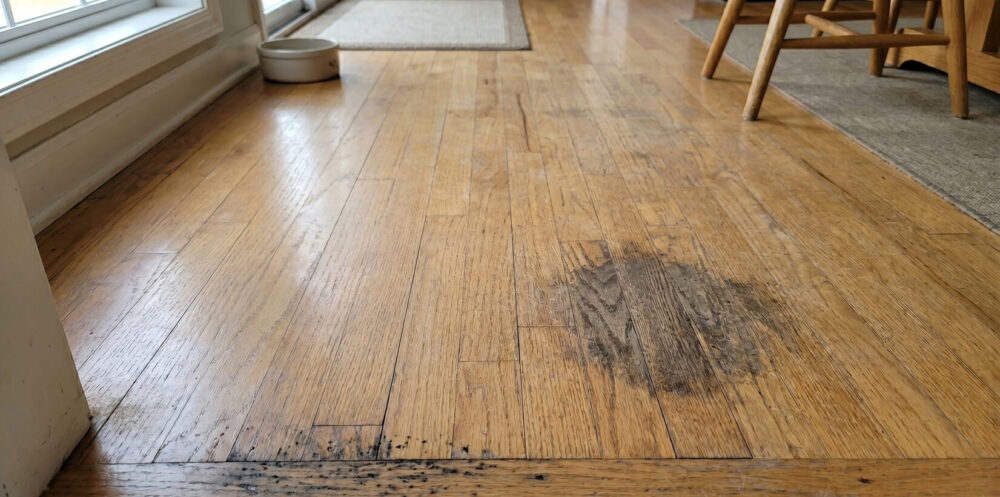
Water Stains, Pet Stains, or Dark Spots
Water stains, pet stains, and dark spots need inspection before refinishing because the stain may be inside the wood, not only on the surface. If the damage is serious, sanding alone may not be a perfect fix.
Look closely near sinks, dishwashers, plant pots, exterior doors, and pet areas. Dark rings, black edges, or soft boards can point to moisture below the finish. That changes the job.
In most cases, stained boards can be sanded, treated, or replaced before the new finish is applied. If there is active water damage, repair comes first.
Dull Finish That Cleaning Does Not Fix
A dull floor that still feels smooth may only need a new coat, but a dull floor that stays dirty, sticky, or patchy after cleaning may need refinishing. The difference is whether the wood floor’s finish is still doing its job.
When finish wears down, dirt starts grabbing into the surface instead of wiping away cleanly. You may mop and still see cloudy traffic paths. That is a sign the coat has lost its luster.
If there is no bare wood, recoating may restore the floor with less disruption. If the finish is uneven or worn through, refinishing is the safer route.
Splintering or Rough Wood
Splintering or rough wood means the surface is no longer sealed well enough to protect the floor. This is not cosmetic wear anymore.
You may feel sharp edges under bare feet, especially along board seams or older floorboards. That usually means the surface has dried, opened, or worn past normal maintenance.
Do not cover this with polish. Sanding, repair, and a proper new finish are usually needed to stop permanent damage.
What Affects How Often Hardwood Floors Need Refinishing?
Several factors affect how often hardwood floors need refinishing, but the biggest ones are daily wear, cleaning habits, finish quality, sunlight, and how well the floor is protected. Two floors installed in the same house can age very differently if one room gets shoes, pets, grit, and spills every day.

Foot Traffic, Kids, Pets, and Shoes
Heavy foot traffic wears down a wood floor’s finish faster because the same walking paths take the most pressure every day. Kids, pets, shoes, and furniture movement add scratches, dents, and dirt that can shorten the time between refinishing jobs.
The first wear usually shows in predictable places:
- Entryways where grit and moisture get tracked inside
- Hallways where people walk the same path every day
- Kitchen work zones near the sink, stove, and island
- Dining areas where chairs move across the floor
- Family rooms where pets, toys, and furniture create repeated surface wear
- Stairs where the shoe pressure hits the same edges again and again
High heels and hard-soled shoes are especially tough on wood flooring because they concentrate weight into small pressure points. That can leave dents even when the floor’s finish still looks decent.
Pets create a different kind of wear. Claws often leave fine scratches first, then heavier marks in turning spots near doors, food bowls, and favorite resting areas. Keep nails trimmed. It helps more than most people expect.
Cleaning Habits
Good cleaning can extend the life of hardwood floors, but the wrong cleaning method can break down the coat faster. It usually goes down to two things: remove dirt before it acts like sandpaper, and avoid pushing moisture into the seams.
The most common cleaning mistakes are easy to prevent:
- Using too much water when mopping
- Leaving standing water on the surface
- Using steam mops on wood floors
- Cleaning with harsh chemicals or abrasive pads
- Letting dirt and grit build up in high-traffic areas
- Skipping entry mats near exterior doors
Finish Type and Finish Quality
The type and quality of finish can change how long refinished hardwood floors last. A basic finish may lose luster sooner, while a high-quality 2-component water-based polyurethane can give the surface better wear resistance in busy homes.
Finish quality matters most in rooms with daily use. A stronger finish can help protect against scratches, surface scuffs, and dull traffic lanes, but it will not make the floor indestructible.
Application matters too. If the sanding process is uneven or the finish is applied too thin, the floor can wear sooner than expected. A good refinishing job is not only about the product. It is also about prep, sanding, dry time, and proper coat build.
Sunlight and Color Fading
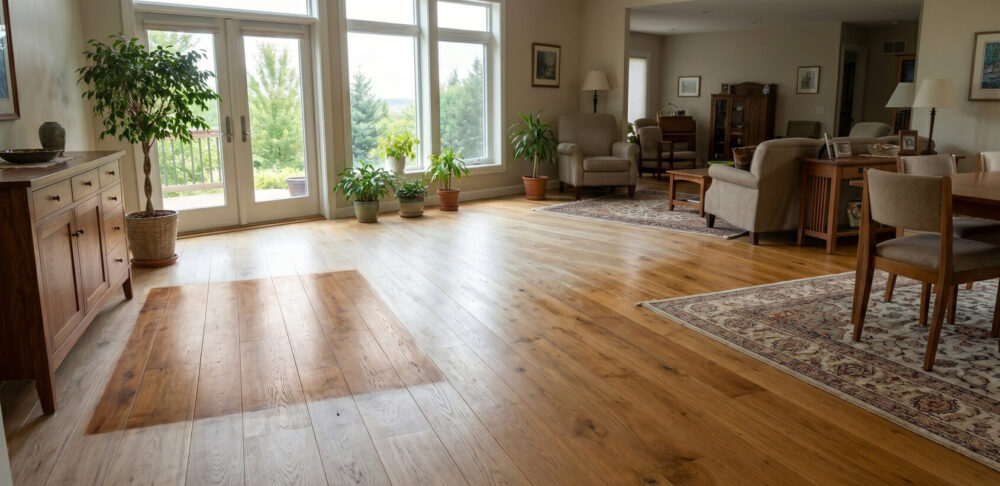
Direct sunlight can fade hardwood floors and create uneven color, especially near large windows, patio doors, and rooms with strong afternoon exposure. This does not always mean the floor needs immediate refinishing, but it can make discoloration more noticeable over time.
Rugs and furniture can also create color differences because covered areas age more slowly than exposed areas. When the contrast becomes strong, a full refinish may be needed to restore a more even tone. Window treatments help. So does rotating rugs when possible.
Rugs, Mats, and Furniture Pads
Rugs, mats, and furniture pads can help hardwood floor refinishing last longer because they reduce direct wear on the finish. They are simple, but they protect the areas that usually fail first.

Use walk-off mats near exterior doors, felt pads under furniture, and rugs in busy walking paths. Avoid rubber-backed mats unless the manufacturer says they are safe for hardwood, because some backings can react with the finish or trap moisture against the surface.
Solid vs. Engineered Hardwood: Why Floor Type Changes Refinishing Timing
Solid hardwood and engineered hardwood should not be refinished on the same schedule because they do not have the same sanding allowance. The question is not only how old the floor is, but how much real wood is left above the structure of the board.
Solid hardwood is usually the safer floor to refinish because the board is real wood from top to bottom. A standard solid hardwood floor is often 3/4 inch thick, but that does not mean the whole board can be sanded. The usable sanding area is above the tongue and groove.
That still gives a solid floor more room to work. In many homes, solid hardwood can handle several sanding and refinishing cycles if it has not already been cut down too far.
Engineered hardwood is built differently. It has a real hardwood wear layer on top and a plywood or composite core underneath. That top layer controls whether sanding is safe.
- A very thin wear layer may only allow recoating, not full sanding.
- Around 2 mm to 3 mm should be inspected carefully before any sanding.
- Around 4 mm or thicker usually gives more refinishing room, depending on the product and past work.
- If the wear layer is below about 3/32 inch, sanding is generally not recommended.
Floor type changes the decision. A worn solid hardwood floor may be ready for hardwood floor refinishing, while an engineered hardwood floor with the same scratches may need a lighter coat, spot repair, or replacement.

Recoat or Refinish: How Floor Condition Changes the Timeline
Recoating and refinishing solve different problems. Recoating refreshes the existing finish, while floor refinishing removes the old finish so the floor can be sanded, stained if needed, and sealed again.
When Recoating Is Enough
Recoating is enough when the finish is dull, lightly scratched, and still bonded to the floor. There should be no bare spots, no dark stains, and no damage that reaches below the finish.
This is usually the better option when you want less downtime and minimal disruption. NWFA consumer guidance recommends a maintenance coat every 3 to 5 years, and that fits this stage well: the crew lightly abrades the existing finish, removes dust, and applies another coat before the wood is exposed. Good dust containment systems help control cleanup, but no flooring work is completely dust-free.
Recoating works best when:
- The finish looks tired, but still covers the floor evenly
- Light scuffs do not catch your fingernail
- The color still looks even after cleaning
- There are no gray traffic lanes
- There are no black stains, soft boards, or loose boards
When Full Refinishing Is Better
Full refinishing is better when the damage has gone through the finish or the color is no longer even. At that point, another coat will only cover the problem for a short time.
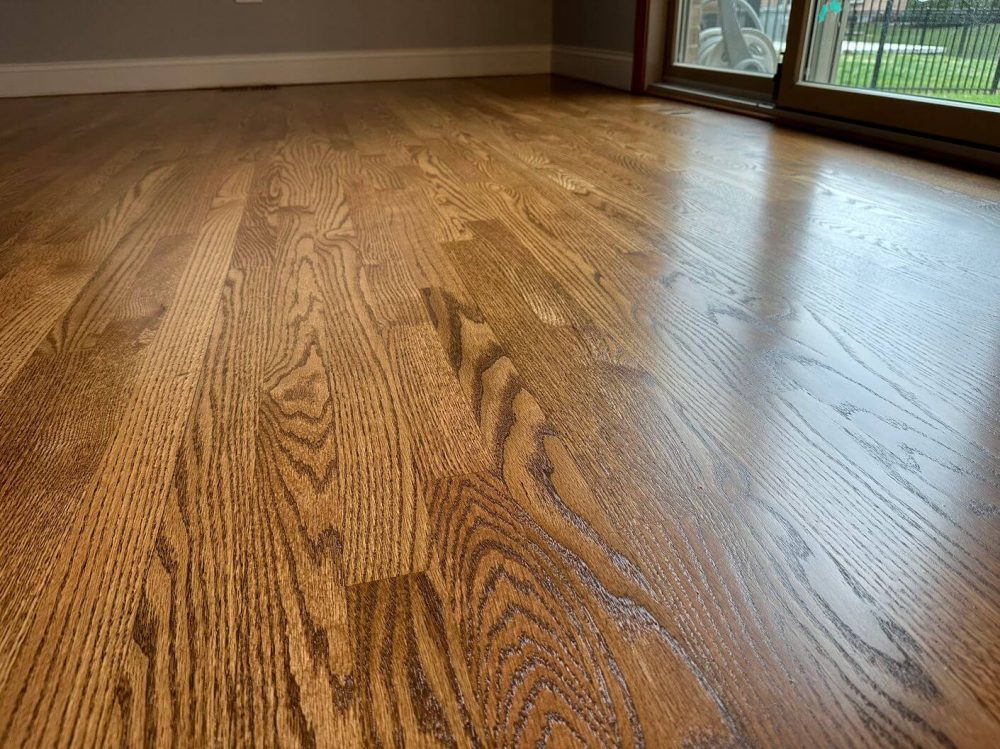
This is the right choice when the floor has exposed boards, deeper scratches, old stains, or worn paths that look gray after cleaning. Large areas usually need a full sanding and refinishing process so the final result looks even from room to room.
To test the floor condition, place a few drops of water on a worn traffic area and watch what happens. If the water beads on the surface, the finish is still giving some protection and recoating may be enough. If the water soaks in, darkens the wood, or spreads into the grain, the finish is likely worn through and the floor may need a full refinish.
| Sign | Best Solution |
| Dull finish with light scuffs | Recoat |
| Finish is intact but has lost luster | Recoat |
| Small marks that do not catch a fingernail | Recoat |
| Exposed boards in walking paths | Full refinishing |
| Deep scratches or gouges | Full refinishing or board repair |
| Uneven color across rooms | Full refinishing |
| Pet stains, water stains, or black marks | Inspect, repair if needed, then refinish |
| Soft boards, cupping, or movement | Repair first, then decide on refinishing |
How to Make Hardwood Floor Refinishing Last Longer
The best way to refinish less often is to protect the finish before damage reaches the wood.
-
Vacuum regularly with a hardwood-safe attachment.
Dirt and grit act like sandpaper under shoes and furniture.
-
u003cstrongu003eUse mats at exterior doors.u003c/strongu003e
Entryways take the most abuse from water, salt, sand, and small stones.
-
u003cstrongu003eWipe spills right away.u003c/strongu003e
Standing water can work into seams and leave stains under the finish.
-
u003cstrongu003eSkip steam mops.u003c/strongu003e
Heat and moisture can damage wood flooring and weaken the coat.
-
u003cstrongu003eUse felt pads under furniture.u003c/strongu003e
Chairs, tables, and sofas can scratch the finish long before the whole floor looks worn.
-
u003cstrongu003eTrim pet nails often.u003c/strongu003e
Pets usually create small scratches first, then deeper marks in turning spots and walk paths.
-
u003cstrongu003eClean with products made for hardwood floors.u003c/strongu003e
Harsh cleaners can dull the finish and make the floor harder to maintain.
-
u003cstrongu003eMove rugs sometimes.u003c/strongu003e
This helps avoid strong color lines from sunlight and uneven fading.
-
u003cstrongu003eRecoat before bare wood appears.u003c/strongu003e
A new coat is cheaper and less aggressive than sanding.
DIY vs. Professional Hardwood Floor Refinishing
DIY hardwood floor refinishing may be reasonable for a small, low-risk area with light surface wear, no bare wood, no stains, and no color change. If you are only screening and adding a coat, and you already know how to use floor equipment, the risk is lower.
Professional hardwood floor refinishing is the better choice for large areas, deep sanding, stairs, stain color changes, engineered hardwood, water damage, old floors, or expensive wood species. These jobs need the right sanding process, dust control, finish system, and a clear read on whether the floor should be recoated, refinished, repaired, or replaced.
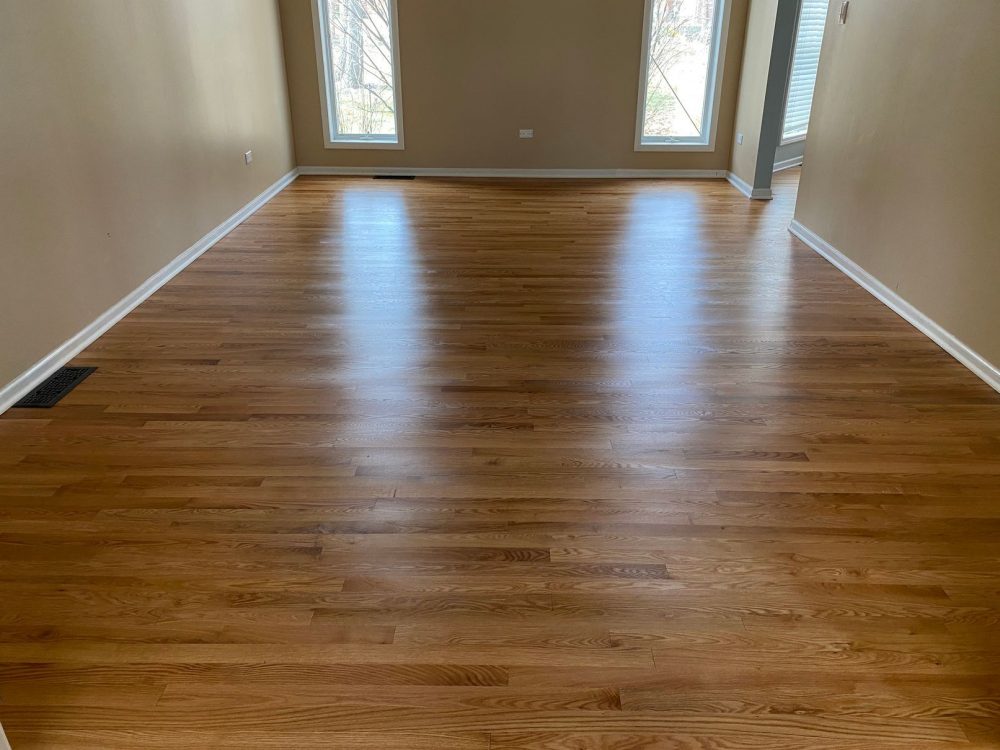
You do not have to guess or worry about choosing the wrong option. As a local hardwood floor refinishing company with 17+ years of hands-on experience, Big Bro Hardwood can inspect your floor, explain whether it needs recoating, refinishing, repair, or replacement, and give you a free estimate before any work begins.

Conclusion
Hardwood floors do not need refinishing just because a certain number of years has passed. The real question is what the floor is showing you: dull finish, light wear, bare wood, stains, scratches, or damage under the boards.
If you are still not sure, do not guess. Big Bro Hardwood can inspect your floors, explain whether you need recoating, refinishing, repair, or replacement. Your hardwood floors deserve the right attention and care before small wear turns into bigger damage.
frequently asked questions
Is Spring or Fall Better for Hardwood Floor Refinishing?
Spring and fall are often comfortable seasons for hardwood floor refinishing because indoor temperatures are easier to control. The main goal is stable indoor conditions, proper ventilation, and enough drying time for the finish system being used.
Can I Refinish Only One Room Instead of the Whole Floor?
Yes, you can refinish one room if there is a natural stopping point, such as a doorway, threshold, or change in flooring direction. If the rooms flow together without a break, refinishing only one area may leave a visible color or sheen difference.
When Should Hardwood Floors Be Replaced Instead of Refinished?
Hardwood floors may need replacement when there is not enough wood left to sand, the engineered hardwood wear layer is too thin, or the boards have severe moisture damage, movement, or structural problems. In those cases, sanding can do more harm than good.


Overall rating
5

(2 vote(s))
Comments
tlovertonet
29.10.2024
I am impressed with this website , really I am a big fan .