

 5.0
5.0


How to Maintain Hardwood Floors: A Practical Care Guide
07/21/2026
Reading Time ~ 13 minutes
Table of Contents
- Start With Your Hardwood Floor Type and Finish
- How Should You Care for Hardwood Floors Day to Day?
- How to Protect Hardwood Floors From Scratches, Dents, and Wear
- Protect Hardwood Floors From Water and Humidity
- Preserve the Finish and Keep Hardwood Floors Looking Good
- When to Recoat, Refinish, or Repair Hardwood Floors
- Protect Hardwood Floors During High-Risk Situations
- Keep Hardwood Floor Maintenance Simple
Maintaining hardwood floors means protecting the finish from abrasive dirt, moisture, scratches, and unstable indoor humidity before damage reaches the wood. This practical hardwood floor care guide applies to solid and engineered hardwood in residential spaces, but product choices must match the existing finish and manufacturer instructions.
The core hardwood floor maintenance rules are simple:
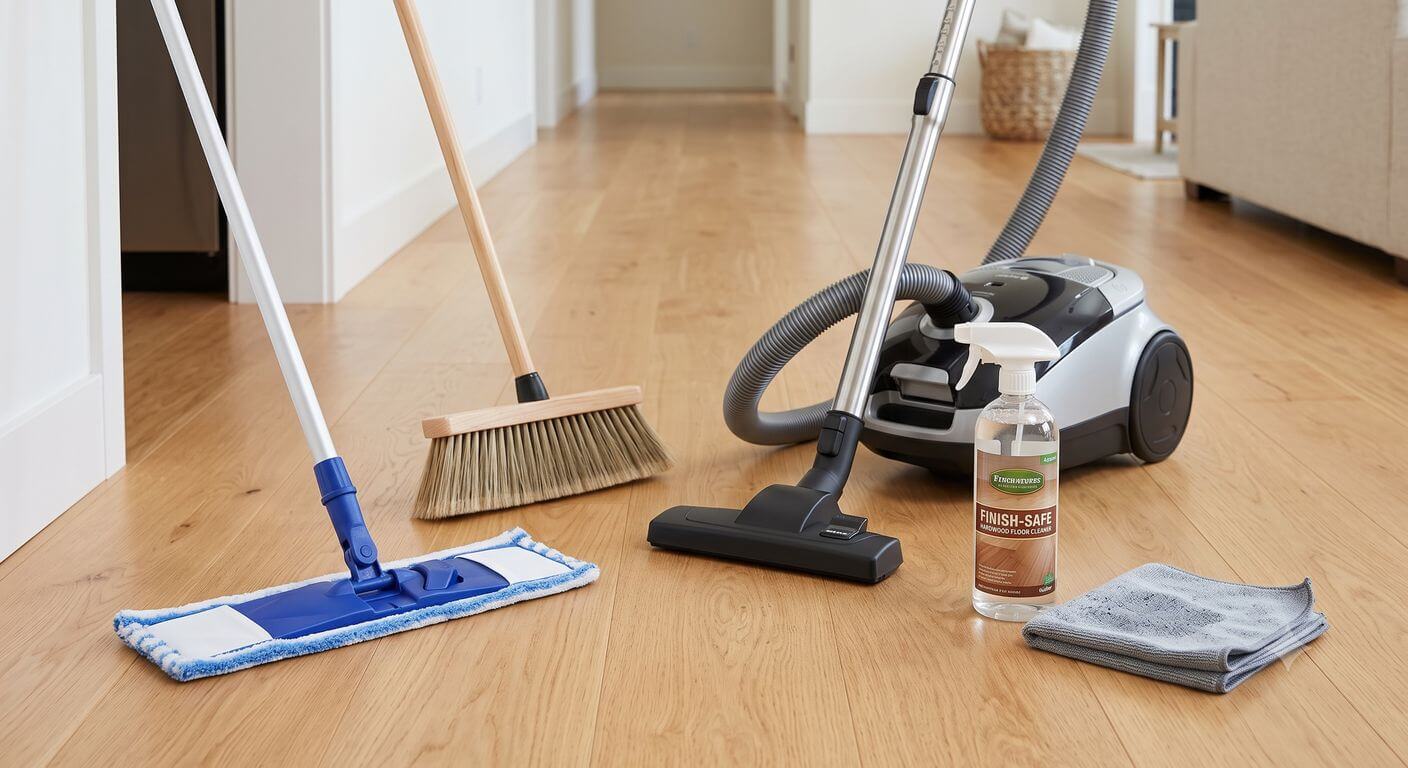
- Remove dust, grit, and debris with a soft broom, microfiber mop, or vacuum without an active beater bar.
- Wipe spills immediately and keep wet shoes, standing water, and excess liquid off the floor.
- Use a hardwood floor cleaner approved for the finish instead of vinegar, oil soap, steam mops, or abrasive cleaners.
- Protect high-traffic areas with clean area rugs, felt pads, safe casters, and trimmed pet nails.
- Keep indoor humidity within the flooring manufacturer’s recommended range.
- Recoat the surface before the worn finish exposes bare wood and makes sanding necessary.
Start With Your Hardwood Floor Type and Finish
Safe hardwood floor care starts with two facts: whether the floor is solid or engineered and what finish protects its surface. These details determine which cleaning products and wood floor treatments are safe.
Solid Hardwood vs. Engineered Hardwood Care
Solid and engineered hardwood need the same basic protection from dirt, scratches, spills, and unstable indoor humidity. Both are real wood floors, but their construction affects repair and refinishing options.
Solid hardwood is made from one piece of wood. It can usually be sanded and refinished several times, depending on the board thickness and previous sanding.
Engineered hardwood has a real wood top layer over a layered core. Engineered wood floor maintenance is similar, but sanding depends on the thickness of the wear layer. Some products can be refinished once or twice. Others should only be recoated.
Engineered hardwood is not automatically waterproof. Water can enter the plank joints, swell the core, or cause the top layer to separate. Clean spills immediately and follow the flooring manufacturer’s humidity and maintenance requirements.
Identify the Finish Before Choosing Maintenance Products
The finish, not the wood species, determines what cleaner, polish, oil, or conditioner can be used on the floor. Using the wrong product can dull the finish, leave buildup, or prevent a future maintenance coat from bonding.
Most newer floors have polyurethane or a factory-applied finish. These surfaces usually need a low-residue hardwood floor cleaner, not wax or oil-based products.
Oiled and hardwax-oiled floors require compatible maintenance oil. Waxed hardwood floor care may include additional wax, but wax should not be applied over polyurethane.
How Should You Care for Hardwood Floors Day to Day?
Keeping wood floors in good shape is mostly about preventing small problems from becoming permanent damage. Remove grit, clean spills quickly, and use as little moisture as possible. Consistent light care works better.
Regular Care and Safe Cleaning Methods
The best way to care for hardwood floors is to match the routine to household traffic. Homes with pets, children, or busy entrances need more frequent dust and debris removal.
To clean hardwood floors, use a low-residue wood floor cleaner approved for the existing finish. Wash or replace dirty mop pads often, since trapped dust can scratch the floor instead of cleaning it.
- Sweep or dry mop loose dirt. Use a soft broom or microfiber mop to catch grit before shoes and furniture grind it into the floor surface.
- Vacuum regularly. Choose a hard-floor setting and turn off the beater bar, which can scatter debris or scratch worn finishes.
- Wipe spills immediately. Use a slightly damp cloth, then dry the area so water does not remain between the planks.
- Damp mop only when needed. Apply a small amount of cleaning solution to the microfiber pad instead of pouring it directly onto the wood.
- Deep clean high-traffic areas as needed. Entryways, kitchens, and hallways usually need attention sooner than low-use rooms.
| Maintenance Task | When to Do It | Do It More Often When | Why It Matters |
| Wipe up spills | Immediately | Water reaches plank seams | Prevents stains, swelling, and finish damage |
| Sweep or dry mop | Every few days | You have pets, children, or busy entrances | Removes grit before it scratches the finish |
| Vacuum with the beater bar off | About once a week | Dust collects along edges or under furniture | Picks up debris missed by a broom or mop |
| Damp clean with an approved cleaner | When dry cleaning no longer removes visible soil | Kitchens and entryways become dirty faster | Removes stuck-on dirt without excessive water |
| Clean under rugs and mats | Every few weeks | Sand, pet hair, or moisture collects underneath | Prevents hidden scratches, stains, and discoloration |
| Check felt pads and casters | Every few months | Chairs and furniture move often | Stops worn or dirty protectors from scratching the floor |
| Check indoor humidity | During heating and cooling seasons | Boards begin gapping, swelling, or cupping | Helps limit seasonal wood movement |
| Inspect the finish | Every few months | Traffic lanes look dull or feel rough | Gives you time to recoat before bare wood is exposed |
Products and Methods to Avoid on Hardwood Floors
The wrong tools can dull the finish, leave a sticky film, or force moisture into the seams. Avoid products that promise instant shine without confirming that they match the floor finish.
Do not use:
- Wet mops or excessive water. Too much liquid can cause swelling, stains, cupping, or damaged plank edges.
- Steam mops. Heat and moisture can enter seams and weaken some finishes or engineered hardwood cores.
- Vinegar or harsh chemicals. Repeated use can dull the finish and reduce its protective quality.
- Oil soap on polyurethane floors. It may leave residue that attracts dirt and interferes with future recoating.
- Abrasive cleaners or scrubbing pads. They create fine scratches across the top layer.
- Furniture polish or unapproved shine products. They can make the surface cloudy, slippery, or difficult to refinish.
When you are unsure what cleaner to use on hardwood floors, check the flooring or finish manufacturer first. A simple, compatible floor cleaner is safer than a homemade mixture.
How to Protect Hardwood Floors From Scratches, Dents, and Wear
The best way to protect hardwood floors is to stop grit, sharp pressure, and heavy movement before they damage the finish. Small habits make a noticeable difference, especially in busy parts of the home.
Entryways, Rugs, Shoes, and High-Traffic Areas
Most scratches begin with dirt and sand carried in on shoes. Protecting high-traffic areas helps the finish stay smooth and even.
- Place a strong outdoor mat at each entrance to catch dirt, sand, and road salt.
- Use an indoor mat to absorb moisture from wet shoes.
- Add area rugs or runners in hallways, kitchens, and busy walkways.
- Choose a rug pad made for wood floors so it does not stick, stain, or trap moisture.
- Lift rugs and remove debris underneath before it scratches the surface.
- Avoid worn high heels, sports cleats, and shoes with small stones in the soles.
- Rotate rugs from time to time to reduce uneven wear and color change.
Furniture, Casters, and Moving Heavy Objects
The easiest way to protect hardwood floors from furniture is to keep hard legs and narrow wheels from touching the finish directly. Soft padding also helps prevent dents.
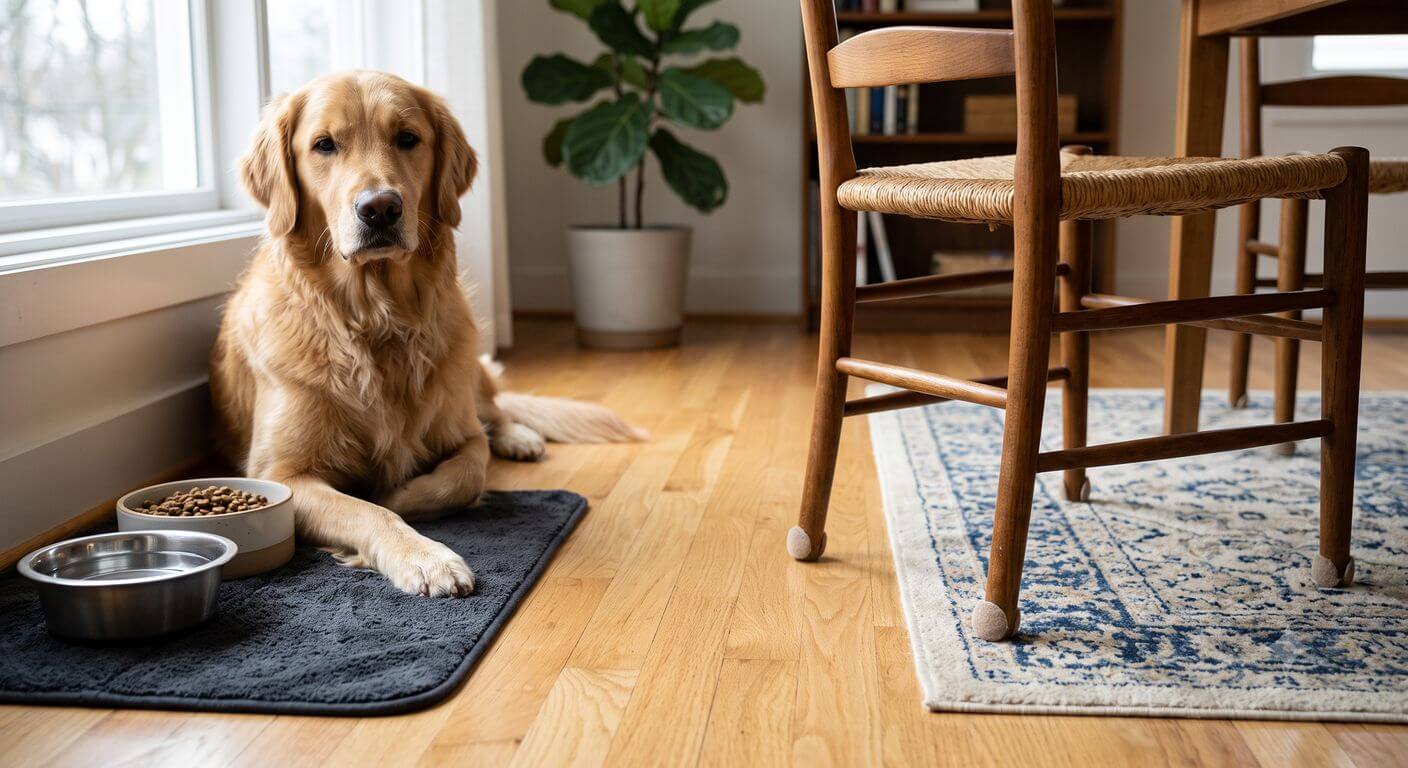
- Place clean felt pads under chairs, tables, sofas, and other movable furniture.
- Check the pads often because trapped grit can cause scratches.
- Replace pads when they become thin, loose, or dirty.
- Use wide, soft casters on office chairs instead of narrow plastic wheels.
- Place a wood-safe chair mat under furniture that rolls every day.
- Lift furniture instead of pulling it across the floor’s surface.
- Use clean sliders when you need to move furniture on hardwood floors.
- Lay down plywood or hardboard before moving a refrigerator, piano, or another heavy object.
- Spread heavy weight across several planks to reduce dents and crushed wood fibers.
Protecting Hardwood Floors from Dogs and Other Pets
To protect hardwood floors from dogs, focus on nails, fast movement, dirt, and water. These are the most common causes of pet-related floor damage.
- Keep dog nails trimmed and filed to help prevent dog scratches on hardwood floors.
- Place rugs where pets run, turn, or jump from furniture.
- Use a wood-safe backing that will not mark or discolor the finish.
- Wipe muddy paws before pets walk across the wood floors.
- Remove pet hair, dust, and grit before they collect in walking paths.
- Put an absorbent mat under food and water bowls.
- Clean pet accidents and spills immediately before moisture reaches the seams.
- Keep the floor dry near doors, stairs, and other places where pets often skid.
Protect Hardwood Floors From Water and Humidity
Water can damage the finish, seep between planks, and leave the wood swollen or stained. The safest approach is to keep the surface dry and maintain steady indoor humidity throughout the year.
Spills, Leaks, and Moisture-Prone Areas
The best way to protect hardwood floors from water is to remove moisture quickly and watch the places where small leaks often go unnoticed. A few minutes of standing liquid can become a much larger repair problem.
- Clean spills immediately with an absorbent cloth, then dry the area so moisture does not remain in the seams.
- Never leave standing water on the floor, even when the finish still looks intact.
- Place wood-safe mats near sinks, dishwashers, exterior doors, and pet bowls, then lift them regularly to check for trapped moisture.
- Use waterproof trays under plant pots and humidifiers so slow drips do not create dark stains.
- Check refrigerator water lines, dishwashers, washing machines, and other nearby appliances for leaks.
- Add leak sensors in kitchens, laundry rooms, and other areas where water may collect out of sight.
- Watch for raised edges, cupping, buckling, dark spots, or soft boards, since these signs may point to moisture below the surface.
- Fix and dry the moisture source before sanding, refinishing, or replacing damaged planks.
Ideal Humidity and Seasonal Hardwood Floor Movement
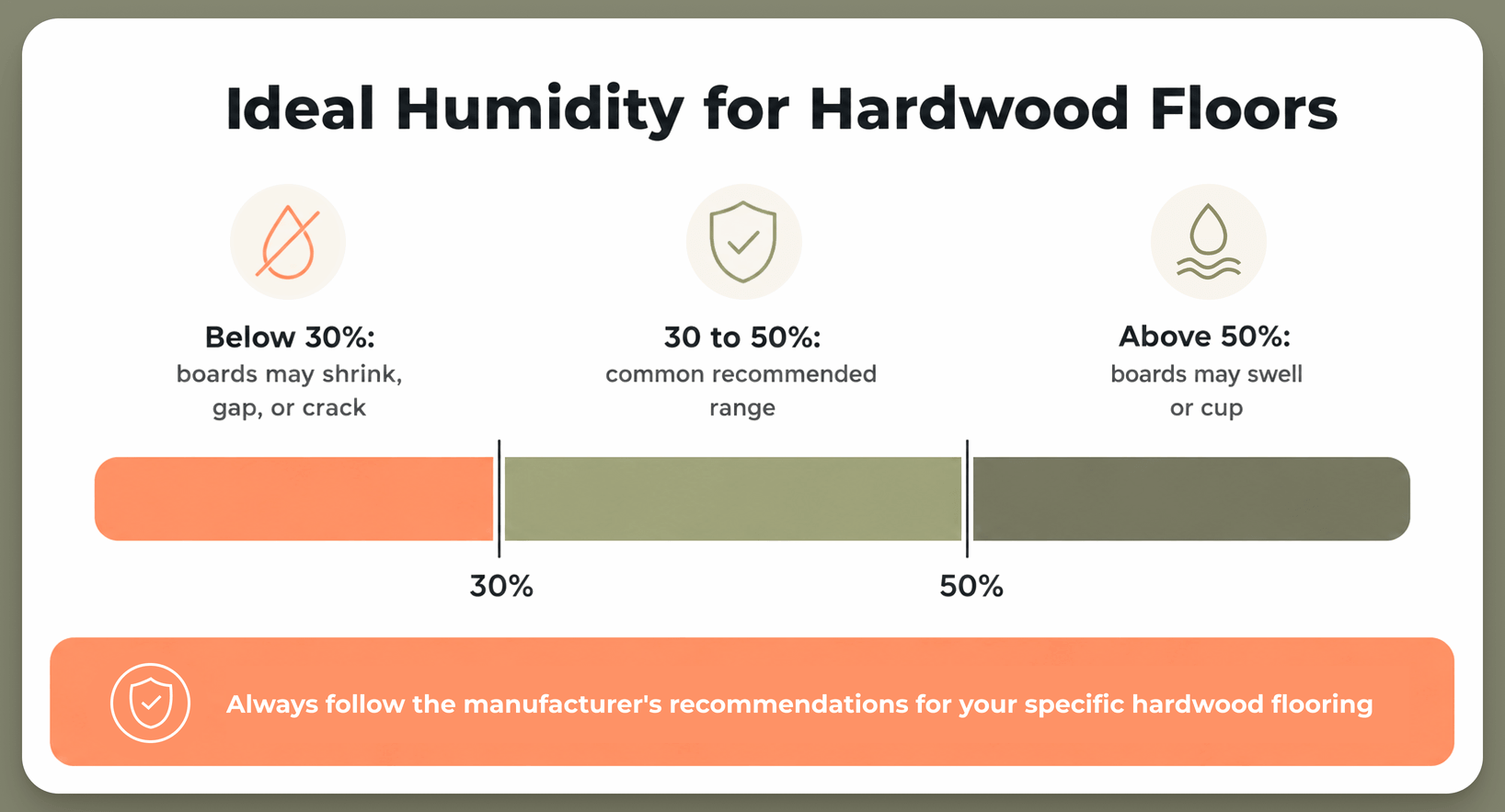
The ideal humidity for hardwood floors is usually between 30 and 50 percent, unless the flooring manufacturer gives a different range. Keeping the level steady helps limit seasonal gaps, swelling, and cracks.
- Check indoor humidity with a hygrometer instead of guessing from how the room feels.
- Use a humidifier during dry heating months if the boards begin shrinking or showing wider gaps.
- Use air conditioning or a dehumidifier when summer moisture causes the planks to swell.
- Expect small seasonal gaps that open in winter and close during more humid months.
- Call a local flooring professional when gaps remain large year-round or the floor develops cupping, crowning, or buckling.
- Keep the HVAC system running in vacant or seasonal homes so the wood floor humidity does not change sharply.
- Follow the flooring manufacturer’s limits for radiant heat, since heat can dry the wood faster near the floor surface.
- Aim for stable conditions rather than chasing one exact reading each day. NWFA also recommends keeping homes between 60 and 80°F and 30 to 50 percent relative humidity year-round.
Preserve the Finish and Keep Hardwood Floors Looking Good
A healthy finish should look even, feel smooth, and protect the wood below. To keep it that way, remove buildup, use compatible products, and deal with uneven light exposure before small changes become harder to correct.
Dullness, Residue, and Loss of Shine
When hardwood floors look dull, the cause is often residue, fine scratches, or worn finish rather than dirt alone. The right fix depends on what is sitting on the surface and whether the protective layer is still intact.
- Cleaner buildup: Too much cleaning solution can leave a cloudy or sticky film across the floor.
- Fine surface wear: Dust, grit, and traffic create tiny scratches that slowly dull the finish.
- Wrong shine products: Wax, polish, and oil-based products can leave buildup when they do not match the existing finish.
- Worn top layer: Dull patches in busy areas may mean the finish is thinning and needs a new protective coat.
- Safe first step: Use the right tools and a compatible hardwood floor cleaner before trying to polish or deep clean the surface.
- Professional treatment: Recoat the floor when the finish is worn but the wood is still protected, and refinish it when bare wood or deep stains appear.
Sunlight, Rugs, and Uneven Color Change
Sunlight can lighten, darken, or warm the color of wood floors over time, while covered areas change more slowly. This natural process can leave visible outlines beneath rugs and furniture.
- Control direct light: Use blinds, curtains, or UV-filtering window film in rooms with strong sun exposure.
- Rotate area rugs: Move rugs from time to time so the surrounding wood changes color more evenly.
- Shift furniture slightly: Small changes in placement help prevent sharp color lines around tables, sofas, and cabinets.
- Keep covered areas clean: Dirt and moisture trapped under rugs can stain the finish as well as change its color.
Real wood develops color over time, so good floor care can reduce unevenness but cannot stop the process completely. This is normal. The speed can vary by species and stain.
When to Recoat, Refinish, or Repair Hardwood Floors
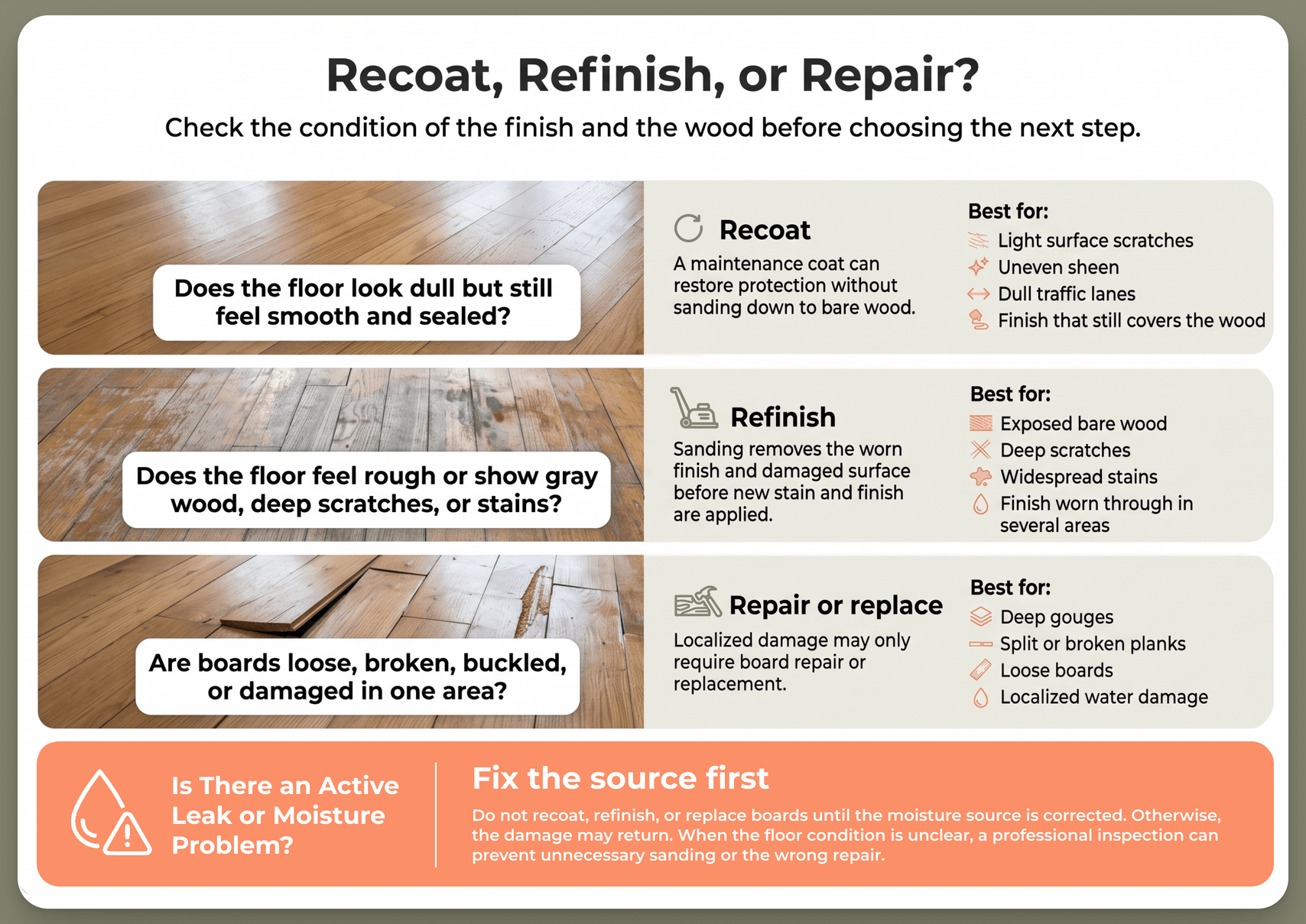
Recoat hardwood floors when the finish looks dull or lightly scratched but still covers the wood. Refinish them when wear, stains, or scratches have reached the wood itself, and repair individual boards when damage is deep or limited to one area.
Compare a busy walkway with an area under a rug or furniture. If the worn spot is dull but still smooth and sealed, a recoat may be enough. If it feels rough or shows bare wood, it’s most likely time for wood refinishing.
Cupped, buckled, loose, or badly damaged planks usually need local hardwood floor repair or full replacement instead. Any leak or humidity problem must be corrected before the floor is refinished.
Protect Hardwood Floors During High-Risk Situations
Fresh finish and remodeling work leave hardwood floors more vulnerable than usual. Give the coating time to cure, then use proper protection against dust, tools, paint, and heavy foot traffic.
Care for Newly Refinished Hardwood Floors
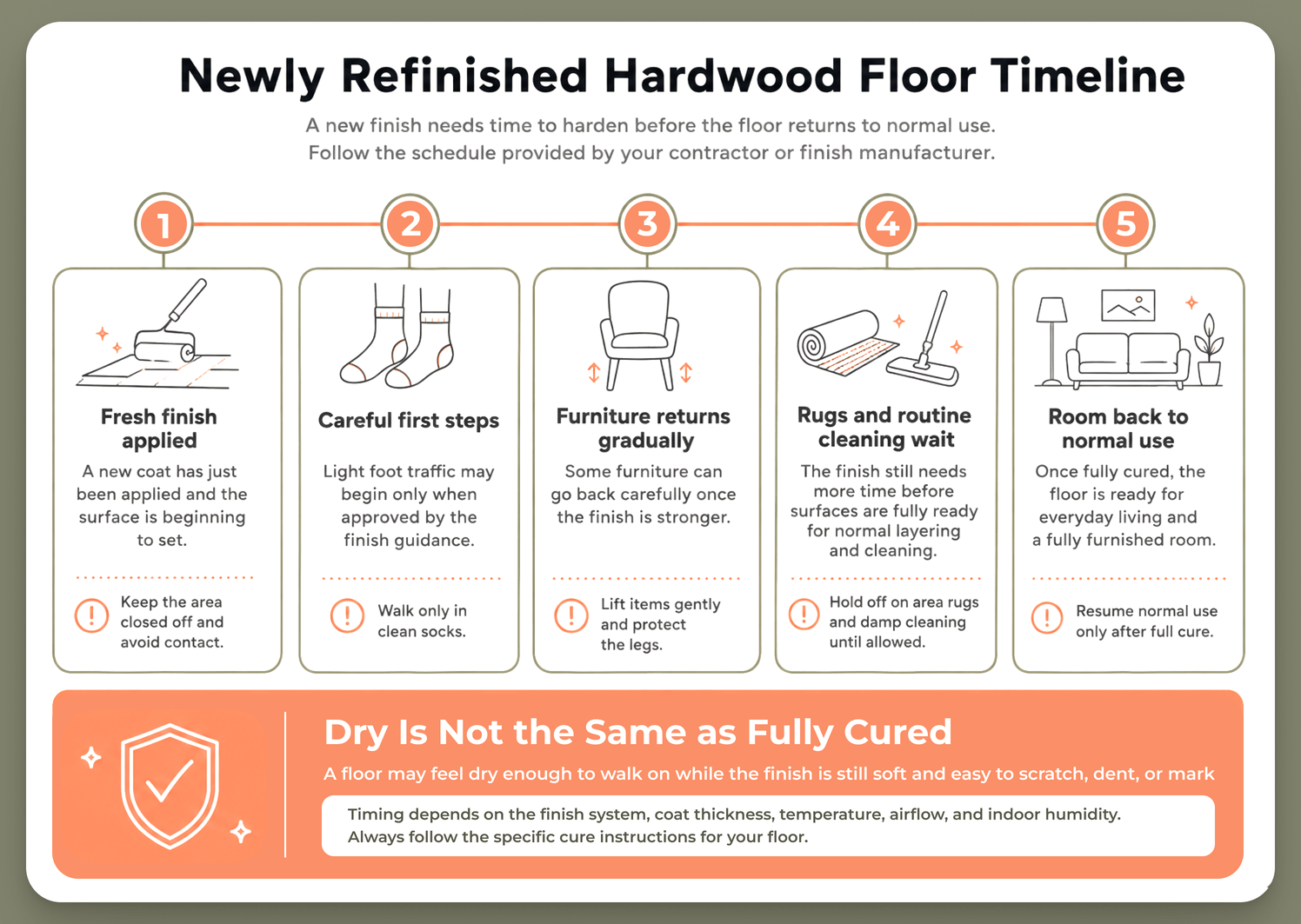
Right after refinishing is the best time to start taking care of hardwood floors with a clean slate. The finish is new, but it has not reached full strength yet, so the first few days matter.
- Follow the cure schedule: Use the timing provided by your contractor or finish manufacturer because water-based, oil-based, and hardwax-oil finishes cure at different rates.
- Do not confuse dry with cured: A floor may feel dry enough for light walking while still being easy to scratch, dent, or mark.
- Delay rugs and coverings: Wait until the finish is fully cured before placing area rugs, rubber-backed pads, or anything that blocks airflow.
- Keep dust out: Ventilate as directed, but do not aim a fan across the floor where it can blow dust and hair into the soft finish.
- Wait before cleaning: Do not wet clean or apply a wood floor treatment until the approved cure period has passed.
- Return furniture carefully: Follow the contractor’s schedule and place each piece down gently rather than sliding it into position. Cure times vary widely by product, so the finish instructions should always take priority.
Protect Hardwood Floors During Construction or Remodeling
To protect hardwood floors during construction, cover them against both scratches and impact. Thin paper may catch dust, but it will not stop a dropped tool or a heavy cart.
- Wait for full cure: Never cover a newly refinished floor until the coating manufacturer says it is ready.
- Build protection in layers: Place a clean, wood-safe protective layer over the floor, then add hardboard or plywood along main work paths.
- Tape the covering, not the floor: Join seams to each other so adhesive does not pull, stain, or mark the finish.
- Seal spill-prone areas: Close the seams near painting and wet work so liquid cannot run underneath the covering.
- Check underneath regularly: Remove grit or debris that could grind into the surface as workers walk over it.
- Keep the room stable: Leave the HVAC system operating and avoid trapping moisture beneath plastic or other non-breathable materials.
- Protect every traffic route: Extend the covering from the entrance to the work area so tools, ladders, and contractor shoes never cross exposed wood.
Keep Hardwood Floor Maintenance Simple
Good hardwood floor care comes down to prevention. Keep grit and moisture away, protect the busiest areas, and deal with surface wear before the finish disappears.
If the finish is already worn through, regular maintenance will not restore it. Our team can inspect the floor and recommend the right next step, whether that means a recoat, a full hardwood floor refinishing in Chicago, or a local repair. Book a free in-home estimate to get a plan for your floors.
frequently asked questions
Are Robot Vacuums Safe for Wood Floors?
Yes, most robot vacuums are safe for finished hardwood, but grit caught under a wheel or brush can leave scratches. Clean the wheels and underside regularly, check the area around the charging dock, and turn off the mopping function on unsealed wood floors.
Why Do Hardwood Floors Squeak More in Winter?
Dry winter air can shrink the boards slightly, creating more movement between the flooring, fasteners, and subfloor. A squeak that remains year-round, spreads, or comes with a soft spot may point to loose fasteners or a subfloor problem rather than normal seasonal movement.
Do Hand-Scraped or Wire-Brushed Wood Floors Need Special Care?
They use the same finish-safe products as smooth hardwood, but their textured surface can hold more dust in the grain and low spots. Vacuum with a soft floor attachment and wipe in the direction of the texture instead of scrubbing across it.
Do Matte Hardwood Floors Need Different Maintenance Than Glossy Floors?
The basic care depends on the finish type, not the sheen, but any polish or refresher must match the existing gloss level. A high-gloss product on a matte floor can leave shiny patches that are difficult to blend evenly.


Overall rating
5

(2 vote(s))
Comments