

 5.0


How to Get Pet Urine Smell and Stains Out of Hardwood Floors
10/26/2026
Reading Time ~ 11 minutes
Table of Contents
- What to Do Immediately After Pet Urine Gets on Hardwood Floors
- How to Get Pet Urine Smell Out of Hardwood Floors
- How to Remove Pet Urine Stains from Hardwood Floors
- What Cleaners Are Safe for Pet Urine on Hardwood Floors?
- What to Do When Pet Urine Has Soaked into the Wood or Subfloor
- When Cleaning Is Not Enough: Refinish, Repair, or Replace Urine-Damaged Hardwood
- How to Prevent Repeat Pet Urine Damage
Pet urine on hardwood floors should be cleaned quickly, with as little liquid as possible. Fresh accidents usually need blotting and a hardwood-safe floor cleaner, while lingering odor may require an enzyme cleaner approved for sealed wood. Old brown, gray, or black urine stains are different because the urine may have penetrated the finish and reached the wood itself.
The right treatment depends on what you see and smell:
- Fresh urine: Blot with a paper towel or clean cloth, clean the affected area with a suitable hardwood floor cleaner, and dry it completely.
- Urine odor after cleaning: Treat the remaining organic residue with a compatible enzyme cleaner instead of repeatedly soaking the floor.
- Surface marks or finish damage: Check whether the discoloration is in the protective finish or the wood underneath.
- Old dark or black stains: Hydrogen peroxide, wood bleach, sanding, or refinishing may be needed, but these treatments can change the wood color.
- Persistent odor, swelling, or soft wood: Urine may have reached board joints or the subfloor, where surface cleaning is no longer enough.
The sooner pet urine is cleaned up, the better the chance of avoiding permanent damage.
What to Do Immediately After Pet Urine Gets on Hardwood Floors
If your dog or cat just peed on the hardwood floor, clean it up right away. The longer urine sits, the more likely it is to get between the boards or soak through worn spots in the finish.
Here is what to do:
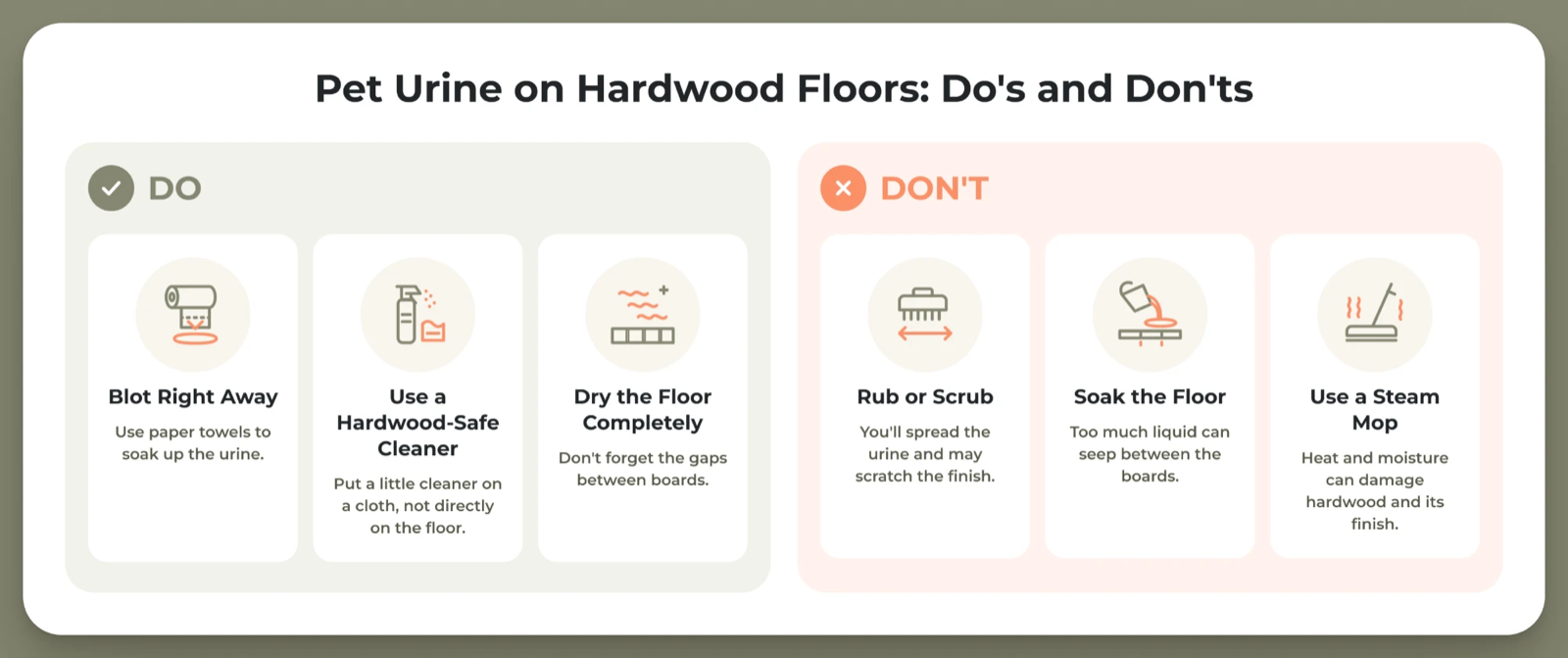
- Blot up the urine. Grab some paper towels or a clean rag and soak up as much as you can. Don’t rub or scrub. You’ll just spread it around.
- Check the gaps between boards. If urine got into the seams, press a dry paper towel along them to soak up what you can.
- Wipe the spot clean. Put a little hardwood floor cleaner on a cloth and wipe the area. Make sure the cleaner is safe for your floor’s finish.
- Dry the floor. Go over the spot with a dry towel, especially around the seams. Good airflow will help with any leftover moisture.
- Check it again once it’s dry. If there’s still a smell or pet stain, don’t keep scrubbing. It may need a different treatment.
If your hardwood floor has worn spots or exposed wood, urine can soak in much faster. Don’t pour water or cleaner onto those areas. That can make the damage worse.
How to Get Pet Urine Smell Out of Hardwood Floors
If the floor looks clean but still smells, some urine residue is still there. It may be sitting on the finish, inside small cracks, between boards, or deeper below the surface.
A regular hardwood floor cleaner can remove dirt and surface residue from the floor, but it may not fully remove the source of a dog or cat urine smell. Covering the smell with fragrance does not fix it either.
How to Use an Enzyme Cleaner Without Damaging the Finish
An enzyme cleaner can help break down urine residue that causes odor, but only if the product is safe for sealed hardwood. The main mistake we see is using too much liquid.
Use it this way:
- Check the label and make sure the cleaner is approved for sealed wood.
- Test it in a small hidden area first.
- Apply only the amount recommended by the manufacturer.
- Keep the cleaner out of open seams and gaps as much as possible.
- Leave it on the floor only for the recommended dwell time.
- Remove any residue if the product instructions call for it.
- Let the area dry completely before deciding whether the odor is gone.
An enzyme cleaner can help with pet urine odor, but it will not remove a deep brown or black pet stain in the wood. That is a different problem.
Why Urine Odor Returns After Drying, Humidity, or Refinishing
If the smell comes back after the floor dries, the urine may have gone deeper than the surface. This is common with repeated accidents or floors with worn finish and open seams.
Urine can remain in:
- gaps between boards
- beveled edges
- cracks in the finish
- tongue-and-groove joints
- underlayment
- the subfloor
Humidity can make an old odor more noticeable again. Sanding can also expose contaminated wood that did not smell as strong before.
The same thing can happen after refinishing. If urine remained below the sanded surface, a new finish will not remove the source.
At that point, adding more cleaner usually does not help. The next step is to find out how deep the contamination goes.
How to Remove Pet Urine Stains from Hardwood Floors
Pet urine can leave marks on the hardwood floor finish or soak into the wood itself. Surface marks are usually easier to deal with. Old brown or black stains are harder because the discoloration may go deep into the wood.
Surface Marks and Finish Damage
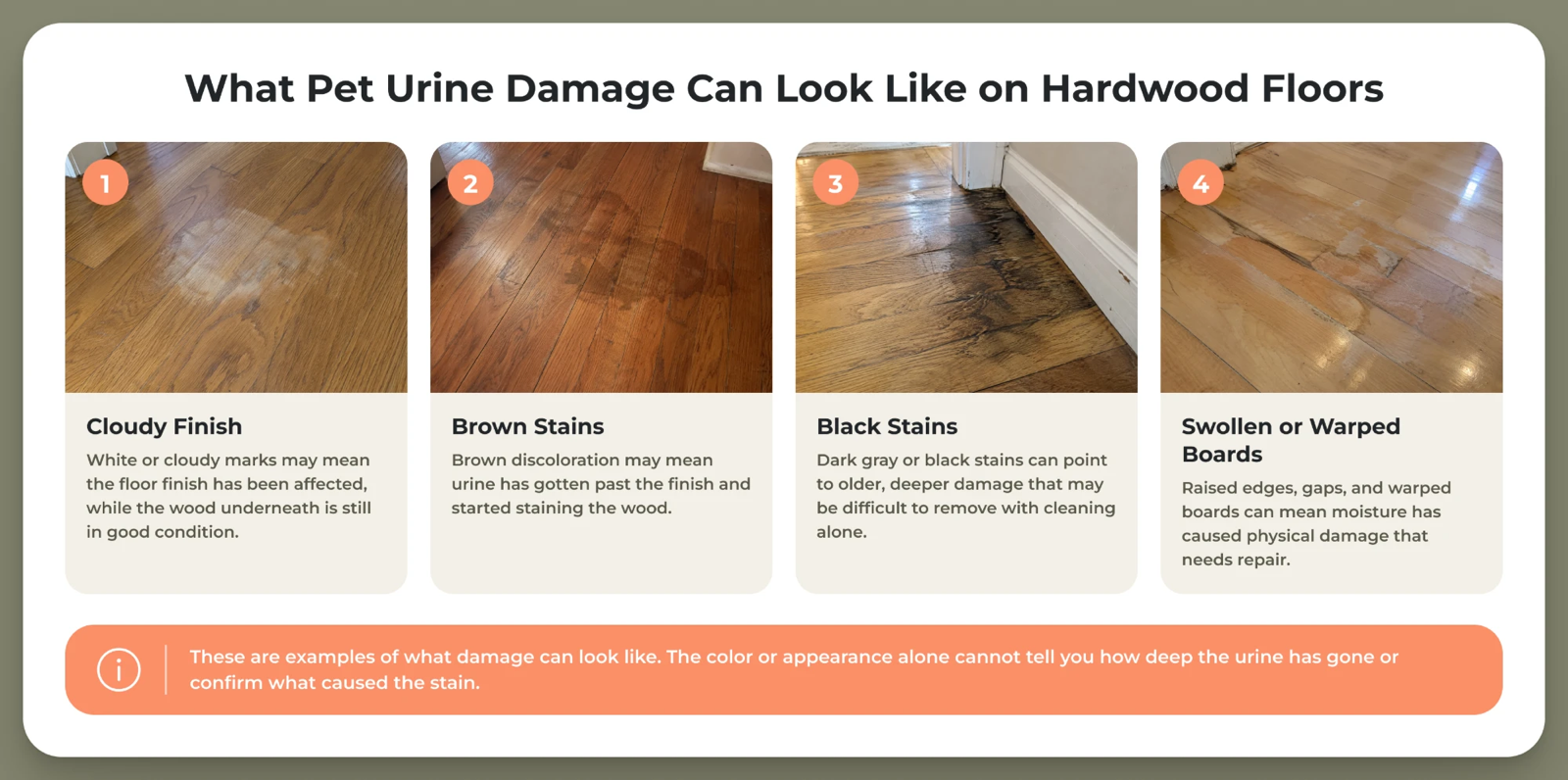
White or cloudy spots, dull patches, and sticky areas may be signs of finish damage rather than a deep pet stain in the wood.
Start by wiping the spot with a hardwood-safe cleaner and a soft cloth. Let it dry and check whether the mark is still there.
If the finish looks cloudy, feels soft, or starts peeling, more cleaning won’t fix it. The damaged finish may need to be repaired. The same goes for rough spots where the protective coating has worn away and exposed the wood.
Light yellow or brown marks may also be surface residue. If they don’t come off with gentle cleaning, the discoloration may have reached the wood.
Old Brown, Gray, and Black Urine Stains
Old urine stains are a different story. When urine gets past the finish and soaks into the wood, it can leave brown, gray, or even black spots. This is especially common with repeated pet accidents. Oak floors can turn particularly dark because urine can react with the natural tannins in the wood.
There are a few ways to deal with these stains, but none works every time.
- Hydrogen peroxide: A 3% solution may lighten some urine stains, but it can also bleach the surrounding wood or damage the finish. You could end up with a pale spot instead of a dark one. Don’t soak a finished floor with it.
- Wood bleach: Products such as oxalic acid or two-part wood bleach may help with certain stains after the finish is removed. These are better left to professionals because getting an even color can be tricky.
- Sanding: If the pet stain hasn’t gone too deep, sanding may remove the discolored wood. Deep black stains can remain even after sanding.
Sometimes the cat or dog stain is simply too deep to remove without taking off more wood than the floor can safely lose. In those cases, replacing the affected boards may give a better result.
One thing to keep in mind: Getting rid of the dark color doesn’t always mean the urine smell is gone. The two problems may need different treatments.

Sanding Out Old Urine Stains on Hardwood Floors
What Cleaners Are Safe for Pet Urine on Hardwood Floors?
The safest choice is a hardwood floor cleaner made for your floor’s finish. Not every pet stain remover is safe for wood, and some household cleaners can do more harm than the urine itself.
| Cleaner or Method | Does It Work? | What to Watch Out For |
|---|---|---|
| Hardwood floor cleaner | Best for cleaning fresh urine off the surface | Use a pH-neutral product approved for your finish |
| Enzyme cleaner | Can help remove lingering urine odor | Must be safe for sealed hardwood |
| Hydrogen peroxide | May lighten some urine stains | Can bleach the wood or leave a lighter spot |
| White vinegar | Common DIY remedy, but best avoided | Acid can dull or damage the finish |
| Baking soda | May absorb some surface odor | Can leave residue or scratch the finish if scrubbed |
| Mild dish soap | May remove surface residue | Can leave a film and require extra rinsing |
| Chlorine bleach | Not recommended | Can damage the finish and discolor wood |
| Ammonia | Avoid | Can damage the finish and adds a strong smell |
| Steam mop | Avoid | Heat and moisture can damage the finish and get between boards |
Whatever cleaner you choose, test it in a hidden spot first and follow the label. Use as little liquid as possible, keep the room ventilated, and never mix cleaning chemicals. Keep pets off the treated area until it’s dry and the product instructions say it’s safe.
A cleaner labeled safe for hard floors isn’t always safe for hardwood. Tile and vinyl can handle products that may damage a wood floor finish. Check the label carefully, it needs to say hardwood specifically.
What to Do When Pet Urine Has Soaked into the Wood or Subfloor
If urine gets between hardwood boards, wiping the floor won’t get it all out. The problem may be inside the wood or even underneath it. You need to figure out how deep it went before trying anything else.
Signs the Contamination Is Below the Surface
You can’t always tell how deep urine has soaked in just by looking at the hardwood floor. But there are a few warning signs:
- The smell won’t go away, even after you’ve cleaned the floor and let it dry.
- Dark pet stains along the seams or spreading across several boards.
- Soft or spongy spots that feel different when you walk on them.
- Swollen, cupped, or buckled boards around the affected area.
- Peeling finish or gaps opening between boards.
- Urine smell during or after refinishing, even when the floor looks clean.
A UV blacklight can help you find old urine spots, but it’s not always accurate. A moisture meter can show if the wood is still damp, though it won’t tell you whether dried urine is trapped inside.
How Urine Reaches the Wood and Subfloor
A good floor finish helps protect the wood, but it can’t keep urine out of every crack or gap. Here’s how it can get deeper:
- Through worn finish. Scratches and spots where the finish has worn away leave bare wood exposed. Urine can soak right in.
- Between the boards. Liquid can run into small gaps, beveled edges, and joints, even if the top of the floor is sealed.
- Into the wood underneath. Once urine reaches the unfinished sides and tongue-and-groove joints, it can soak deeper into the boards.
- Down to the subfloor. If enough urine gets through, it can reach the underlayment or plywood or OSB subfloor.
This is especially common when a dog or cat keeps peeing in the same spot. It can also happen under old carpet, where pet accidents may have gone unnoticed for years.
Once urine gets underneath the flooring, cleaning the top won’t reach it. Sometimes the only way to see how far it went is to lift an affected board and check what’s below.

Repairing Urine Damage to Hardwood Floors
When Cleaning Is Not Enough: Refinish, Repair, or Replace Urine-Damaged Hardwood
If pet urine has damaged the wood itself, cleaning products won’t fix it. The good news is that you don’t always have to replace the whole floor. Sometimes sanding is enough, and sometimes only a few boards need to go.
Here’s how we decide what makes sense:
- Spot finish repair. If the damage is limited to a small area of the finish, we may be able to repair that spot without sanding the entire floor.
- Sanding and refinishing. If the urine stain hasn’t gone too deep, hardwood floor sanding and refinishing in Chicago can remove the stained top layer and give the floor a fresh finish. But there’s a limit to how much wood we can sand off.
- Board replacement. If the stain runs deep or the boards are badly damaged, replacing them is often the better choice. In many cases, hardwood floor repair in Chicago means replacing just a few damaged boards rather than the entire floor.
- Subfloor repair. If urine has soaked through the flooring, the damaged material underneath may need to be removed or replaced too. Otherwise, the smell can remain even after the hardwood looks new.
The type of hardwood floor matters. Solid hardwood usually gives us more room to sand. Engineered hardwood floor has a thinner top layer, and some products can’t be sanded at all.
Matching the repair is another part of the job. New boards need to match the existing wood, width, pet stain color, and finish sheen. On older floors, that isn’t always easy. Sometimes refinishing a larger area gives a better result than trying to blend one small patch.
If you’ve tried cleaning and the odor keeps coming back, or the boards are soft, warped, or badly stained, it’s time to have the floor checked. At Big Bro Hardwood, we’d rather tell you a few boards can be saved than recommend replacing a floor that doesn’t need it.
How to Prevent Repeat Pet Urine Damage
The best way to protect hardwood floors from pet urine is to keep accidents from sitting on the wood and make sure the finish stays in good shape. A few simple habits can save you from dealing with stubborn pet stains and expensive repairs later.
Here’s what helps:
- Clean up accidents right away. Even a well-finished floor can be damaged if urine sits on it long enough.
- Keep the finish in good condition. If you notice worn or bare spots, don’t ignore them. Recoating before the finish wears through helps protect the wood.
- Use washable pet mats. Put them near pet beds or other spots where accidents happen. Make sure the backing is safe for hardwood and won’t trap moisture.
- Check under rugs and mats. Urine can go unnoticed underneath them. Never cover a damp floor.
- Pay attention to repeat accidents. If your dog keeps peeing in the same spot, make sure the old odor is gone and keep the pet away from that area until it’s taken care of.
- Make bathroom breaks easier. Give dogs regular outdoor breaks and keep cat litter boxes clean and easy to reach. Washable pads can also help protect floors around senior pets.
If a house-trained dog or cat suddenly starts having accidents indoors, it’s worth checking with a vet. Sometimes the problem is medical, not behavioral.
frequently asked questions
Does the Type of Hardwood Floor Affect How Pet Urine Should Be Treated?
Yes. Sealed hardwood floors are easier to clean because the finish helps keep urine from soaking in. Unfinished, worn, waxed, or oiled floors need more care. Engineered hardwood also has limits on how much it can be sanded. Wood species matters too. Oak can develop dark urine stains, while light-colored maple can make repaired spots harder to hide.
Is Cat Urine Harder to Remove from Hardwood Floors Than Dog Urine?
Cat pee often has a stronger, more stubborn smell than dog pee, especially if it has been sitting in the wood for a while. But when it comes to cleaning wood floors, the bigger issue is how long the urine sat and how far it soaked in. Either one can leave permanent pet stains if ignored.
Can Pet Urine Cause Mold Under Hardwood Floors?
Yes, but not every pet accident leads to mold. The problem is moisture. If urine repeatedly soaks through the boards and the area underneath stays damp, mold can grow. A musty smell, along with signs of moisture damage, is a good reason to have the floor checked.
Can I Cover the Cleaned Area with a Rug or Pet Mat Right Away?
No. Make sure the hardwood floor is completely dry first, including the gaps between boards. A rug can trap leftover moisture and slow down drying. Also, check the backing before putting it down. Some rubber or latex-backed mats can discolor or react with certain hardwood finishes.
Should You Seal Over Pet Urine Odor Instead of Removing the Source?
No. Putting another coat of finish over urine-damaged hardwood won’t get rid of contamination trapped inside or underneath the boards. In some repairs, an odor-blocking sealer can be used on an exposed subfloor after the damaged material has been dealt with. But sealing alone isn’t a reliable fix for urine-soaked wood.


Overall rating
5

(1 vote(s))
Comments