Local Hardwood Floor Staining for Buffalo Grove Homes

Big Bro Hardwood is an owner-operated hardwood floor staining company serving Buffalo Grove, IL. We sand existing wood floors back to bare wood and give them a new color, so you can change the look without replacing the floor. A lot of what we do here is updating the orange, amber, and golden oak found in so many Buffalo Grove homes built from the 1970s through the 1990s, moving those floors toward a natural, greige, deeper brown, or more contemporary tone that actually fits how people live today.

Color is not just about picking a sample. The wood species decides what is possible, so we test stains right on your sanded floor before committing, and we are straightforward about what your particular floor can and cannot do. We offer a free in-home estimate within 24 hours across Buffalo Grove and nearby suburbs.

Hardwood Floor Staining Cost in Buffalo Grove

The cost of hardwood floor staining in Buffalo Grove, IL, depends on whether you are pricing the stain portion itself or the full sanding, color, and finish process. In most homes, staining services are part of a larger scope because the floor has to be taken to bare wood, the previous finish has to be removed, and the new stain has to be sealed properly for a durable result.

Starting staining prices in Buffalo Grove, IL, by project scope (per square foot)
Package / Scope Typical Use Starting Price* Includes
Stain Add-On Adding color during a standard refinish +$1.0 to $2.0 / sq ft Color selection, stain application, and stain-related labor after the full sanding process
Full Sand, Stain & Refinish Existing wood floors that need full color change and new finish From $4 / sq ft Sand to bare wood, remove previous finish, apply stain, standard finish system, and cleanup

*Pricing shown is a starting point. Final cost can vary depending on square footage, floor condition, wood species, custom color testing, and whether the floor has deep scratches, heavy buildup, or areas in poor condition. Moving furniture, extra prep, and any needed repairs are usually priced separately. For a more detailed breakdown of full sanding and refinishing pricing, see the Hardwood Floor Refinishing page or calculate hardwood floor staining and refinishing cost.

Hardwood Floor Staining Service Highlights

  • 80% of Clients Refer Us
  • Owner-operated Company
  • Light, Natural, and Dark Tones
  • Oak, Maple, and Exotic Wood Experience
  • On-Floor Samples Before Approval

Why Stain Hardwood Floors in Your Buffalo Grove Home

Staining is one of the easiest ways to change the look of existing hardwood flooring without replacing it. In many Buffalo Grove homes, a proper sanding process and new stain can update color, improve wear patterns, and bring older wood floors back to a cleaner, more natural look.

  • Change the color without replacing the floor. Staining recolors the solid boards you already have, so a whole room can look new without new flooring.
  • Refresh worn boards, not just color. Sanding removes the old finish and evens out traffic paths before the new stain goes on.
  • Keep sound boards instead of replacing them. If the boards are solid, staining costs less and disrupts less than a full tear-out.
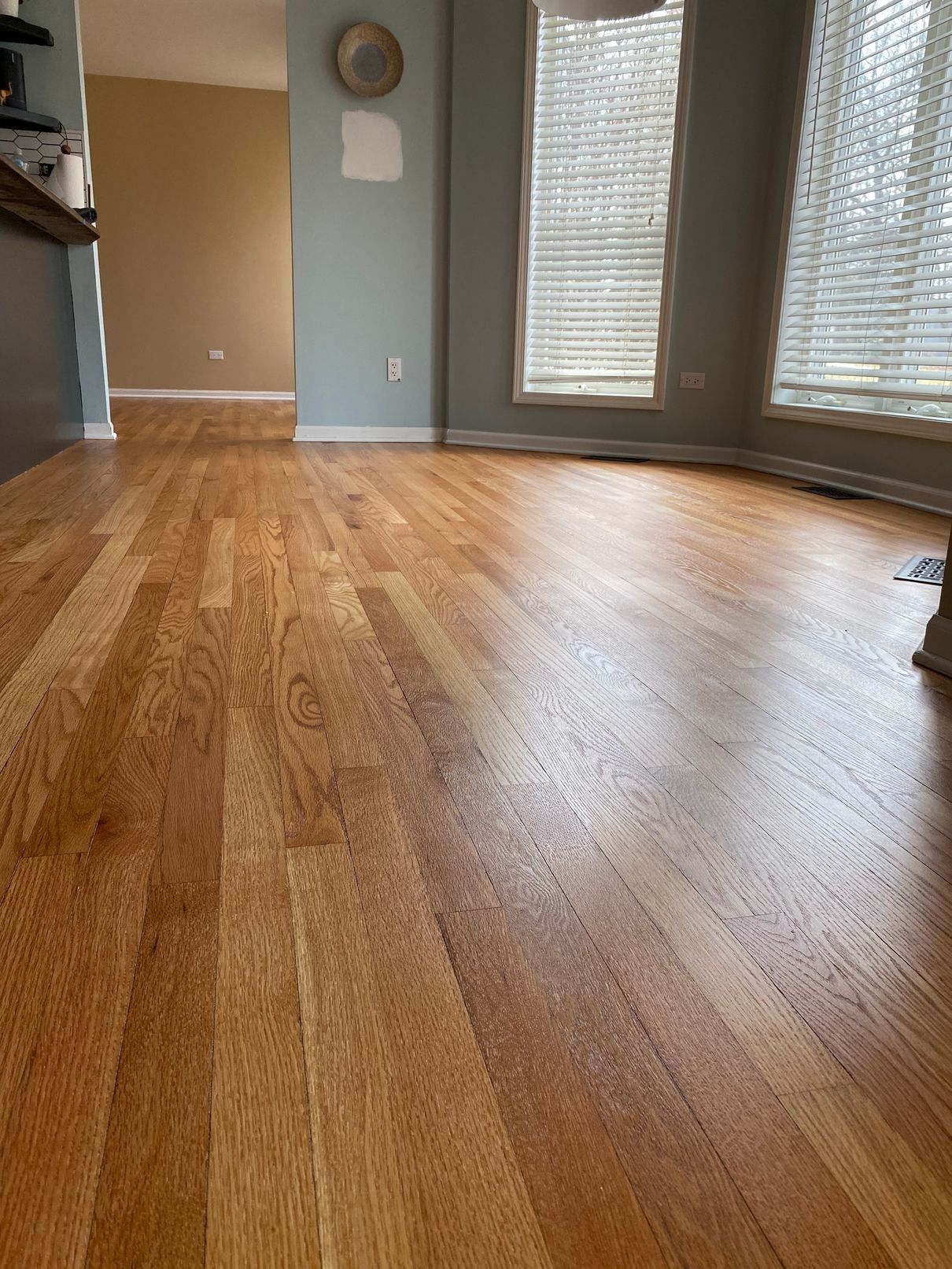
Close view of oak hardwood floors, satin wood floor finish by windows.

Hardwood Floor Stain Colors and Color Matching in Buffalo Grove

Color is what people worry about most when they consider wood floor staining. Will it look like the sample? Is the tone even possible on their wood? Will it work with the rest of the house? Buffalo Grove has a wide mix of floors, from original 1970s and 1980s red oak in older single-family homes to maple, white oak, and engineered products in newer townhomes and condos. Here is how we approach color on those floors, and what is realistic:

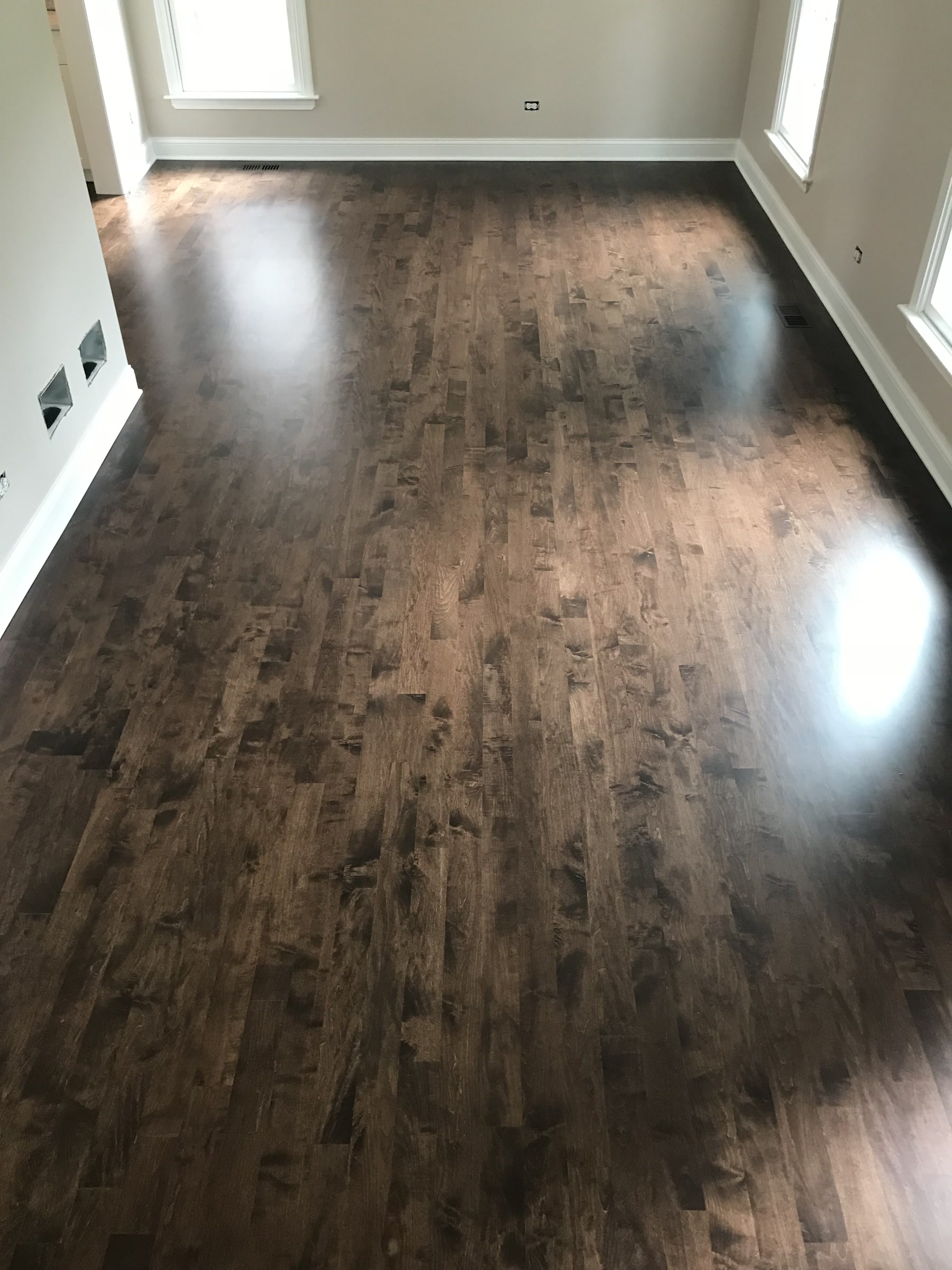
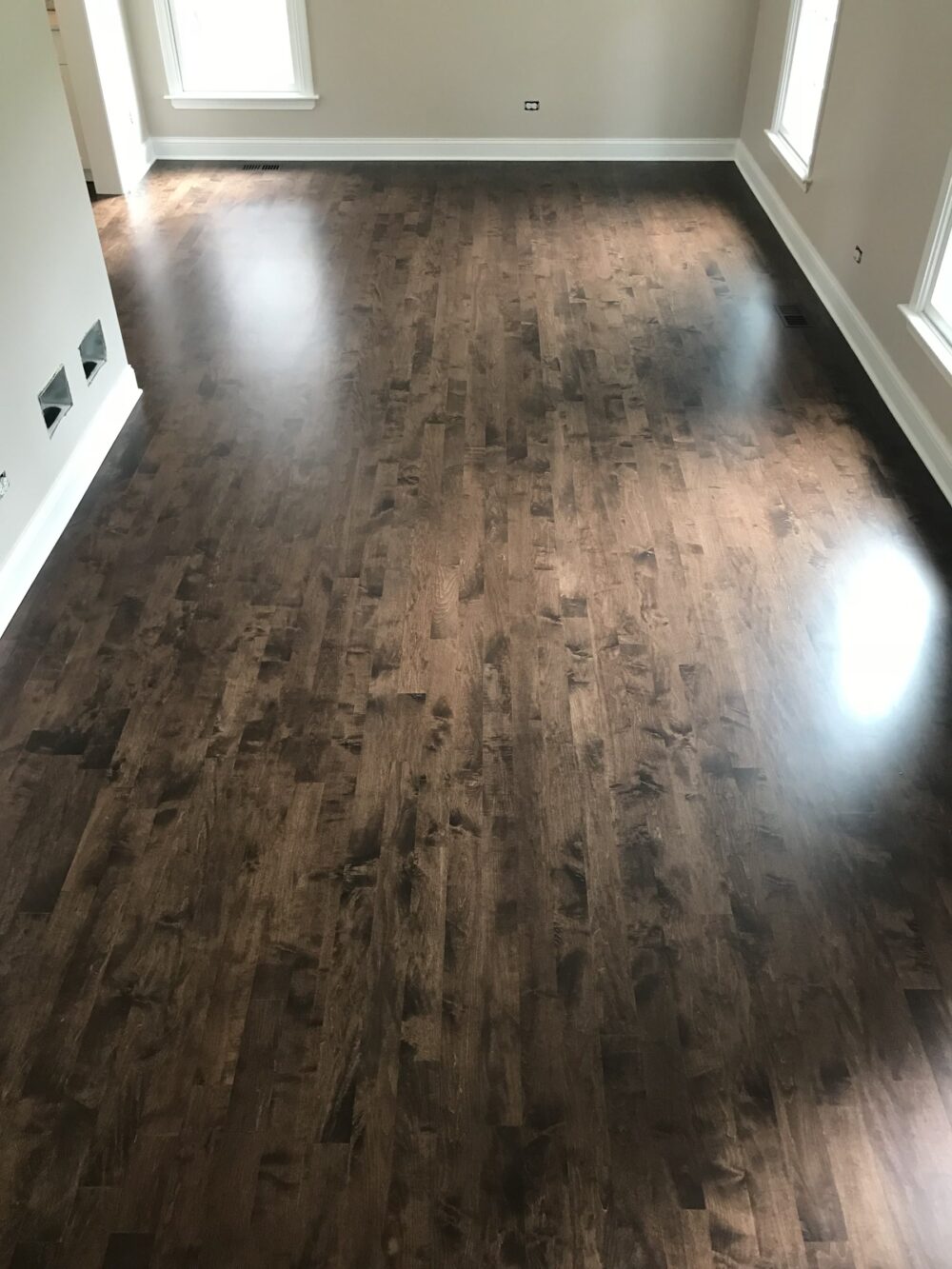
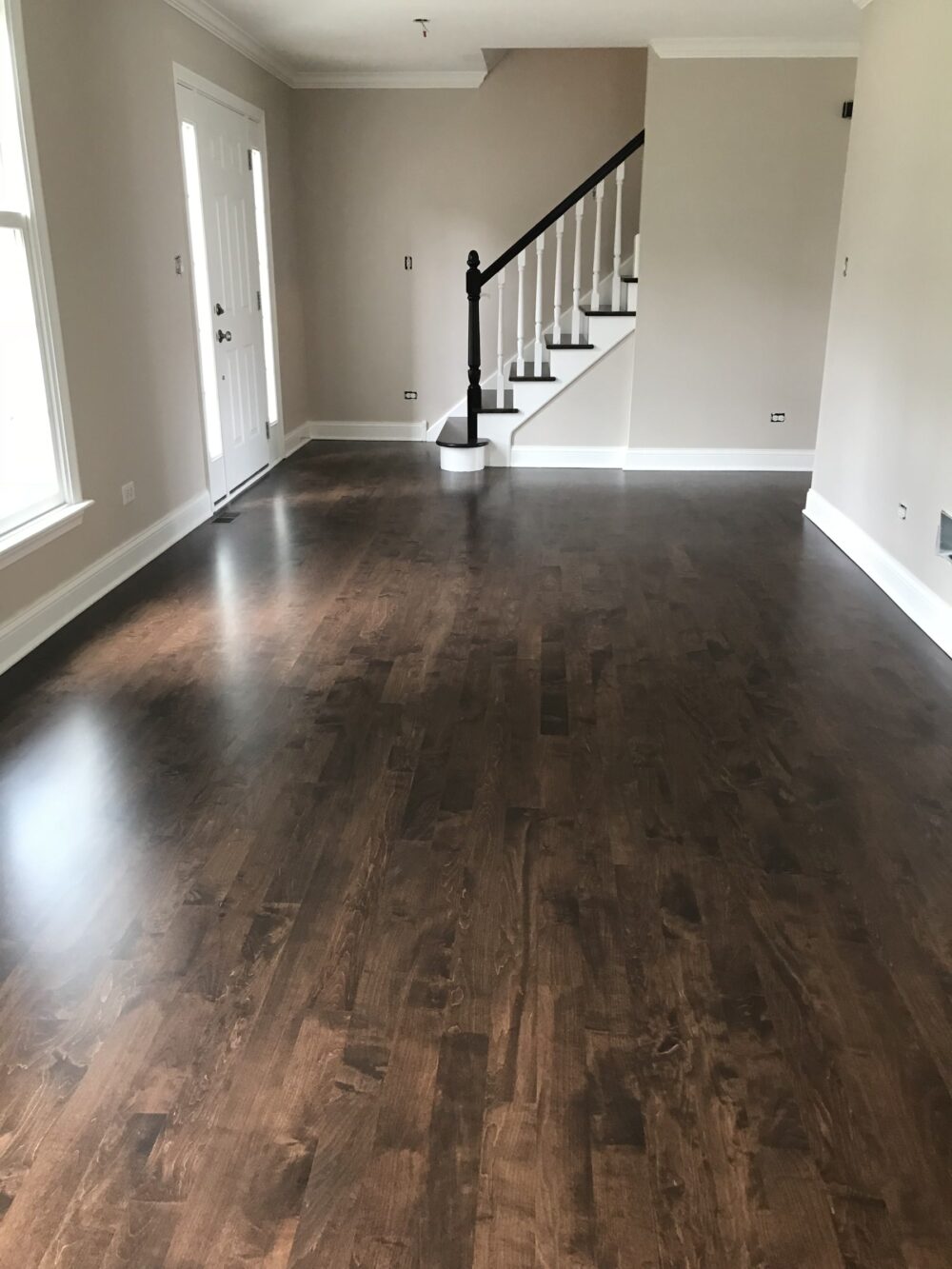
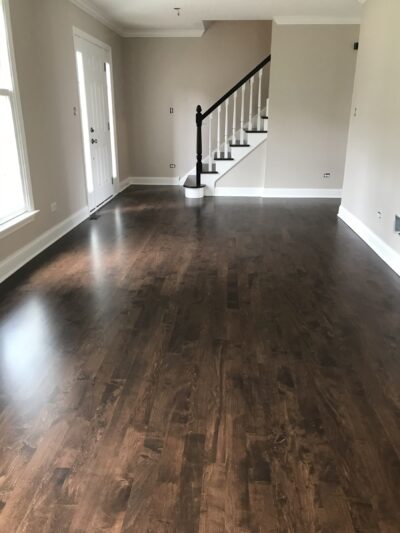
Espresso maple floor in the great room, Buffalo Grove, IL
  • Moving away from orange or amber oak. Many of the split-levels, colonials, and ranch homes built across Buffalo Grove in the 70s and 80s have red oak floors in an old orange or amber tone. We can shift that toward a natural, greige, or deeper brown, and we show you on your actual floor how far the color can move, because the wood underneath still plays a role in the final result.
  • Grays and whites on red oak. This is the one we are most direct about. Red oak carries a natural pink undertone that fights true gray and white stains and can read blotchy or pinkish rather than clean. We tell you upfront whether your floor can reach that tone, and when a slightly different shade gives a better result on your specific wood.
  • Matching other floors in the house. Older Buffalo Grove homes often have wood that has aged and faded near large windows over decades. A perfect match from a color card is not realistic. We sand a test area and adjust for your species, your floor’s age, and your actual lighting before we commit to anything.
  • Even color on mixed or vintage wood. Red oak, maple, and engineered products all take stain differently, and floors with old repairs or previous finish buildup can come out uneven. Careful bare-wood prep and a wood conditioner where the grain calls for it keep the color consistent across the whole floor.
  • Low-odor stains for condos and townhomes. Buffalo Grove has a significant number of low-rise condo and townhome communities, and closed units need a different plan. We use low-VOC stains and finishes, coordinate ventilation, and work within any HOA quiet-hour rules so the color change is manageable for you and your neighbors.
  • Stain versus a clear finish. Sometimes the right answer is not a stain at all. A natural clear finish can brighten the wood and bring out the grain without adding color. We help you decide whether to deepen the tone, neutralize the old orange cast, or let the wood read close to natural.

Whatever direction you want to go, we test the color on your floor first, so the shade you approve is the shade you get. If it is not achievable on your wood, we say so before any stain goes down.

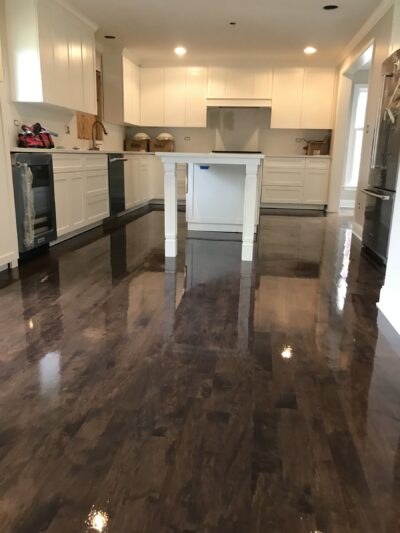
Espresso Staining on Maple in Buffalo Grove, IL

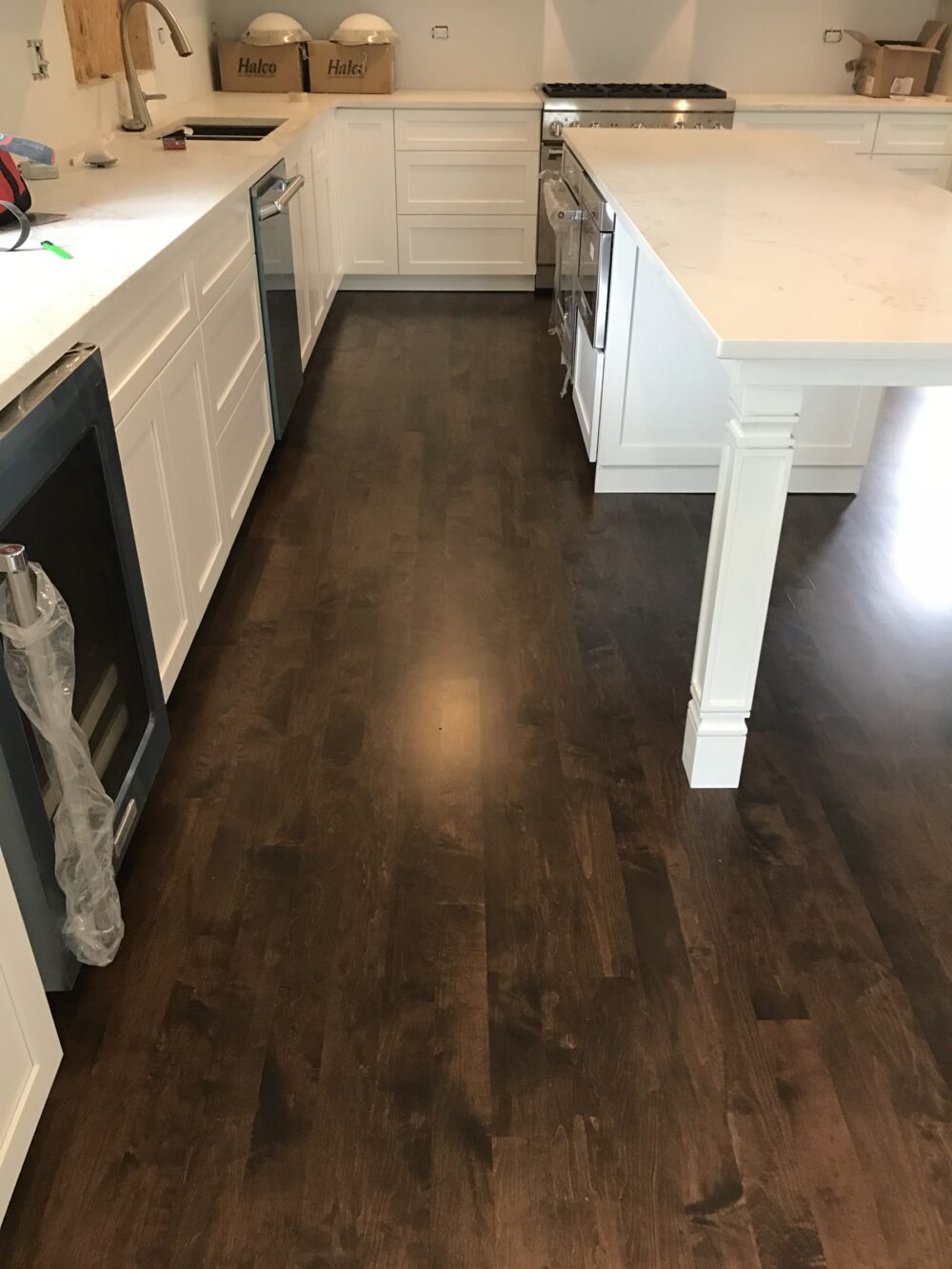
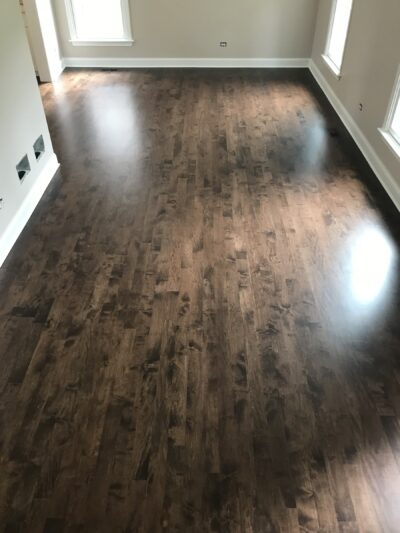
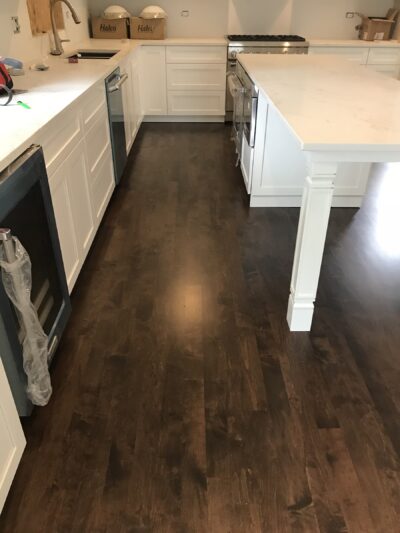
Espresso staining of a new maple floor in Buffalo Grove, IL, sealed with Loba 2K Duo for a rich dark tone through the kitchen and open living space.

Location
Buffalo Grove, IL
Wood
Maple
Stain / Color
Espresso
Finish
Loba 2K Duo

Before & After: Maple Floors Stained Espresso — Buffalo Grove, IL

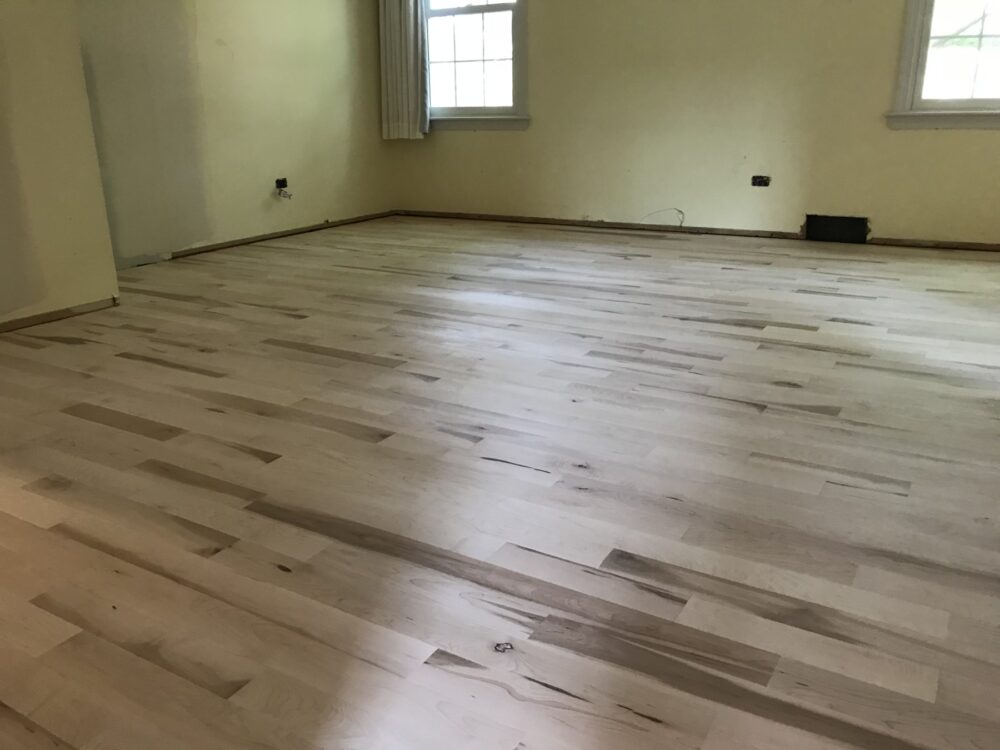
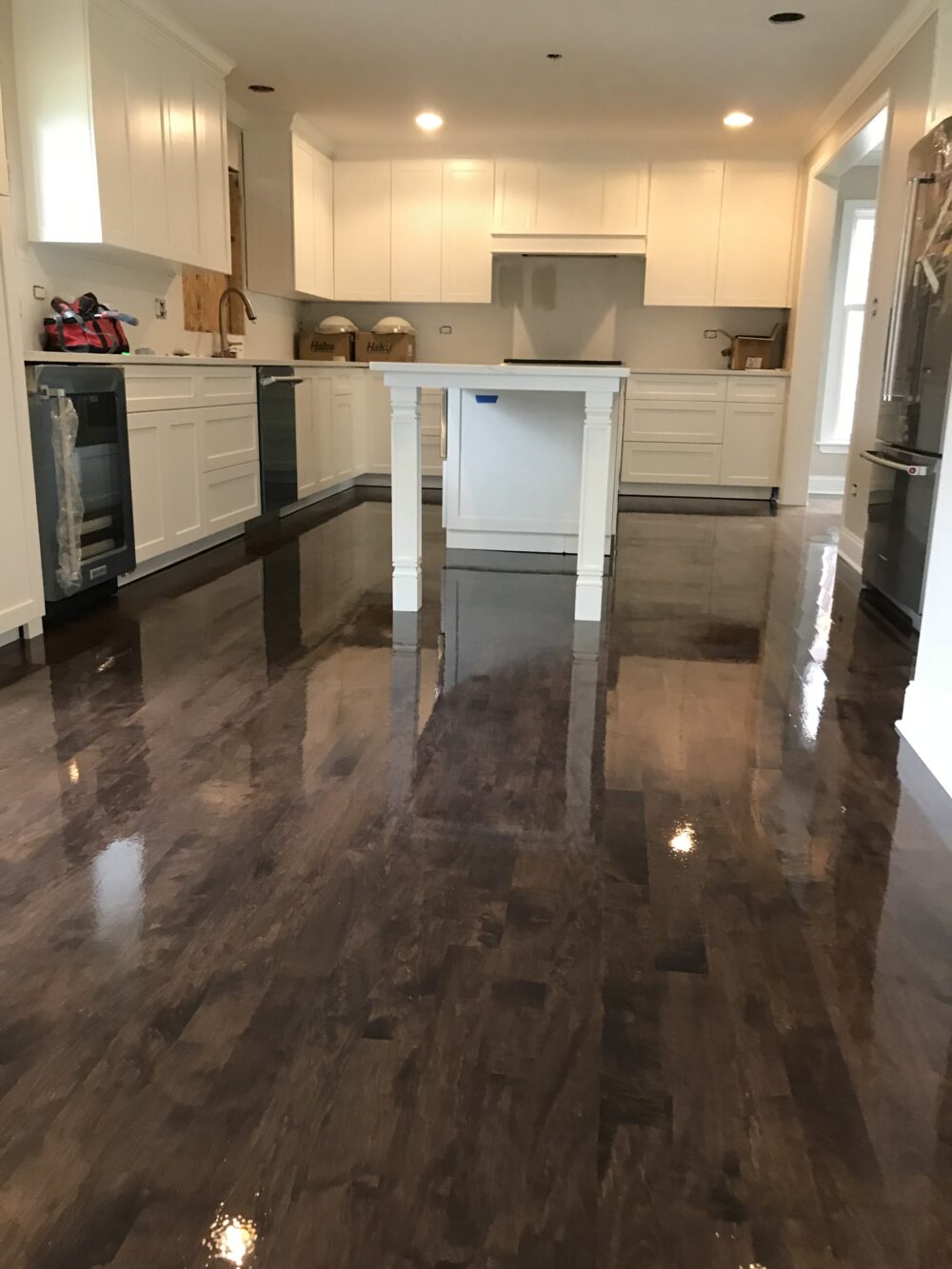
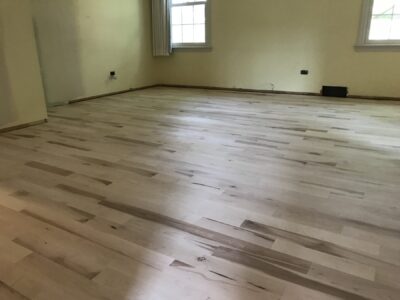
Raw newly installed maple floor before espresso staining, Buffalo Grove, IL (in-process) Maple floor stained espresso in the kitchen, Buffalo Grove, IL
The new maple floor went from bare wood to a rich espresso finish.

Ready to breathe new life into your hardwood floors?

contact big bro hardwood

Our Hardwood Floor Staining Process in Buffalo Grove, Illinois

Our process is simple and fully managed: clear scheduling, dust-controlled work, and straightforward communication. We handle prep, sanding, color testing, and finish application, so hardwood floor sanding and staining in Buffalo Grove, IL feels organized, not stressful.

Timeline at a glance for hardwood floor staining:

≤300 sq ft
2 to 3 days
800 to 1,200 sq ft
3 to 5 days
  1. Inspect and Plan

    We start with the condition of the existing hardwood flooring, not just the color. We look at the species, the previous finish, visible scratches, areas of heavy wear, and whether the floor is in poor condition anywhere. You get a clear scope, stain direction, and a free estimate before work begins.

  2. Protect the Room and Prep the Area

    Before the sanding process starts, we protect the work area and plan for furniture, nearby rooms, and traffic through the home. Good prep helps control dust, protects adjacent surfaces, and keeps the job cleaner in lived-in Buffalo Grove homes, especially around doorways, trim, and transitions to stairs.

  3. Sand to Bare Wood

    For stain to absorb correctly, the floor has to be taken back to bare wood. We remove the old previous finish, level out wear patterns where possible, and prep the surface with the right proper equipment so the new stain goes on more evenly. This step matters most in high traffic areas where old finish and color usually break down first.

  4. Test the Stain and Confirm the Color

    Color is confirmed on your sanded floor, not from a screen. See the stain-colors section above for how we test it in your light. If your floor is maple or pine rather than oak, we flag it early: these woods can blotch under stain, so we test first and use a wood conditioner where needed before any color goes down. We also seal the test area so you see the color the way it will actually look under finish, not raw stain, since a topcoat shifts the tone once it goes on.

  5. Apply Stain and Protective Finish

    Once the color is approved, we apply the stain and follow with the selected finish system. The exact steps can vary depending on the floor, the color, and the finish choice, but the goal is always the same: even color, a cleaner look, and a more durable surface for daily use. This is where the floor starts to show its natural beauty again. This is also where you pick the sheen: matte, satin, or semi-gloss, which changes how much the floor reflects light and shows everyday wear. We walk you through water-based finishes, which stay clear over the years, versus oil-based, which adds warmth but ambers as it ages: worth knowing if the whole point is getting away from orange tones.

  6. Final Check and Care Guidance

    At the end of the job, we review the finished floor with you and go over what happens next. We explain when to walk on the floor, when to move furniture back, and how to protect the new finish from early wear, moisture, and accidental damage like spills immediately after the work is completed. Light foot traffic is usually fine in about 24 hours, but keep furniture off for 48 hours and lift it into place rather than dragging it. The finish keeps hardening for three to four weeks, so go easy on rugs, tape, and heavy loads until it fully cures.

Why Buffalo Grove Homeowners Choose Big Bro Hardwood for Floor Staining

Picking the right hardwood floor staining company in Buffalo Grove matters more than most people expect. The wrong prep, the wrong stain for the species, or vague pricing can turn a straightforward project into a frustrating one. Here is what we bring to every job.

Staining Matched to the Wood Species

Not every wood takes color the same way. Many Buffalo Grove homes have red oak floors with a natural pink undertone that can fight gray or white stains, reading blotchy instead of clean. Maple is dense and can resist even penetration. We look at your specific species, grain, age, and current condition before we ever open a can. Knowing your wood first is what keeps the finished color looking intentional rather than uneven.

Clear Pricing and Predictable Scheduling

We walk through the scope with you before work begins. Whether the job is a color change on floors in good shape or a project that also involves some light repair and prep, we explain what is included, what affects the timeline, and why. No surprise line items at the end. Most staining projects run about 2-4 days from sanding through initial finish coats, and we give you a realistic picture of that from the start.

Prep and Sanding Come First

The stain is only as good as the surface underneath it. We sand down to bare wood, removing the old finish completely so the new color absorbs evenly. Our Atomic Dust Containment System with HEPA-filtered vacuums captures roughly 95-98% of dust, which matters especially in the split-levels, ranches, and open-plan colonials common across Buffalo Grove. Floors with wear, past repairs, or heavy traffic areas get extra attention during prep before we move on to color.

Even Color Across Rooms and Transitions

Getting consistent color from room to room takes planning. Board age, previous coatings, replacement planks, and how much natural light a room gets can all shift the way stain lands. We test color on your actual sanded floor, not just a sample chip, and we think through the sequence carefully. Doorways, hallways, and transitions get close attention so the result reads as one cohesive floor rather than a patchwork of slightly different tones.

Natural Variation Explained Up Front

Wood is a natural material and no two boards are identical. Grain differences, mineral streaks, density shifts, and older boards absorbing stain differently than newer replacement pieces are all real factors. We talk through these honestly before you commit to a color. Setting clear expectations early helps you land on a stain tone that works with your floor’s character rather than against it, so the result feels like a deliberate choice, not a compromise.

Local Proof: 80% Referrals

Around 80% of our work comes from referrals, and that is the kind of track record we are most proud of. Homeowners across Buffalo Grove and nearby suburbs call us because a neighbor or family member trusted us with their floors and liked what they got. Honest work and straight talk tend to travel. We have been doing this since 2009, we hold a 5.0 rating across 50 reviews, and we have no interest in upselling you on something your floors do not need.

Dark refinished hardwood floor

Get your free estimate today

Contact Us

Frequently Asked Questions

My Buffalo Grove home was built in the 1980s and has original red oak floors. Can I stain them a modern gray or greige?

Red oak is the most common species we see in Buffalo Grove’s 70s and 80s subdivisions, and it has a natural pink undertone that fights true gray stains. You can often land a soft greige or a cooler brown, but a pure gray can read blotchy or pinkish on red oak. We test the stain on your actual sanded floor before committing to anything. If a tone is not going to work cleanly, we tell you upfront and show you alternatives that will look great on your wood.

Buffalo Grove winters are dry and summers get humid. Does that affect staining and how the color holds up?

It does matter. The seasonal swings here, cold dry winters with the heat running and warm humid summers, cause hardwood to expand and contract. That movement can open small gaps in winter and close them back in summer. Proper sanding to bare wood, the right stain, and a quality finish system all help the floor handle those shifts better. We also use low-VOC Bona and Loba finishes that seal the wood well, which gives you better protection against moisture changes year-round.

I live in a Buffalo Grove condo with an HOA. Can you still stain my hardwood floors?

Yes, we work in condos and townhomes throughout Buffalo Grove regularly. We use low-VOC, low-odor stains and finishes to keep fumes manageable for neighbors. Our Atomic Dust Containment System with HEPA-filtered vacuums captures roughly 95-98% of sanding dust. We protect shared hallways and elevators during the job and are happy to work within your association’s quiet hours. If your building requires approval or a certificate of insurance, just let us know and we can help you get what you need.

A lot of Buffalo Grove homes have maple floors in kitchens or as accents. Can maple be stained the same way as oak?

Maple is a denser, tighter-grained wood and it absorbs stain unevenly, which makes blotching a real risk. It can be stained, but the prep work is different. We use a wood conditioner on maple before applying any color to help the stain go on more evenly. Darker tones tend to work better than very light or gray shades on maple. We always test on your actual floor first so you can see exactly how the color reads on your specific wood before we commit to the full job.

How do you match stain to the existing floors in other rooms I am not refinishing?

An honest answer: a perfect match is rarely possible from a color card alone. Wood ages, fades near windows, and picks up years of foot traffic, so the original color shifts over time. What we do is sand a small test area and try different stain combinations until we get as close as we reasonably can, accounting for your species, age, and the lighting in each room. We will tell you upfront how close we can realistically get before any work begins.

Do I have to choose a stain color, or can you just refresh my floors with a clear finish?

A clear or natural finish is a completely valid choice and sometimes the right one. If your floors have good color and you just want to remove scratches and bring back the sheen, we can sand them back to bare wood and apply a clear finish that brightens the natural grain without adding any color. We talk through both options with you, because adding stain when the wood does not need it is not always the best move. We help you decide what actually makes sense for your floors.

How long does a hardwood floor staining project take in Buffalo Grove, and can I stay in my home?

Most staining projects run about 2-4 days from sanding through the first finish coats and initial dry time. The exact timeline depends on room size, floor condition, how much color testing is needed, and the finish system we use. You can usually handle light foot traffic after about 24 hours, though the floor is still curing and scuffs easily at that stage. Furniture goes back around day three. Many homeowners stay in the house and just stay off the treated areas. You can also get a rough cost estimate using our cost calculator before we even visit.

What should I do, and avoid, to keep the new stain color looking good long-term?

The basics make a big difference. Sweep or dust-mop regularly and vacuum on a bare-floor setting. Wipe up spills right away, because standing water is hard on any finish. Skip the wet mop and never use a steam mop on hardwood. Put felt pads under furniture legs and keep heavy pieces off the floor until it has fully cured, which takes longer than that first 24-hour window. Hold off on area rugs until cure is complete too. Follow those steps and the color and finish should stay looking sharp for years.

How long will stained hardwood floors last before they need redoing?

Stain soaks into the wood, so the color doesn’t wear off, only the clear finish on top does. Plan on 7 to 10 years before a full re-sand, with an optional recoat (buff, fresh clear coat, no sanding) every 3 to 5 years in high-traffic areas to stretch that further. You’d only re-stain to change the color.

Are there floors you won't stain?

Yes, and we’ll say so up front. We won’t stain over a solid floor that’s been sanded down too many times, or boards cupping or gapping from moisture (that has to be fixed first); deep pet or water stains usually mean a board needs replacing, not staining over. In those cases we recommend refinishing-only or replacement instead.

Hardwood floors in sunny room

Request Free
Appointment!

WE ARE AVAILABLE TO PROVIDE YOU WIDE RANGE OF HARDWOOD FLOORING SERVICES

Get a free quote