Local Hardwood Floor Staining for Wilmette Homes

Big Bro Hardwood is an owner-operated hardwood floor staining company serving Wilmette, IL. We sand existing floors back to bare wood and give them a new color, so you can change the look without replacing the floor. A lot of what we do here is updating the orange, amber, and golden oak found in Wilmette’s many Colonial, Tudor, and Cape Cod homes, moving it toward a natural, greige, deeper brown, or more modern tone. Red oak and white oak are both common in this area, and each species takes stain differently, so we treat every project on its own terms.

Color depends on the wood, not just the sample. We test stains on your actual floor after sanding before we commit to anything, and we are honest about what your species can and cannot do. Free in-home estimate within 24 hours across Wilmette and nearby suburbs.

Hardwood Floor Staining Cost in Wilmette

The cost of hardwood floor staining in Wilmette, IL, depends on whether you are pricing the stain portion itself or the full sanding, color, and finish process. In most homes, staining services are part of a larger scope because the floor has to be taken to bare wood, the previous finish has to be removed, and the new stain has to be sealed properly for a durable result.

Starting staining prices in Wilmette, IL, by project scope (per square foot)
Package / Scope Typical Use Starting Price* Includes
Stain Add-On Adding color during a standard refinish +$1.0 to $2.0 / sq ft Color selection, stain application, and stain-related labor after the full sanding process
Full Sand, Stain & Refinish Existing wood floors that need full color change and new finish From $4 / sq ft Sand to bare wood, remove previous finish, apply stain, standard finish system, and cleanup

*Pricing shown is a starting point. Final cost can vary depending on square footage, floor condition, wood species, custom color testing, and whether the floor has deep scratches, heavy buildup, or areas in poor condition. Moving furniture, extra prep, and any needed repairs are usually priced separately. For a more detailed breakdown of full sanding and refinishing pricing, see the Hardwood Floor Refinishing page or calculate hardwood floor staining and refinishing cost.

Hardwood Floor Staining Service Highlights

  • Existing Woodwork Color Matching
  • Owner-operated Company
  • 80% of Clients Refer Us
  • Damaged Boards Repaired Before Staining
  • Free Estimate in 24 Hours

Why Stain Hardwood Floors in Your Wilmette Home

Staining is one of the easiest ways to change the look of existing hardwood flooring without replacing it. In many Wilmette homes, a proper sanding process and new stain can update color, improve wear patterns, and bring older wood floors back to a cleaner, more natural look.

  • Change the color without replacing the floor. Staining recolors the solid boards you already have, so a whole room can look new without new flooring.
  • Refresh worn boards, not just color. Sanding removes the old finish and evens out traffic paths before the new stain goes on.
  • Keep sound boards instead of replacing them. If the boards are solid, staining costs less and disrupts less than a full tear-out.
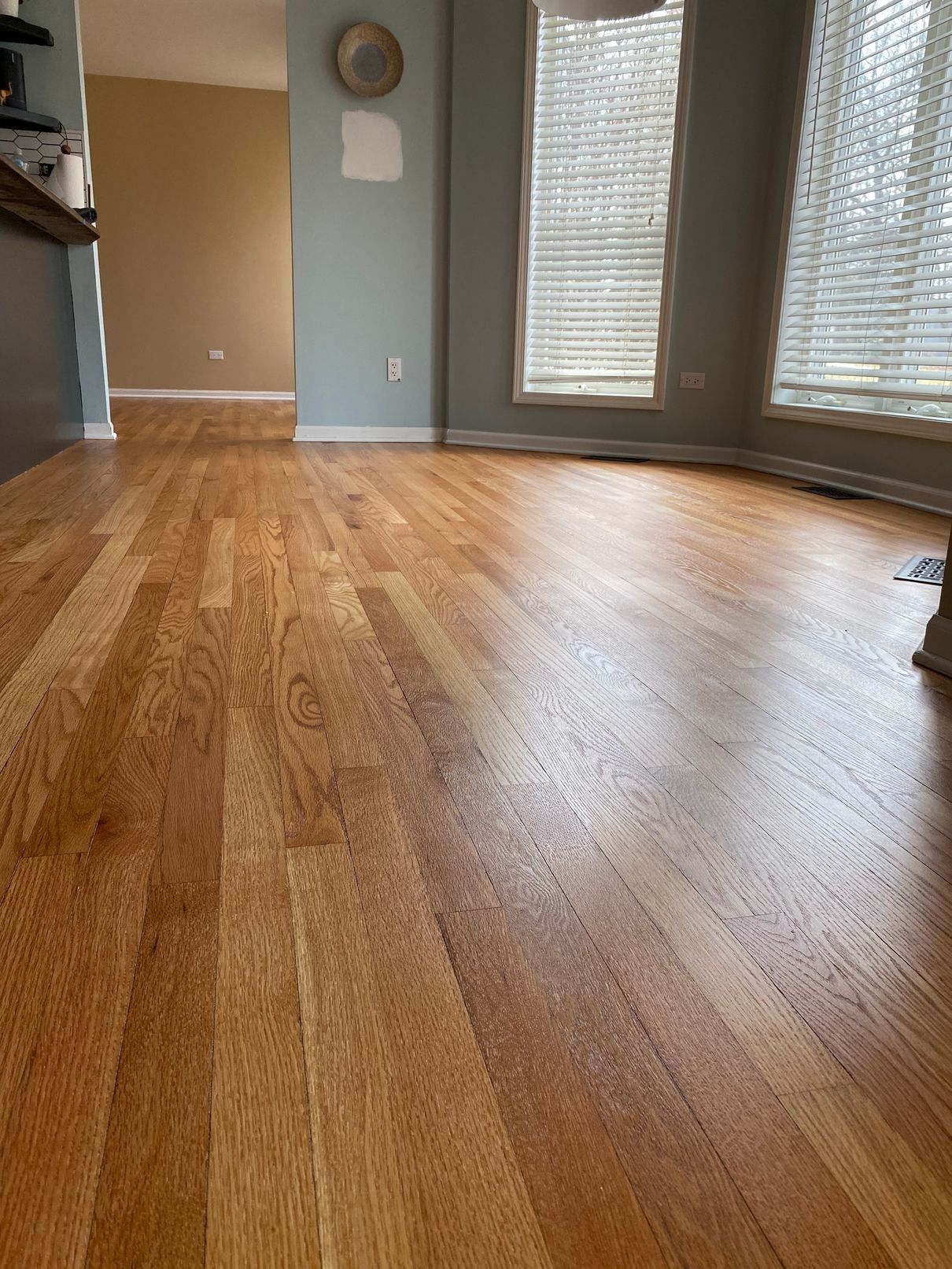
Close view of oak hardwood floors, satin wood floor finish by windows.

Hardwood Floor Stain Colors and Color Matching in Wilmette

Color is what most Wilmette homeowners worry about first when they consider staining: will it look like the sample, is the tone they want actually possible on their wood, and will it tie in with the rest of the house. Here is how we approach color on Wilmette floors, and what is realistic before a drop of stain goes down.

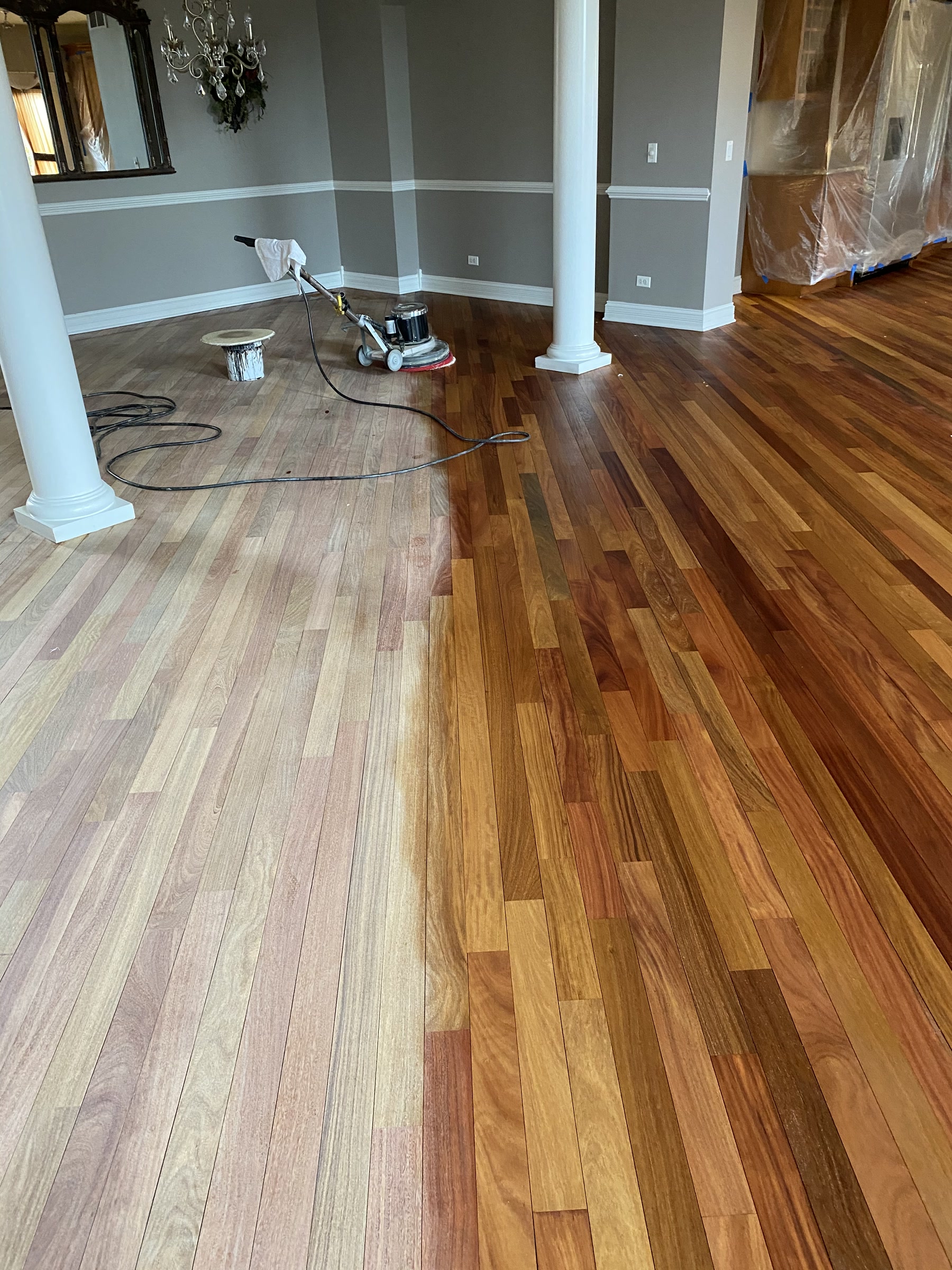
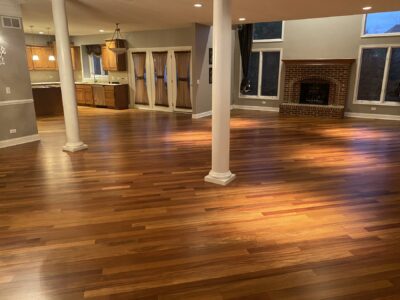
Natural-stained Brazilian cherry floor in the sunlight, Wilmette, IL
  • Moving past orange and amber oak. Wilmette has a lot of older Colonial, Tudor, and Cape Cod homes with red oak floors that have been sitting under an orange or amber finish for decades. We can shift that toward a natural, greige, or deeper brown tone, and we show you exactly how far the color can travel on your specific floor, because the wood underneath still has a say in the final result.
  • The honest truth about gray and white on red oak. Red oak has a natural pink undertone that works against true gray and white stains. On older Wilmette floors, that undertone can make a cool gray read pinkish or come out uneven. We tell you upfront whether your floor can reach the tone you want, and when a slightly warmer shade or a different finishing system will give you a cleaner, more consistent look.
  • Matching floors to the rest of your home. Older wood fades and shifts near large windows over time, so a color card match is not realistic on aged floors. We sand a test area, look at the result in your actual lighting, and adjust for your wood species, age, and existing finish before we commit to anything.
  • Even color on vintage or mixed wood. Many Wilmette homes have floors that were repaired or patched at different points over the years, and older oak, maple, and pine all absorb stain at different rates. Careful bare-wood prep and a wood conditioner where the grain calls for it keep the color from going blotchy or uneven across the room.
  • Stain versus a clear natural finish. Sometimes the right call for a Wilmette floor is not a stain at all. A clear finish can brighten and refresh the wood without fighting its natural tone. We help you decide whether to deepen the color, neutralize old orange, or let the wood read close to natural.
  • Low-odor options near the village center. For homeowners in multifamily or rental buildings near the Metra station and Green Bay Road corridor, we use low-VOC stains and finishes and plan ventilation carefully, so the color change is manageable in a building with shared hallways and less airflow.

Whatever color direction you are leaning toward, we test it on your actual floor first, so the shade you approve is the shade you get. If your wood cannot reach the tone you have in mind, we tell you that before any stain goes down, not after.

Natural Stain on Brazilian Cherry in Wilmette, IL

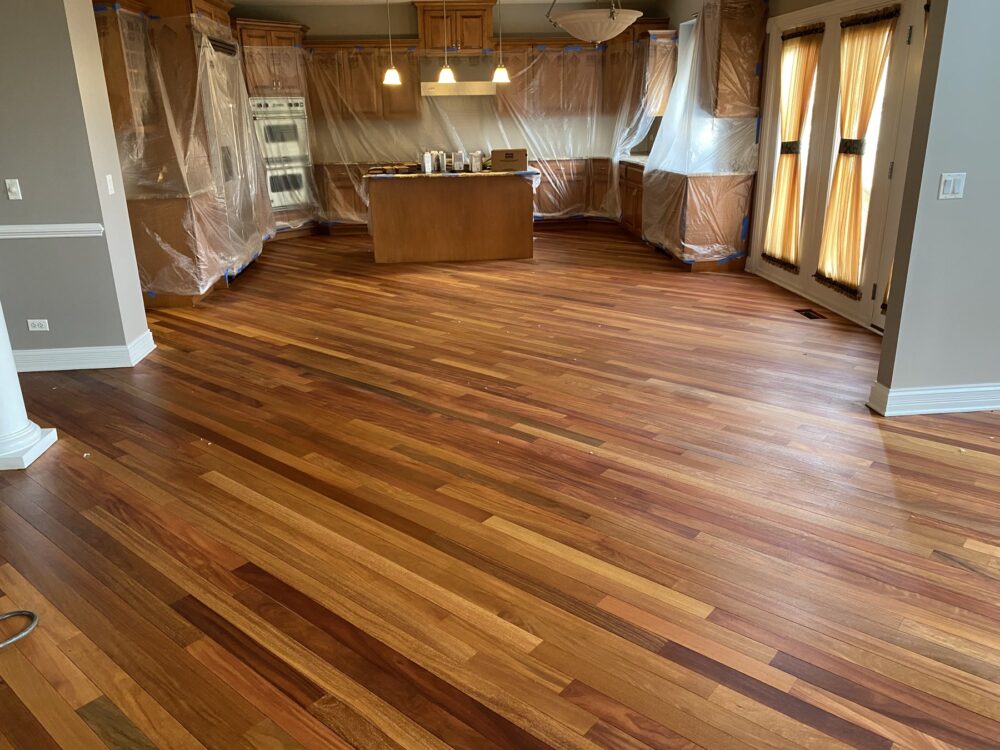
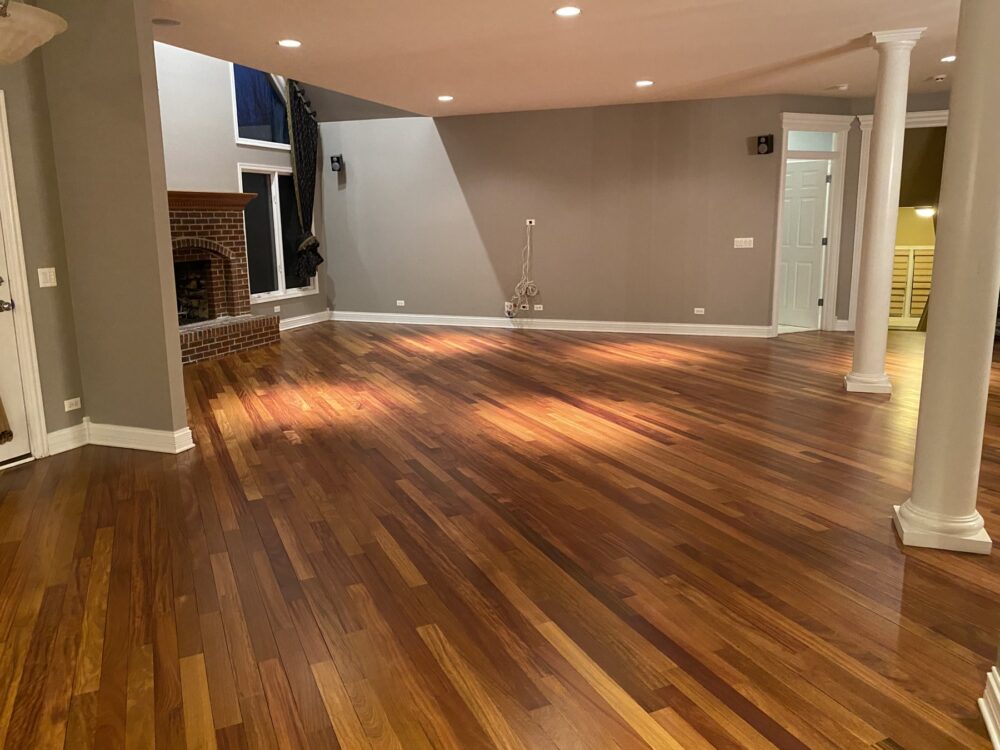
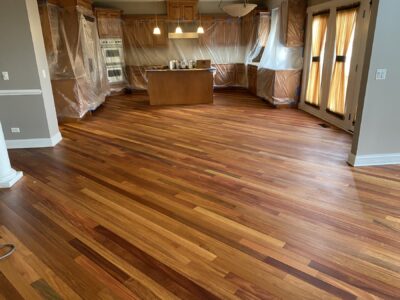
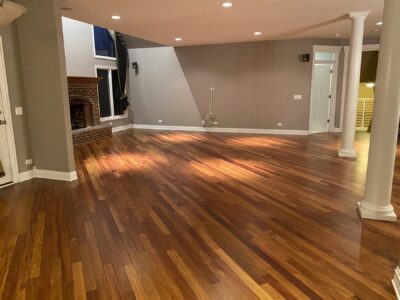
A natural stain on a Brazilian cherry floor in Wilmette, IL, sealed with Loba 2K Duo. The natural finish deepens the wood's own red-brown tone across the open great room and main level.

Location
Wilmette, IL
Wood
Brazilian Cherry
Stain / Color
Natural
Finish
Loba 2K Duo

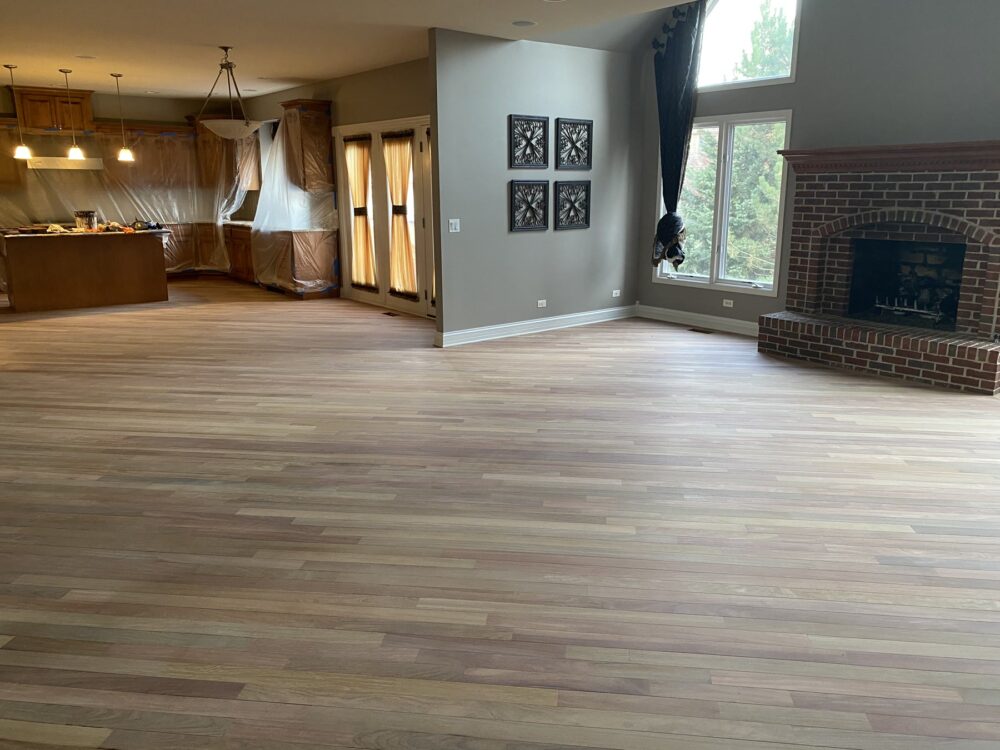
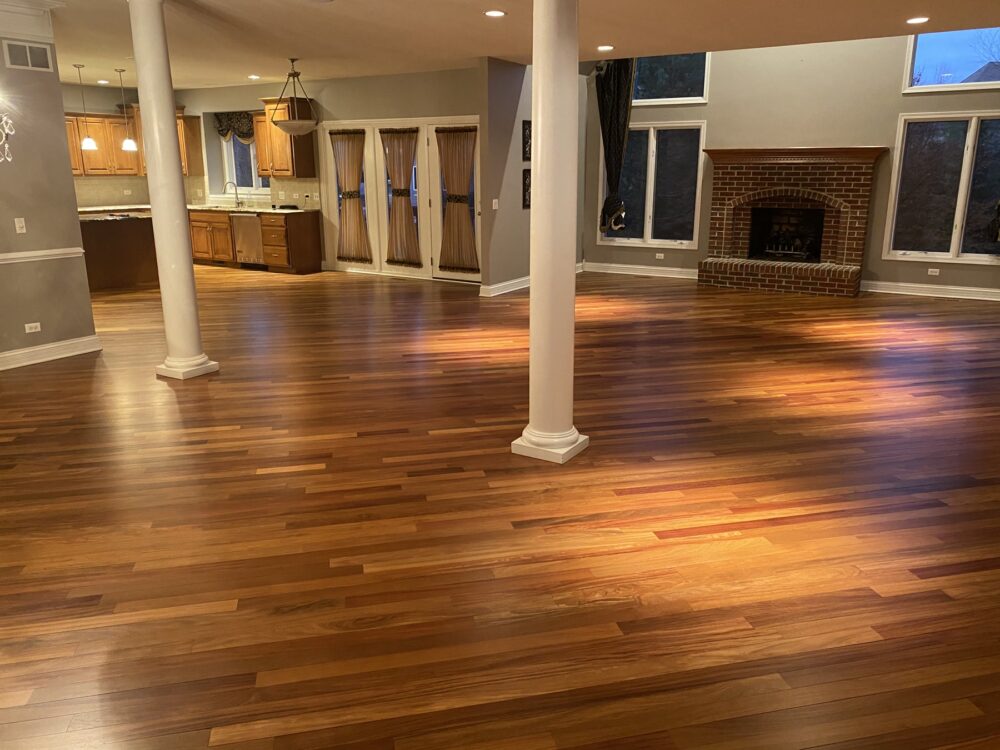
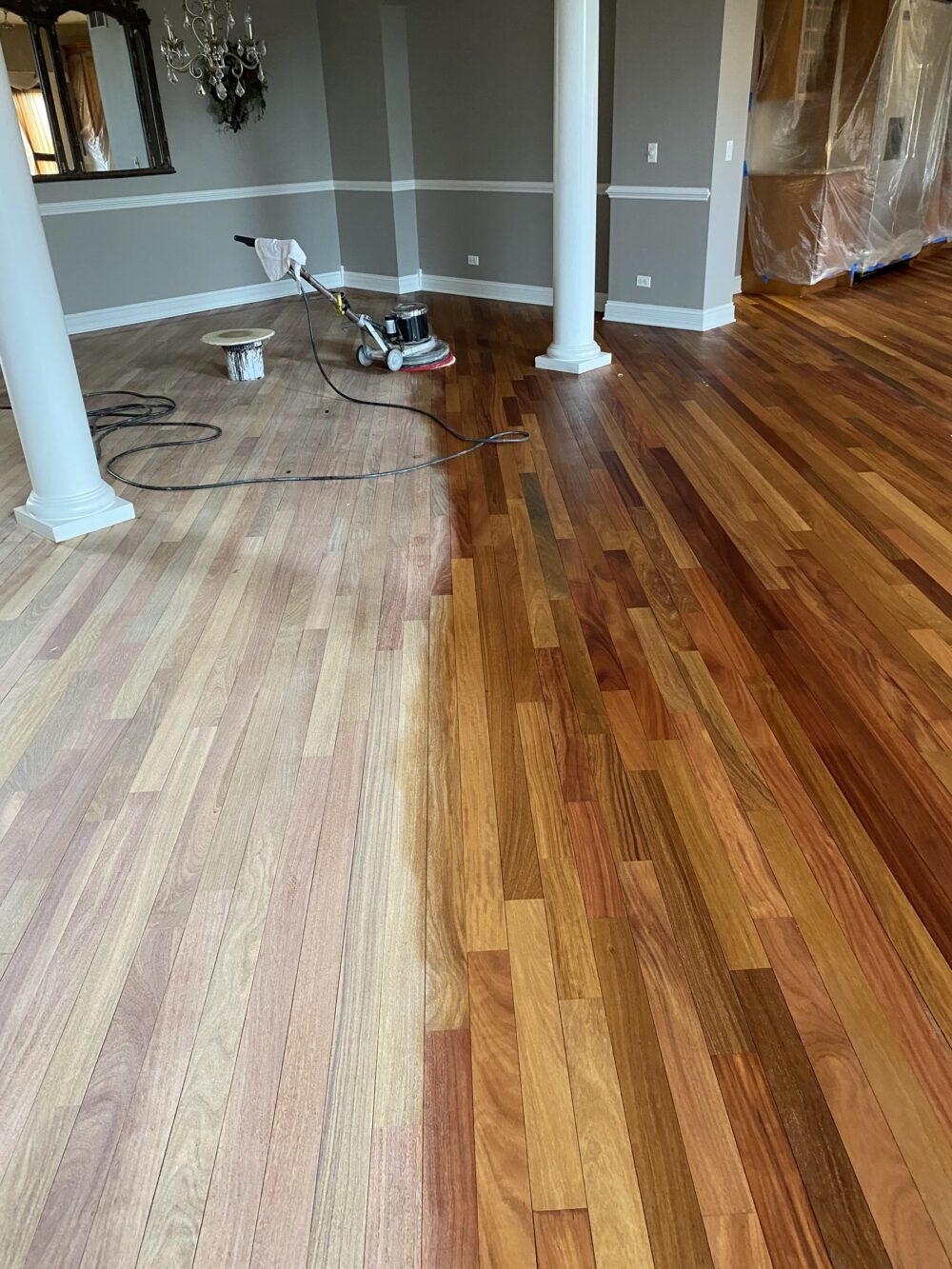
Before & After: Brazilian Cherry Floors Refinished Natural — Wilmette, IL

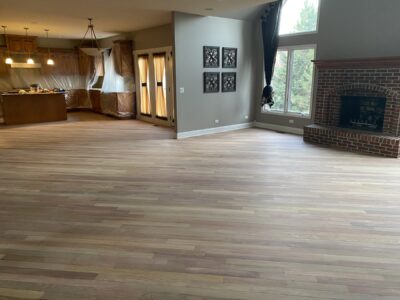
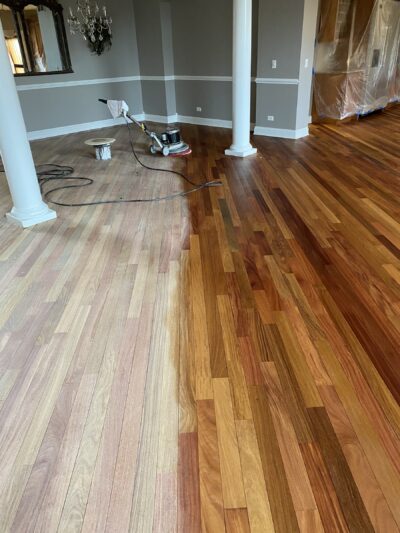
Great room with brick fireplace and open kitchen, dull Brazilian cherry floor before finishing, Wilmette, IL Brazilian cherry floor with natural stain, great room with columns, Wilmette, IL
The great room's Brazilian cherry went from a dull, worn surface to a rich natural red-brown after sanding and a natural Loba 2k Duo finish.

Ready to breathe new life into your hardwood floors?

contact big bro hardwood

Our Hardwood Floor Staining Process in Wilmette, Illinois

Our process is simple and fully managed: clear scheduling, dust-controlled work, and straightforward communication. We handle prep, sanding, color testing, and finish application, so hardwood floor sanding and staining in Wilmette, IL feels organized, not stressful.

Timeline at a glance for hardwood floor staining:

≤300 sq ft
2 to 3 days
800 to 1,200 sq ft
3 to 5 days
  1. Inspect and Plan

    We start with the condition of the existing hardwood flooring, not just the color. We look at the species, the previous finish, visible scratches, areas of heavy wear, and whether the floor is in poor condition anywhere. You get a clear scope, stain direction, and a free estimate before work begins.

  2. Protect the Room and Prep the Area

    Before the sanding process starts, we protect the work area and plan for furniture, nearby rooms, and traffic through the home. Good prep helps control dust, protects adjacent surfaces, and keeps the job cleaner in lived-in Wilmette homes, especially around doorways, trim, and transitions to stairs.

  3. Sand to Bare Wood

    For stain to absorb correctly, the floor has to be taken back to bare wood. We remove the old previous finish, level out wear patterns where possible, and prep the surface with the right proper equipment so the new stain goes on more evenly. This step matters most in high traffic areas where old finish and color usually break down first.

  4. Test the Stain and Confirm the Color

    Color is confirmed on your sanded floor, not from a screen. See the stain-colors section above for how we test it in your light. If your floor is maple or pine rather than oak, we flag it early: these woods can blotch under stain, so we test first and use a wood conditioner where needed before any color goes down. We also seal the test area so you see the color the way it will actually look under finish, not raw stain, since a topcoat shifts the tone once it goes on.

  5. Apply Stain and Protective Finish

    Once the color is approved, we apply the stain and follow with the selected finish system. The exact steps can vary depending on the floor, the color, and the finish choice, but the goal is always the same: even color, a cleaner look, and a more durable surface for daily use. This is where the floor starts to show its natural beauty again. This is also where you pick the sheen: matte, satin, or semi-gloss, which changes how much the floor reflects light and shows everyday wear. We walk you through water-based finishes, which stay clear over the years, versus oil-based, which adds warmth but ambers as it ages: worth knowing if the whole point is getting away from orange tones.

  6. Final Check and Care Guidance

    At the end of the job, we review the finished floor with you and go over what happens next. We explain when to walk on the floor, when to move furniture back, and how to protect the new finish from early wear, moisture, and accidental damage like spills immediately after the work is completed. Light foot traffic is usually fine in about 24 hours, but keep furniture off for 48 hours and lift it into place rather than dragging it. The finish keeps hardening for three to four weeks, so go easy on rugs, tape, and heavy loads until it fully cures.

Why Wilmette Homeowners Choose Big Bro Hardwood for Floor Staining

Staining hardwood floors is not just picking a color from a chart. In Wilmette, where so many homes have older oak, maple, and other wood species with decades of character, the company you choose shapes everything about the result. Here is what we bring to every project.

Prep and Sanding Come First

A stain can only perform as well as the surface beneath it. Before any color goes down, we sand the floor back to clean, bare wood using our Atomic Dust Containment System with HEPA-filtered vacuums, capturing roughly 95-98% of dust. We address worn spots, old finish buildup, and surface inconsistencies so the wood is genuinely ready to absorb color evenly rather than just coating over problems.

Staining Matched to the Wood Species

Red oak, white oak, and maple each respond to stain differently, and older floors in Wilmette homes add another layer of variability. We look at the species, grain pattern, age, and how the floor sanded before we choose an approach. Maple can resist penetration and show blotching without the right prep, while red oak carries a natural pink undertone that can fight certain gray tones. We account for all of that before the stain touches the floor.

Natural Variation Explained Up Front

Wood is not uniform, and we never pretend otherwise. Grain density, mineral streaks, board age, and past repairs all affect how stain settles across a floor. On the older homes throughout Wilmette, this is especially common near windows where sun has faded the wood over the years. We walk you through what to realistically expect before you commit to a color, so there are no surprises once the finish dries.

Even Color Across Rooms and Transitions

Getting consistent color from room to room takes planning, not just the same product applied everywhere. Lighting changes, board age differences, past repairs, and varying finish thickness can all shift how a stain reads in different parts of the home. We sequence the work carefully and give careful attention to doorways, hallways, and transitions so the color flows naturally rather than looking like separate jobs pieced together.

Clear Pricing and Predictable Scheduling

We tell you upfront what the project includes, what the timeline looks like, and what factors could affect either one. Most staining projects run roughly 2-4 days from sanding through initial finish coats, depending on room size, floor condition, and color testing. No vague estimates and no surprises mid-project. If something about the floor condition changes the scope, we say so before we proceed, not after.

Custom Colors Without Guesswork

Choosing a stain tone involves more than picking light, medium, or dark. Undertone, warmth, and how the color reads under your specific lighting all matter. We test stains directly on your sanded floor before committing, so you can see exactly how a greige, deeper brown, gray, or natural tone will look on your actual wood, not just on a sample chip. That step is what keeps the final result from reading too orange, too pink, or too flat once the finish coats go on.

star star star star star
Kelly McKissack
Kelly McKissack
20:50 29 Apr 19
Big Bro Hardwood did an exceptional job refinishing our hardwood floors. The quality of work was wonderful and the customer service was great. They provided many stain samples for us to choose from, replied to my messages quickly, started/finished the work when they said they would, and kept my home very clean. I highly recommend them!
Read more
READ ON GOOGLE
Dark refinished hardwood floor

Get your free estimate today

Contact Us

Frequently Asked Questions

Most Wilmette homes have older red oak floors. Can those floors be stained a modern color?

Yes, and we do it regularly in Wilmette’s Colonial, Tudor, and Cape Cod homes. The honest part: red oak has a natural pink undertone that resists true gray and white stains. It can read blotchy or pinkish if the stain is not chosen carefully. We sand the floor back to bare wood, then test stain colors directly on your floor before committing. Greige, deeper brown, and natural tones tend to work beautifully on red oak. We tell you upfront what is realistic for your specific floor.

Wilmette winters are hard on floors. How does the climate affect the staining process?

The cold winters, humidity swings, and lake moisture common in Wilmette can cause hardwood to cup, gap, or show surface wear over time. We assess the floor’s condition before anything else. If there is cupping or old finish buildup, we address that during sanding so the stain goes onto clean, flat bare wood. Temperature and humidity in your home also affect dry times after staining, so we factor that in when planning your project timeline.

My Wilmette home has floors near large south- or east-facing windows. Can you match the faded sections to the rest?

A perfect match off a color card is not realistic when wood has aged and faded unevenly near windows. What we do is sand a test area, look at how your specific wood takes the stain under your actual lighting, and adjust from there. Older floors in Wilmette homes often have years of sun exposure, previous finishes, and past repairs that all affect the final color. We work to get the floor as consistent as possible and are honest when a slight variation will remain.

I live near the Wilmette village center in a condo or multifamily building. Can you stain floors in that kind of space?

Absolutely. We use low-VOC, low-odor stains and finishes that are well suited for condos and multifamily buildings. We plan around HOA quiet hours, protect shared hallways and elevator surfaces, and make sure ventilation is set up properly. Keep in mind that drying and curing can take a little longer in spaces with less airflow, so we build that into the schedule. If your building has specific rules, let us know early and we will work around them.

Can my red oak floors go gray or white-washed?

Sometimes, but we want to be straight with you. Red oak’s pink undertone actively fights cool gray and bright white stains. The result can look muddy, uneven, or still pinkish rather than the clean gray you see on a sample card. In some cases a white-oak-style finish system gives a cleaner result. We test the actual stain on your sanded floor before you commit to anything. If the gray you want is not achievable on your species, we will say so and show you tones that actually work.

How long does a hardwood floor staining project take in Wilmette?

Most projects run about 2-4 days from sanding through the first finish coats and initial dry time. The exact timeline depends on room size, the condition of the floor, how much color testing is needed, and the finish system we use. Light foot traffic is usually fine after roughly 24 hours, though the floor is still curing and scuffs easily. We recommend keeping furniture off for about 3 days and holding off on area rugs until the floor is fully cured. You can get a rough cost estimate with our cost calculator.

Do you test stain colors on my actual floor, or just show me samples?

We test directly on your floor. Sample cards and chips are a starting point, but the color you see on a sample board can look completely different on your wood once it is sanded. Species, grain, age, and your home’s lighting all change how a stain reads. We sand a small area, apply the stain options you are considering, and let you see the results in your actual space before we commit to the full floor. No guessing, no surprises after the whole floor is done.

How do I take care of a freshly stained floor in Wilmette?

For the first few days, keep it simple. Light foot traffic after about 24 hours is usually fine, but the floor is still curing and marks easily. Keep furniture off for roughly 3 days and skip area rugs until the floor is fully cured. After that, sweep or dust-mop regularly, wipe up spills right away, and use a vacuum on the bare-floor setting. Avoid wet mops and steam mops entirely. Felt pads under furniture legs go a long way toward protecting the finish and keeping your floors looking good for years.

How long will stained hardwood floors last before they need redoing?

Stain soaks into the wood, so the color doesn’t wear off, only the clear finish on top does. Plan on 7 to 10 years before a full re-sand, with an optional recoat (buff, fresh clear coat, no sanding) every 3 to 5 years in high-traffic areas to stretch that further. You’d only re-stain to change the color.

Are there floors you won't stain?

Yes, and we’ll say so up front. We won’t stain over a solid floor that’s been sanded down too many times, or boards cupping or gapping from moisture (that has to be fixed first); deep pet or water stains usually mean a board needs replacing, not staining over. In those cases we recommend refinishing-only or replacement instead.

Hardwood floors in sunny room

Request Free
Appointment!

WE ARE AVAILABLE TO PROVIDE YOU WIDE RANGE OF HARDWOOD FLOORING SERVICES

Get a free quote