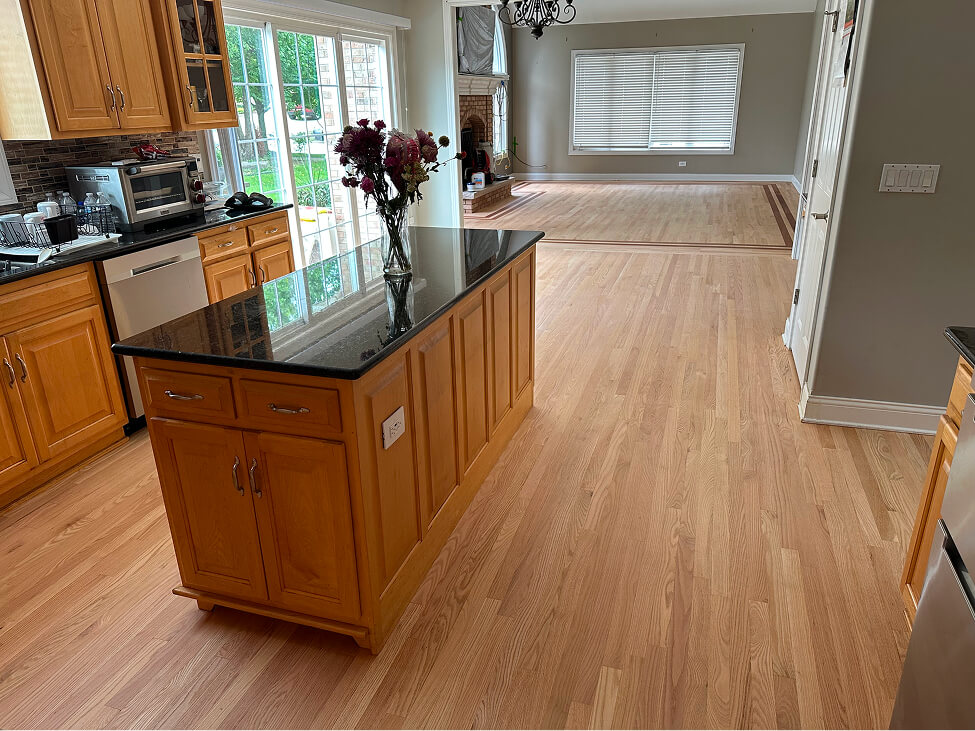
Local Hardwood Flooring Installers in Naperville


We’re Big Bro Hardwood, an owner-operated crew of hardwood floor installers with 17 years of experience working throughout Naperville and the surrounding suburbs. We’ve installed floors in mid-century ranch homes in the older central subdivisions, two-story colonials from the 1980s and 1990s master-planned communities, and newer executive-style builds in the southern and western parts of the city. Every home is different, so we match the installation method to what’s actually under your feet, whether that’s nailing into a wood subfloor over joists or gluing and floating engineered planks over a concrete slab.
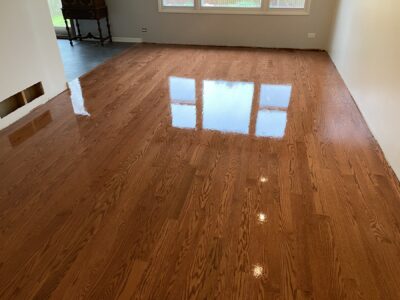
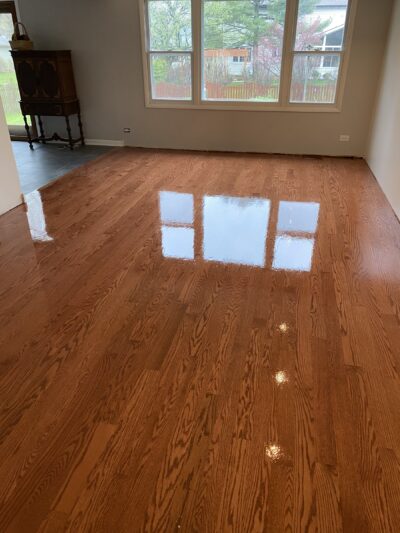
Red oak is the species we find most often in Naperville’s older homes, and it’s still a great floor when it’s done right. We also install the full range: white oak, maple, hickory, walnut, engineered boards in a wide variety of veneers, and exotic species like Brazilian cherry when that’s the direction you want to go. Whatever the species, whatever the subfloor, we treat every Naperville installation the way we’d want it done in our own home, carefully, cleanly, and without cutting corners.
Hardwood Floor Installation Service Highlights
80% of Clients Refer Us
Loose Subfloor and Squeak Repairs
Baseboards and Shoe Molding
Most installs in 1–3 days, Dust-Controlled*
* Timeline depends on square footage and complexity; dust control minimizes, but doesn’t eliminate dust or odors.
Why Hardwood Suits Naperville Homes
From the historic core near Naper Settlement to the newer subdivisions along the western and southern edges, hardwood is one of the best flooring choices Naperville homeowners can make.
- Built to last for generations. Many mid-century and late-20th-century homes in Naperville already have original red or white oak underfoot. A quality nail-down installation done right can be sanded and refinished multiple times, making it far more cost-effective over the long run than replacing cheaper flooring every decade.
- Made for Naperville's seasons. The area swings from cold, dry winters to hot, humid summers. Properly acclimated solid and engineered hardwood handles those humidity shifts better than most flooring options, staying flatter and tighter when the HVAC is running hard in January or July.
- Cleaner air in older homes. Carpet traps dust, pet dander and allergens, especially in homes with older ductwork. Low-VOC finishes from brands like Bona and Loba give you a hard surface that supports better indoor air quality once cured.
- Engineered wood where moisture is a factor. Naperville's clay soils and higher rainfall mean basement moisture is a real concern. For slab-on-grade areas, kitchens and concrete subfloors, glued-down or floating engineered hardwood is the right call, always with moisture testing done first.
- Works with radiant heat. Engineered and select solid floors can be installed over radiant heating systems when the work follows the manufacturer's guidelines, a good fit for the premium builds common in Naperville's newer custom homes.
Our Hardwood Floor Installation Process in Naperville
Our process is simple and fully managed: clear scheduling, dust-controlled work, and transparent communication. We explain each step upfront, handle prep and logistics, and keep your wood floor installation in Naperville low-stress.
Timeline at a glance:
≤300 sq ft
1–2 days
800–1,200 sq ft
3–5 days (prep/acclimation may add time)
1
1. Measure & Plan
On-site measure and goals; we confirm solid vs engineered wood flooring, plank width/finish, room layout, and the correct installation method. You receive an itemized bid and schedule. (Indoor targets: 60–80°F, 30–50% RH per NWFA/manufacturer.)
2
2. Subfloor Inspection and Preparation
Removal of old flooring, moisture checks (wood 6–9% MC; concrete subfloors via RH or CaCl testing if required), squeak fixes, leveling, and base prep. Flatness target: ≤ 3/16″ over 10′ (or 1/8″ over 6′). Underlayment and vapor barriers installed as specified in your bid.
3
3. Layout & Acclimation
Board direction, room transitions, and patterns (e.g., herringbone or chevron) are planned for balanced visuals and minimal waste. Product acclimation is verified by moisture readings on site, following manufacturer and NWFA requirements before installation.
4
4. Install — Method Matches the Base
Nail-down installation on wood subfloors; glue-down installation for concrete, wider planks, or patterns; floating installation where engineered wood makes the most sense. Proper expansion gaps and flush, safe transitions are maintained.
5
5. Finish & Details
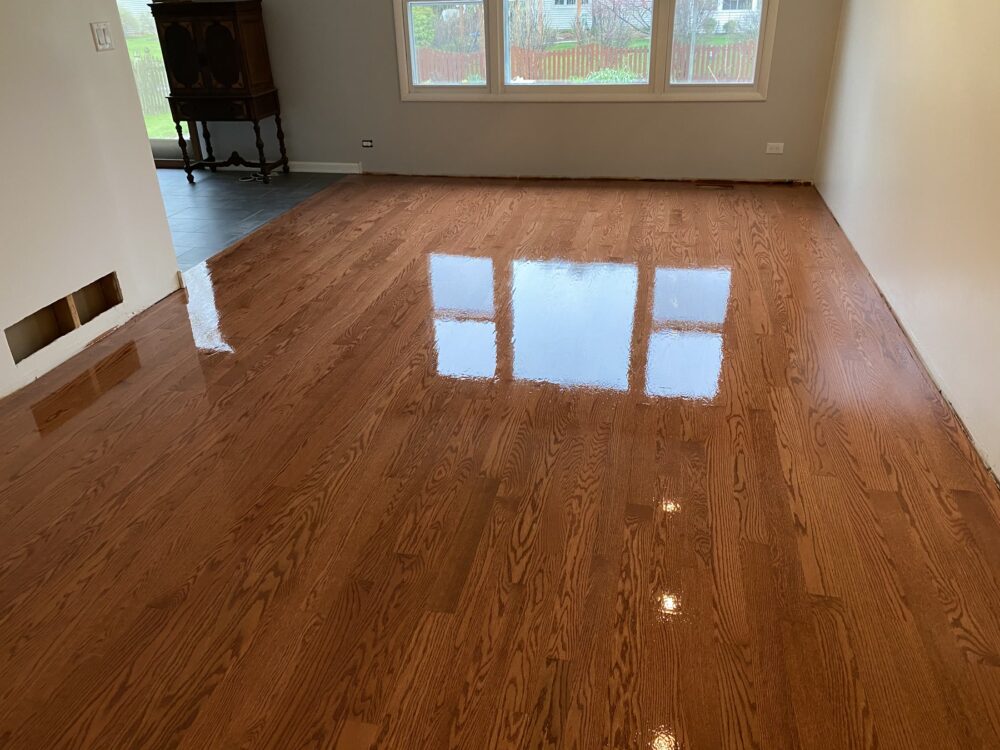
Prefinished floors allow light foot traffic the same day. Site-finished floors are sanded, stained, and coated with guidance on furniture and rug timing. Stairs, treads, thresholds, baseboards, and shoe molding are completed as outlined in your scope.
6
6. Final Check & Handoff
We inspect together, complete quick touch-ups, share simple care guidance, and confirm when to move furniture and rugs back into place.
Hardwood Installation Cost in Naperville
Pricing for hardwood flooring installation in Naperville depends on method, square footage, and subfloor condition. The table below shows transparent labor rates from our Naperville flooring company to give you a clear starting point before an on-site visit.
| Package / Method | Typical Use | Labor from* | Includes (labor) | Not Included |
| Nail-Down | Houses, 1st/2nd floor | $3.5–$6.5 / sq ft | Layout, nailer setup & fastener install; shoe molding install | Demo & disposal, subfloor leveling, new plywood |
| Glue-Down | Condos, basements | $5.5–$9.5 / sq ft | Adhesive application (trowel & roll-in); rolling | Moisture barrier, acoustic underlayment (IIC) |
| Floating | Fast installs, rentals | $3.0–$5.5 / sq ft | Click/lock assembly; underlayment install | Transitions, premium sound mats |
| Stairs (tread + riser) | Any | $150–$300 per step | Cut-to-fit & install; nosings; adhesives | Handrails, balusters |
*Pricing shown is labor-only. Final itemized quote is provided after an on-site visit and moisture testing by our flooring contractors; materials and extras (flooring, adhesive, underlayments, moisture mitigation, leveling, HOA acoustic underlayment, trims) are billed separately as line items. Inclusions and exclusions are defined line by line in your bid by our hardwood flooring contractor.
Add-ons:
$1–$3 / sq ft.
Old floor removal
$1–$3 / sq ft.
Subfloor leveling
$0.7–$1.5 / sq ft.
Moisture barrier
per bid
Baseboard/shoe
Why Naperville Homeowners Choose Big Bro Hardwood for Their Floor Installation
In Naperville, where homes range from mid-century ranches to newer executive builds, the right installation company makes a real difference. Choosing the correct method, catching subfloor problems early, and controlling the scope from day one is what separates a floor that performs for decades from one that causes headaches by spring.
Subfloor & Moisture First
Every installation we do starts below the surface. Before a single board goes down, we test and log moisture levels in both the subfloor and the incoming flooring material. Naperville’s clay soils and seasonal humidity swings make this step especially important, particularly in homes with basements or slab-on-grade areas. We correct any unevenness, address fastening issues in older pine subfloors, and choose the right underlayment or adhesive so the finished floor stays flat, tight, and quiet for years.
New Flooring Coordinated With Existing Floors
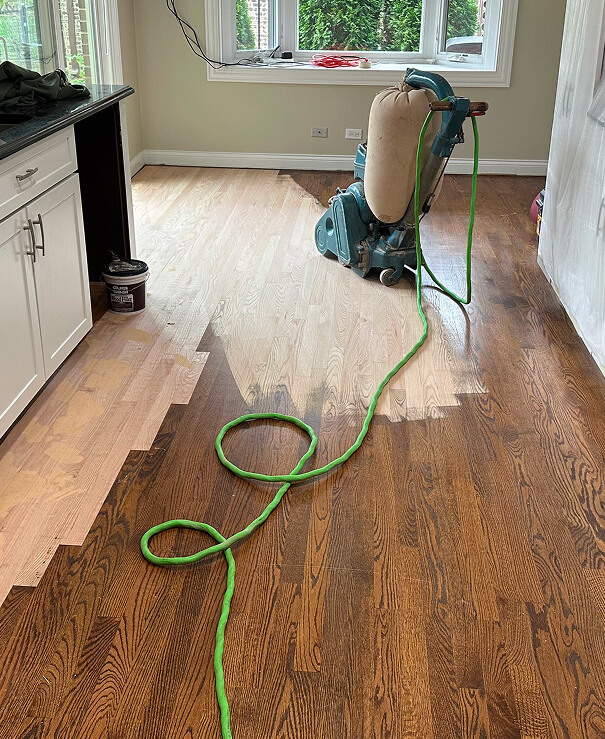
Adding hardwood to one room rarely happens in isolation. A new floor in a family room almost always meets an older hallway floor or a kitchen threshold. We look at species, plank width, board direction, finish sheen, and floor height before we plan any transition. Matching existing floors takes more thought than most people expect, and when site-finishing is part of the project, we explain honestly whether a seamless blend is achievable or whether some natural variation between old and new wood should be anticipated.
Acclimation Verified Before Installation
We do not pull flooring off the truck and start nailing the same morning. Boards need to reach equilibrium with the conditions inside the home first, and we verify that with actual moisture readings rather than a fixed number of days on a calendar. Wider planks and solid hardwood are especially sensitive to this step. Skipping it in a Naperville home, where indoor humidity can swing significantly between a heated January and a humid July, is one of the most common causes of gaps, cupping, and board movement after installation.
Method Matched to Your Base
We choose the installation method based on what is actually under the floor, not out of habit. Nail-down over wood subfloors is the right call for most above-grade rooms in Naperville’s older and mid-century single-family homes. Glue-down engineered hardwood is what we specify for concrete slabs and wider-plank situations. Floating systems make sense in certain condo and townhome settings where HOA rules and concrete subfloors are both in play. Every method gets the correct expansion gaps and clean transitions from the start.
Local Proof: 80% Referrals
Roughly 80% of our work comes from referrals and repeat clients. That number matters because it reflects what happens after the job is done, not just during the sales process. Homeowners across Naperville and the surrounding suburbs have sent us to their neighbors, their family members, and their real estate agents. We have 500-plus completed projects and a 5.0 review rating to back that up, and we are happy to point you toward references if you want to hear directly from past clients.
17+ Years, Owner-operated
We have been installing hardwood floors since 2008, and the ownership is still on the job site. That means the person responsible for the quality of your floor is the same person swinging the nailer or rolling the adhesive. No subcontractors, no handoffs. Whether the project is a single bedroom, a full-home install, or a staircase with custom transitions, an experienced crew that answers directly to the owner handles it start to finish.
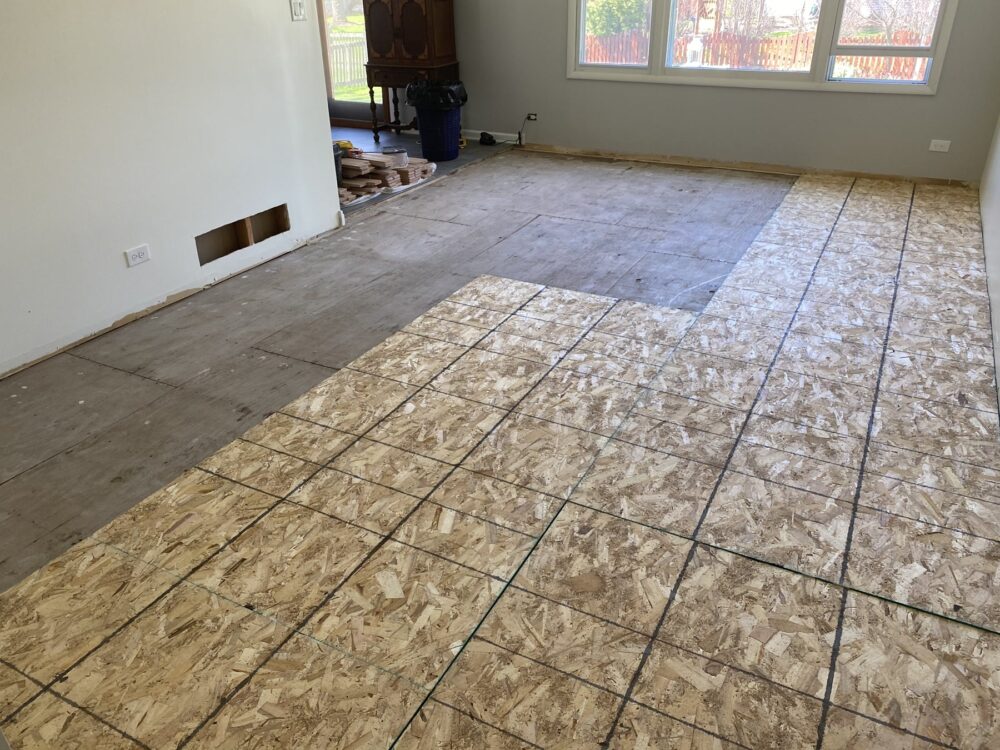
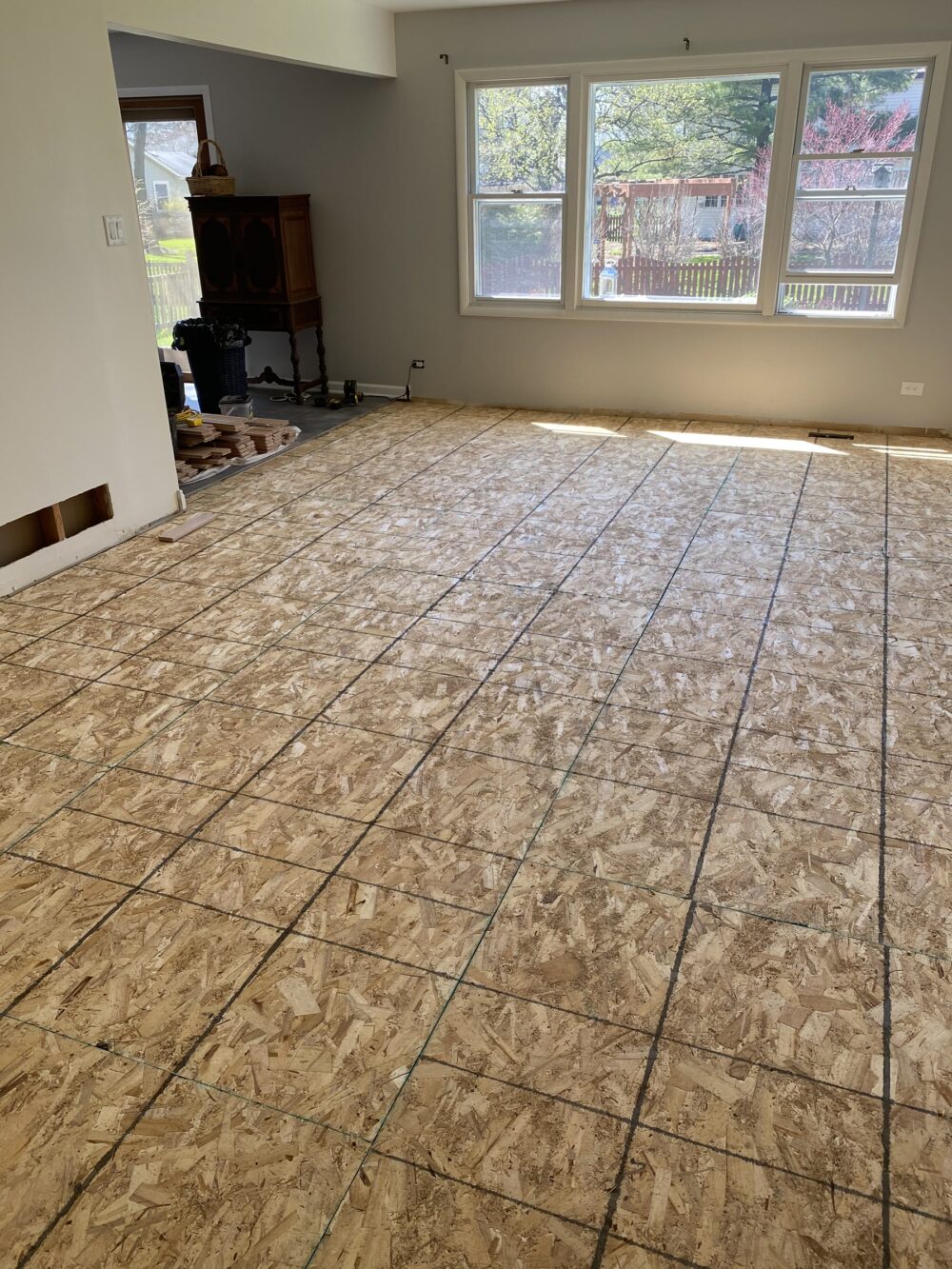
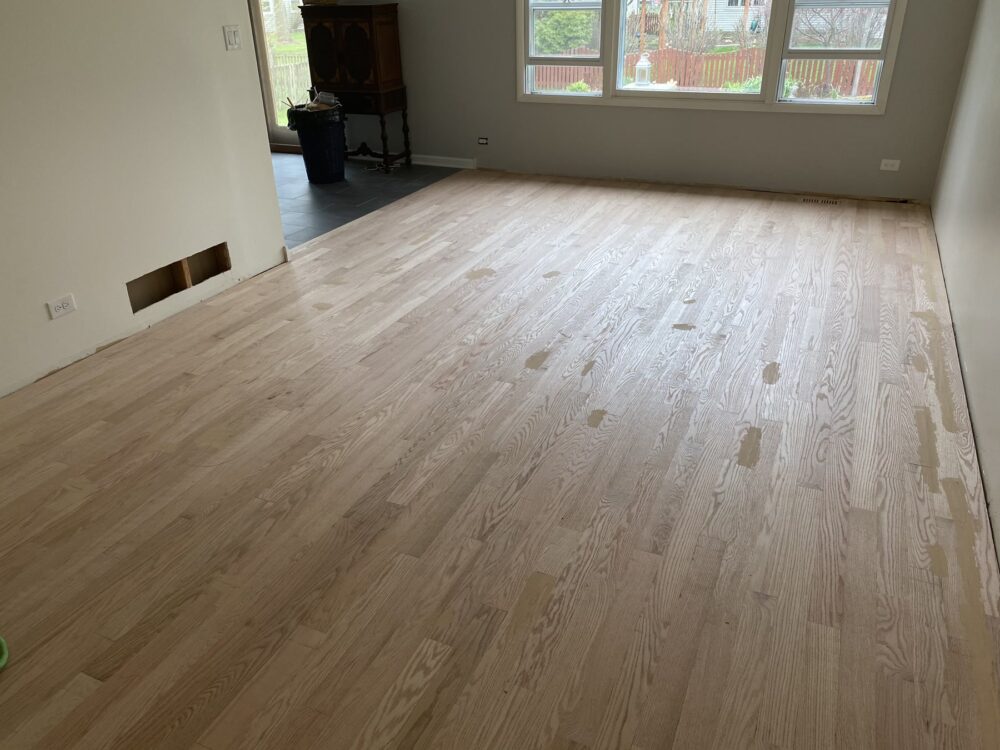
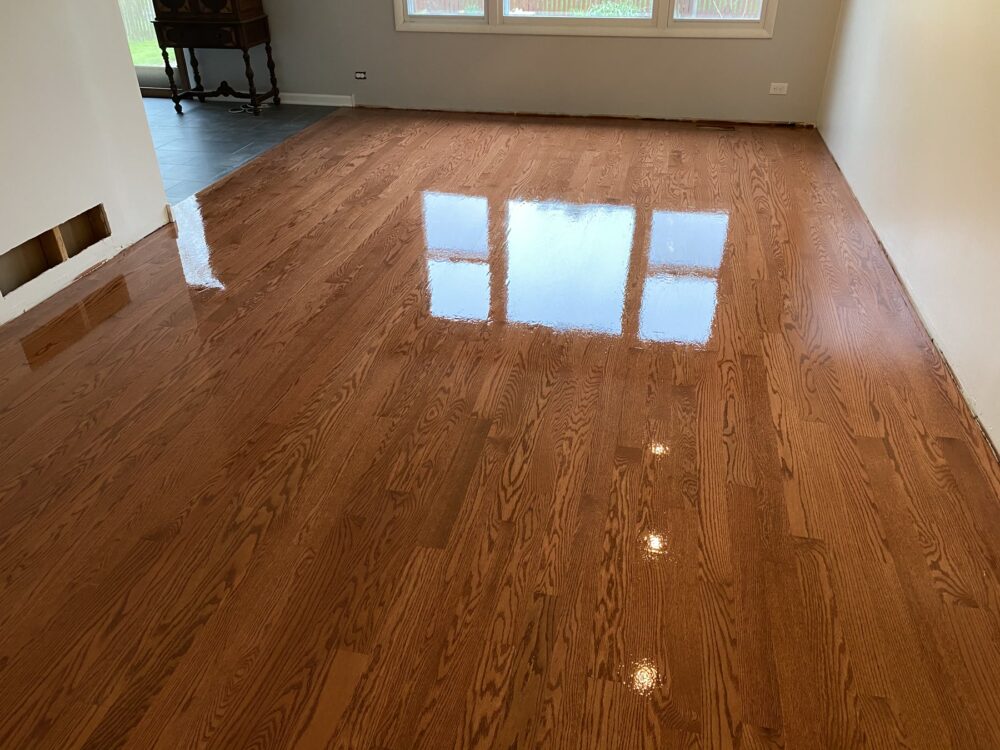
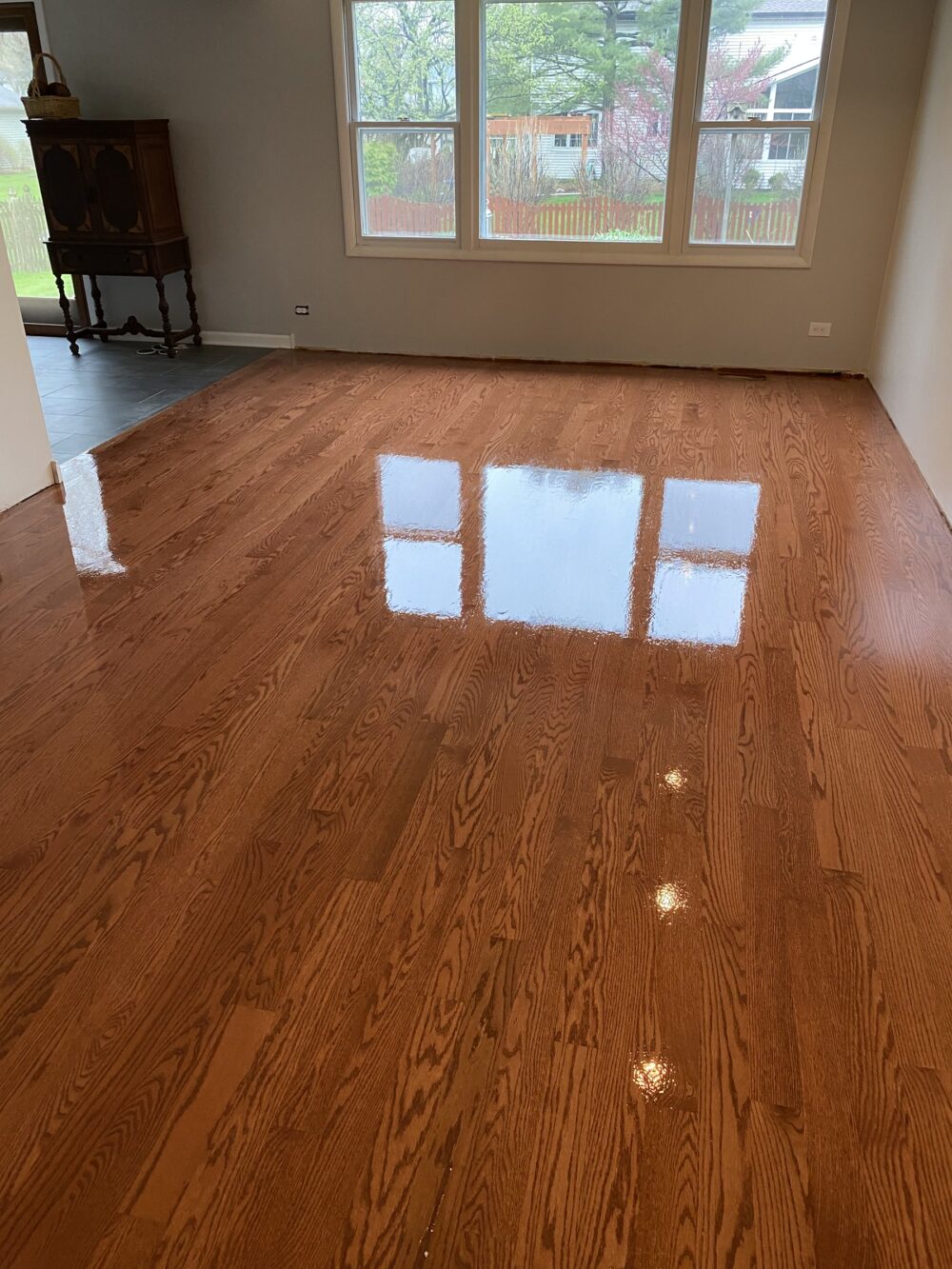
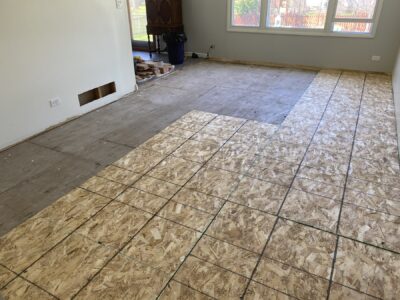
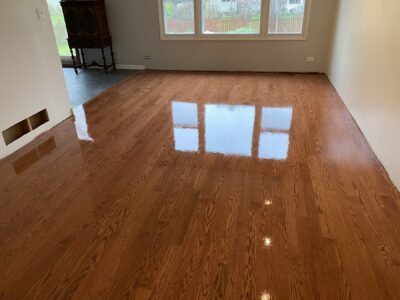
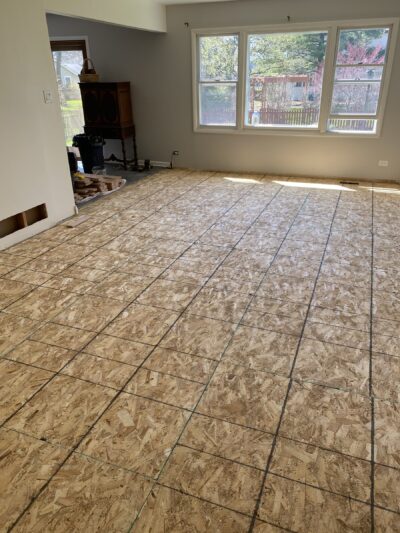
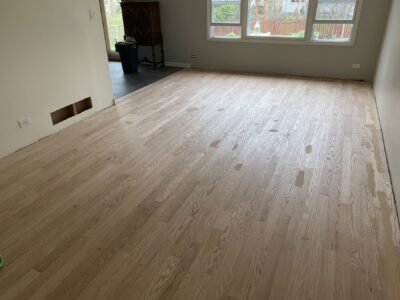
Before and After
Ready to breathe new life into your floors? Get a free estimate today!
contact big bro hardwoodInstalling Hardwood in Naperville Homes: What We Run Into, and How We Handle It
Naperville has a wide range of housing stock, from 19th-century homes near the historic core to large master-planned subdivisions built just a few years ago. No two subfloors are the same. Here is what we typically find, and how we handle each situation before the first board goes down:
- Mid-century ranch and split-level homes. Older subdivisions in central and eastern Naperville often have pine or mixed-softwood plank subfloors over full basements. These are well-suited for nail-down solid hardwood, but years of settling can leave the surface uneven. We spot-level low spots and fasten any loose planks before installation starts, so the finished floor lies flat and stays quiet underfoot.
- 1980s-2000s two-story colonials and executive homes. Many of the larger homes in Naperville’s master-planned communities were built with OSB or plywood subfloors over engineered I-joists. These usually support a standard nail-down or staple-down installation well. We check for moisture and humidity swings first, since these homes can see significant seasonal movement between dry winters and humid summers.
- Condos and townhomes near commercial corridors. Upper-floor units often sit on concrete subfloors poured over steel decking. We use glue-down or floating engineered hardwood here, and we handle the building requirements: a sound-rated underlayment matched to your HOA’s IIC rating, certificate of insurance, elevator scheduling, and quiet-hours compliance. We put the spec sheet together so you are not doing that legwork.
- Older layered floors. Pull back the carpet in a pre-1980 Naperville home and you may find old tile, mastic adhesive, or several finish layers stacked up. We assess the full removal scope before any work begins. Anything that may need testing before demo gets flagged at the estimate, not after we have already started tearing things up.
- Seasonal humidity and clay-soil moisture. Naperville’s humid continental climate puts real stress on wood floors. Dry, heated winters and humid summers cause boards to expand and contract. On top of that, clay soils and proximity to the DuPage River make basement moisture a genuine concern in many neighborhoods. We acclimate boards on site, run moisture tests on the subfloor, and leave proper expansion gaps so the floor performs well through every season.
A like-for-like floor replacement in Naperville typically does not require a city building permit, but condo and HOA boards almost always need documentation before work can begin. We prepare the spec sheet they ask for so approvals do not hold up your project.
Whatever is under your floor, our installers have very likely handled it before. We will tell you exactly what we find at the estimate, in plain terms, before any work starts.
Get a free estimate today
Contact Us
Other Hardwood Flooring Services in Naperville
Frequently Asked Questions
My Naperville home was built in the 1960s and has a wood subfloor over a basement. What installation method works best?
Older Naperville ranch and split-level homes from that era almost always have a pine or mixed-softwood plank subfloor nailed over joists, which is ideal for traditional nail-down installation. We inspect the subfloor first, flatten any high or soft spots, and add fasteners where boards have worked loose. Moisture testing comes before anything else, because Naperville’s clay soils and common basement seepage can push humidity up through the floor system. Once the subfloor passes, nail-down solid or engineered hardwood goes in cleanly and lasts for decades.
I live in a Naperville townhome with a concrete subfloor. Can I still get real hardwood floors?
Absolutely. Concrete subfloors are common in Naperville townhomes and condos, and they work well with glue-down or floating engineered hardwood. We test the slab for moisture first, because the area’s higher rainfall and groundwater levels mean slabs here can read high. If moisture is within range, we glue down the engineered boards directly or float them over an appropriate underlayment. We also handle HOA paperwork, sound-rating requirements, elevator scheduling, and quiet-hour planning so the project goes smoothly from start to finish.
Naperville winters are dry and summers are humid. How does that affect my new hardwood floors?
It affects them quite a bit, and we plan for it every time. Wide seasonal humidity swings cause wood to expand in summer and contract in winter. We acclimate your boards on site before installation, leave proper expansion gaps at every wall and transition, and recommend keeping indoor humidity between 30-50% year-round. A whole-home humidifier running through winter makes a real difference. Skipping acclimation is one of the most common reasons floors buckle or gap, and it is something we never cut corners on in Naperville homes.
My Naperville home has radiant heat under the floor. Are hardwood floors still an option?
Yes, with the right product and method. Engineered hardwood is the preferred choice over radiant heat because its layered construction handles temperature-driven movement better than solid wood. Certain solid species and thicknesses can also work, but only when the manufacturer explicitly approves it. We review the specs for your specific radiant system before recommending anything, keep the floor temperature within safe limits during acclimation, and follow NWFA guidelines throughout. If you are unsure what will work, bring us in for a free estimate and we will sort it out on site.
What is the difference between solid and engineered hardwood for a new installation?
Solid hardwood is milled from a single piece of wood and is typically nailed or stapled down over a wood subfloor above grade. It can be sanded and refinished multiple times over its life. Engineered hardwood has a real wood veneer over a stable plywood core, which makes it suitable for concrete slabs, basements, and areas with bigger humidity swings. The subfloor and the room’s moisture levels are what drive the choice, not personal preference alone. We assess both during the free estimate and recommend whichever option will actually perform in your specific home.
How do I get a sense of what hardwood floor installation will cost before committing?
A good starting point is our cost calculator, which gives you a rough labor figure based on square footage and installation method. As a general range, nail-down installation runs $3.50-6.50 per square foot in labor, glue-down runs $5.50-9.50, and floating systems start around $3.00-5.50. Stairs are priced separately at $150-300 per step. Materials, subfloor prep, and any extras are itemized after we visit the job site. We never quote blind, because what we find under the carpet or tile changes the scope every time.
How long does a hardwood floor installation take, and do I need to leave the house?
Most single-room or partial-floor installs finish in one to two days. Larger whole-home projects in bigger Naperville homes can run three to five days depending on prep work and layout complexity. You do not need to leave, but we do set up dust-controlled containment and clean up at the end of each work day to keep living areas usable. Prefinished floors are walkable the same day, while site-finished floors need 24-48 hours of cure time before furniture and rugs go back. We walk you through the timeline at the estimate so there are no surprises.
Can you match new hardwood to the existing floors already in my home?
Matching is one of the more nuanced parts of the job, and we take it seriously. We look at the existing species, plank width, grain pattern, and finish sheen, then source boards as close as possible. Red oak is very common in Naperville homes from the 1980s and 1990s, and it is generally easier to match than less common species. For site-finished floors, we can blend stain tones and feather the finish to minimize the transition line. We are honest if a perfect match is not realistic, and we always show you a sample before work begins.