

 5.0
5.0


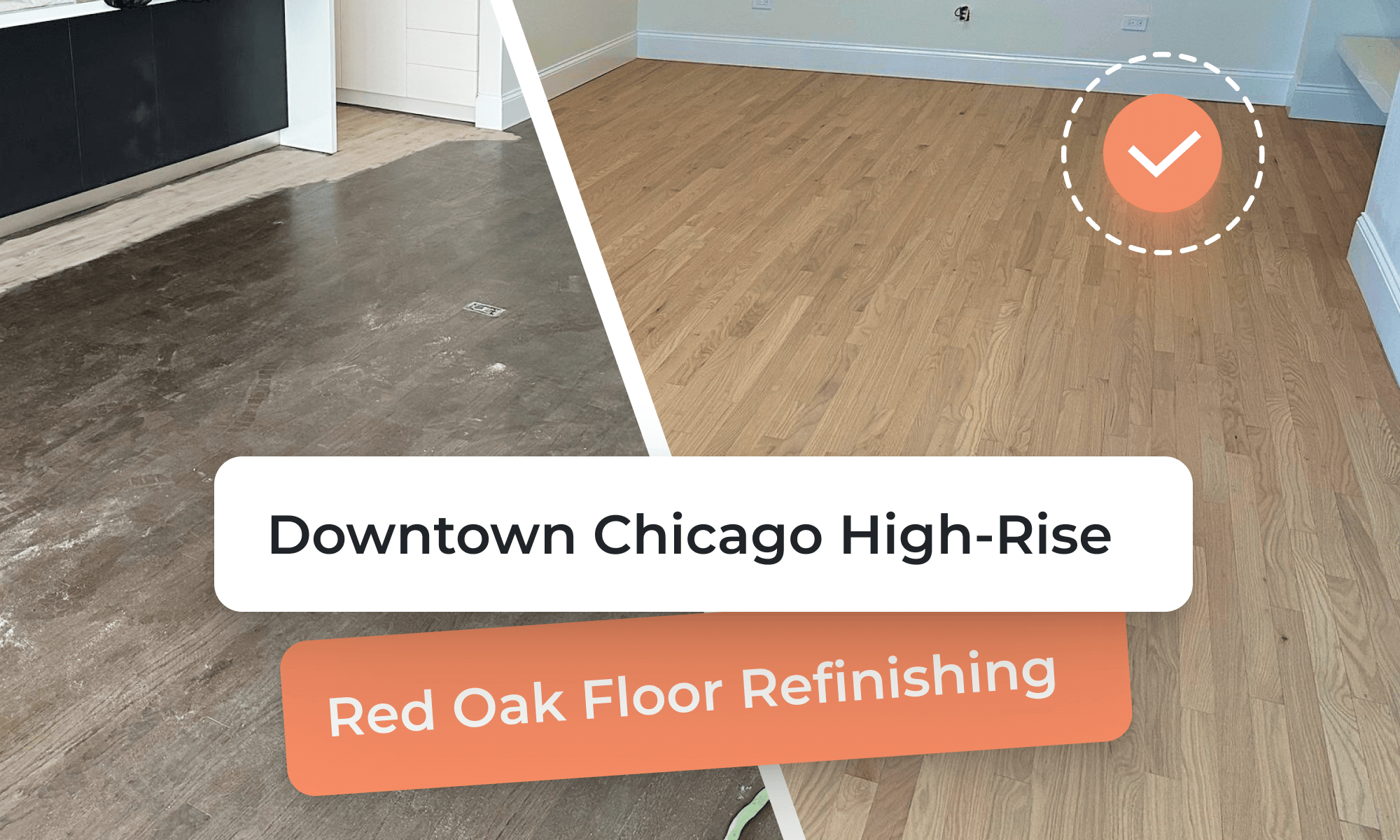
Downtown Chicago High-Rise Red Oak Floor Refinishing
01/29/2026
Reading Time ~ 10 minutes
 Donatas

Table of Contents
- Red Oak Floor Refinishing Project Snapshot
- What Homeowners Wanted for Their Red Oak Floors
- Why Downtown High-Rise Hardwood Floors Are Harder Than a House
- Scope of Work: Sanding and Refinishing Red Oak Floors
- Wood Stain Plan: Controlling Orange Tones and Red Undertones
- Finish System: Two Coats and a Low-Sheen Top Coat
- How the 5-Day Refinishing Timeline Worked
- Why This Red Oak Refinishing Cost More Downtown
- Results: Natural Beauty, Clean Wood Grain, and a Matte Look
- Need a Flooring Installer for Red Oak Floors in Chicago?
When you refinish floors on the 23rd floor in downtown Chicago, the hardest part isn’t always the sanding, it’s the building logistics and the clock. Our clients needed a fast turnaround, a clean, but updated look (and keep the natural beauty of the hardwood), and a plan that wouldn’t fall apart the moment the contractor elevator got booked.
Red Oak Hardwood Floor Project Snapshot
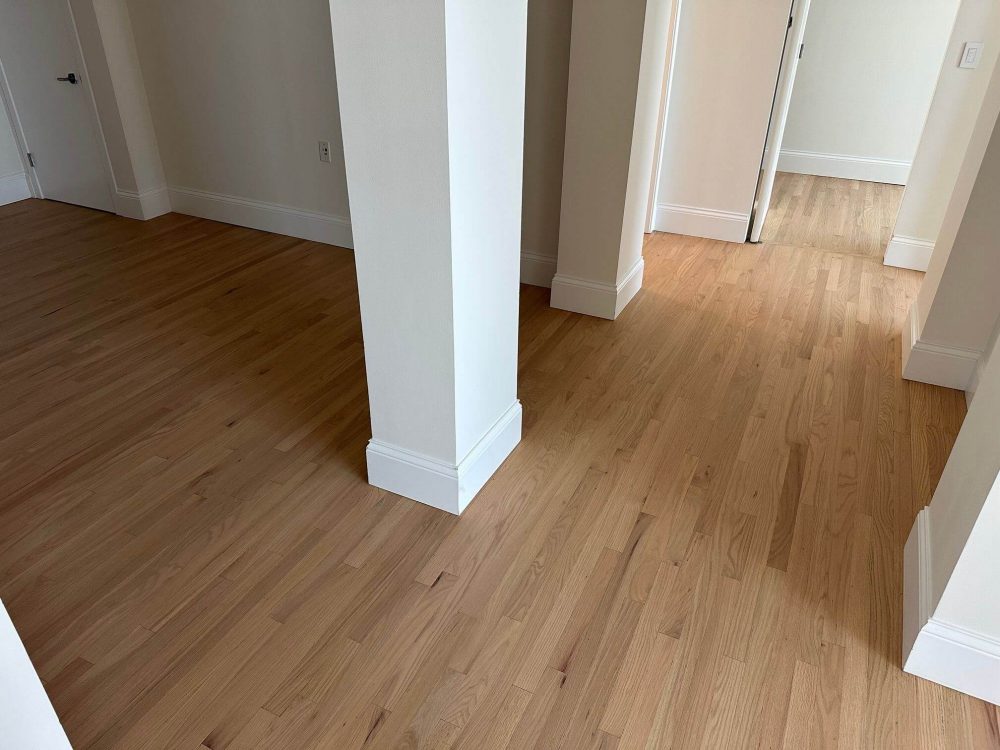
This project was a full red oak floor refinishing completed in five days, including a custom stain blend and a durable, low-sheen finish system. It was built around strict downtown access windows, so every step had to be staged and timed like a tight schedule on a film set.
- Location: Chicago Downtown (23rd Floor)
- Wood Species: red oak
- Total Area: 1,750 sq ft
- Scope: Full sanding + refinishing red oak floors
- Stain Color: Bona White 25% + Fruitwood 75%
- Finish: 2 coats of Loba Invisible Protect
- Project Duration: 5 days
What The Homeowners Needed
They needed the project finished fast without the red oak floor looking rushed, blotchy, or “too red” once the furniture went back in. We built the entire workflow around speed and consistency, because refinishing red oak floors under a deadline punishes sloppy decisions.
The brief was simple on paper, but very specific in real life:
- A refreshed look that still felt like real wood, not a plastic-y new floors vibe.
- A lighter, calmer tone that wouldn’t lean into orange floors under daylight.
- A finish that looks natural and holds up as a true matte finish.
- Predictable timing, because downtime in a condo is expensive in ways people don’t always count.
High-rise work also comes with constraints we always plan for in downtown buildings, even when everything goes smoothly.
Why Downtown High-Rise Refinishing Red Oak Floors Is Harder Than It Looks
Downtown condo work isn’t difficult because the wood is special, it’s difficult because access controls the entire day. On a high floor, the job becomes a mix of craftsmanship and logistics, and you only win when both are handled well.
- Loading and unloading zones are limited. You can’t just pull up, unload, and go. Downtown streets enforce short windows, and a missed slot can snowball into lost hours.
- Contractor elevator scheduling is a bottleneck. If the elevator window shifts, every trip for equipment and materials turns into a delay, especially when you’re moving sanding systems and containment gear.
- Building association coordination is real work. We had to communicate timing, rules, and approvals while also keeping the red oak floor process moving. That’s part of delivering the job.
- Working hours can be restricted. Some buildings limit noisy work or contractor access to specific times. That directly affects how you stage sanding and when you can apply a coat without risking interruptions.
- Parking and staging space are tight. On a single-family home you can spread out. In a downtown tower, you’re working with smaller staging zones and stricter rules about common areas.
And yes, there are a few extra problems that are common in this exact scenario, and we plan for them even if they don’t become headline drama:
- Neighbor sensitivity to sound and dust. Even with modern containment, we assume complaints can happen, so we keep the workflow controlled and the communication proactive.
- Material acclimation and storage constraints. In a condo, you can’t always spread materials out to breathe, so we plan how products and tools enter the unit and where they live during the job.
Scope Of Work: What We Actually Did on This Red Oak Flooring
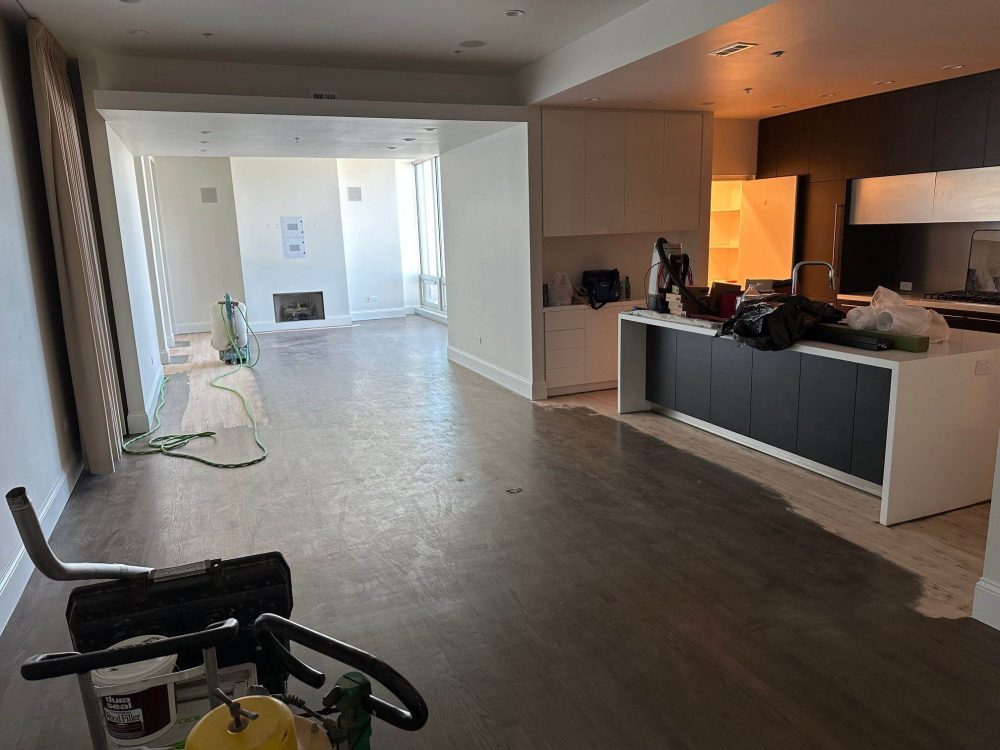
This job was a full reset of the existing floor surface, not a cosmetic touch-up. We approached it with a classic, yes effective plan: prep, sanding, color control, then protection, so the final finished red oak flooring looks intentional and wears evenly.
- Full sanding of the existing red oak hardwood floors to remove the finish from old flooring and level out wear patterns.
- Surface prep and cleanup to keep the grain clean before any color work touched the red oak floor.
- Custom stain blend: Bona White 25% mixed with Fruitwood 75% water-based stain to guide the strong red tone and reduce that “too warm” look.
- Two protective coats of Loba Invisible Protect to achieve a durable, natural-leaning surface on the red oak hardwood floor.
- Tight staging and protection planning to keep the condo livable and the building common areas respected throughout the work.
Because this was a downtown high-rise, we also treated logistics as part of the scope. That meant timed deliveries, controlled movement through the building, and a workflow that stayed stable even when access windows were short.
Color Strategy: Making Red Oak Flooring Look Clean, Not Orange
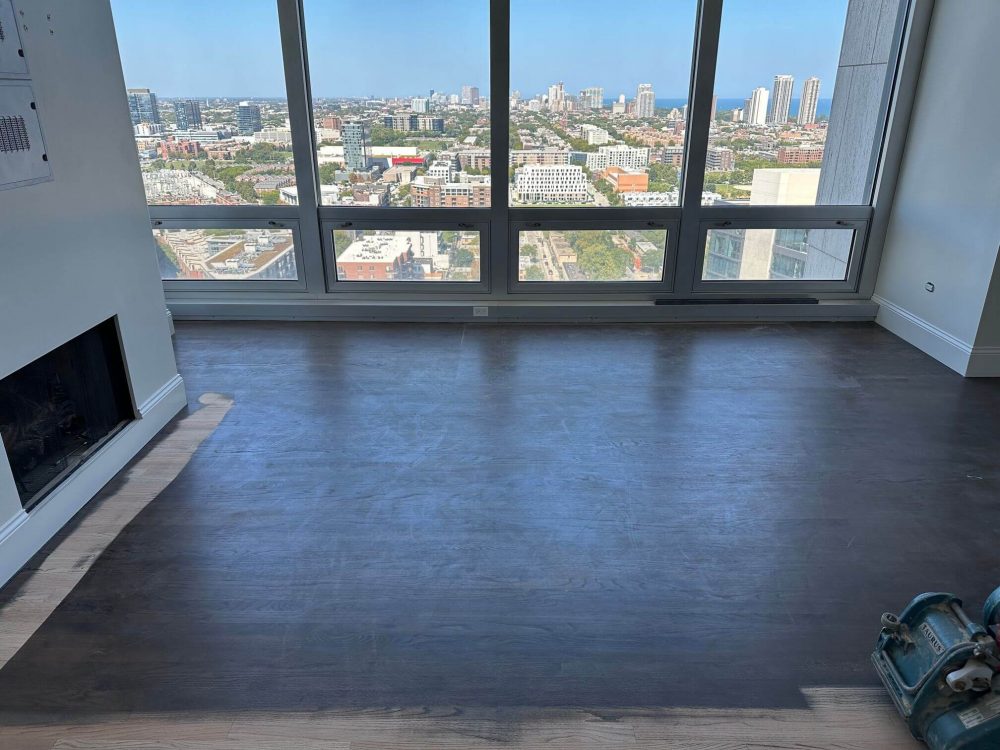
Red oak naturally wants to read warm, and in bright condos it can lean into orange tones fast. Our goal was a balanced, modern look that keeps the wood grain visible while calming down the warmth.
We used an intermixed approach instead of forcing one heavy stain color. The blend was Bona White at 25% and Fruitwood at 75%, which lets the red oak floor stay rich and natural without drifting into pink or overly red tones. That matters when you have one continuous field of red oak wood flooring across a large space, because small color shifts become obvious.
A color plan like this also plays better with modern interiors. White walls, bright daylight, and clean cabinetry can exaggerate warm undertones, so the best stain mix has to be chosen for the actual room conditions.
Finish Choice
A good finish should protect the red oak floor and disappear visually, especially when the color direction is natural and low sheen. That’s why we chose Loba Invisible Protect water-based finish for this red oak hardwood flooring project.
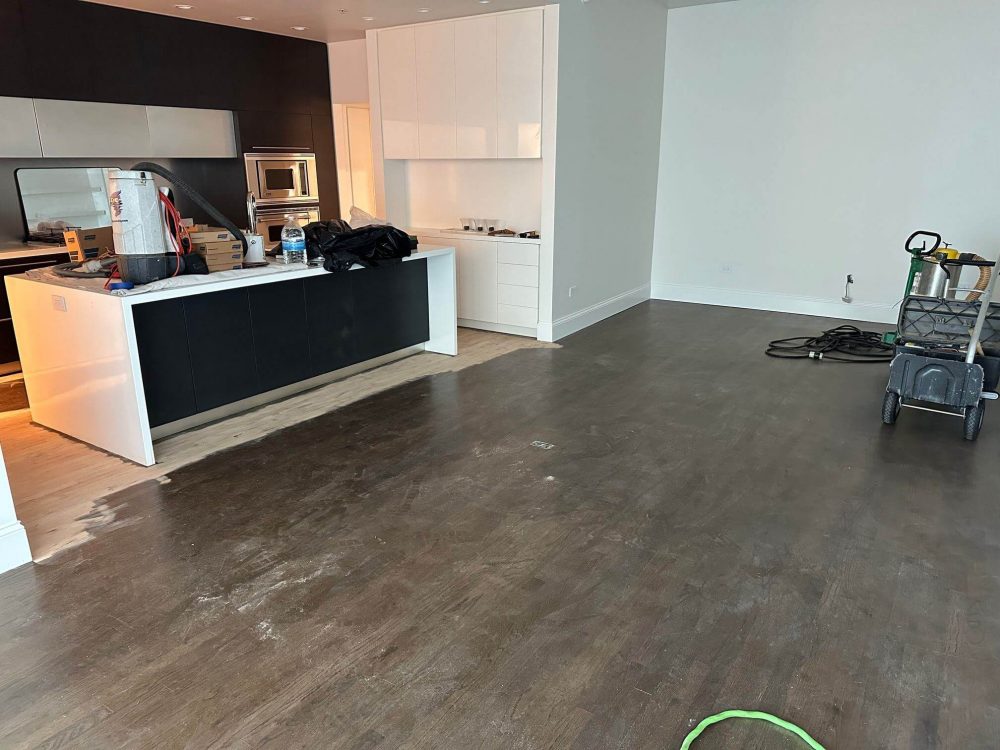
We applied two coats to build consistent protection across the full 1,750 square feet. This finish system is a strong match when homeowners want the red oak floor to look close to raw wood but still behave like a real top coat in daily life. It also helps the space read more even under changing light, which is a big deal on a high floor with large windows.
The practical side matters too, of course.
A finish that cures predictably supports a tight schedule, and it reduces the risk of uneven sheen across the floor.
That’s how you get red oak flooring natural finish without sacrificing durability.
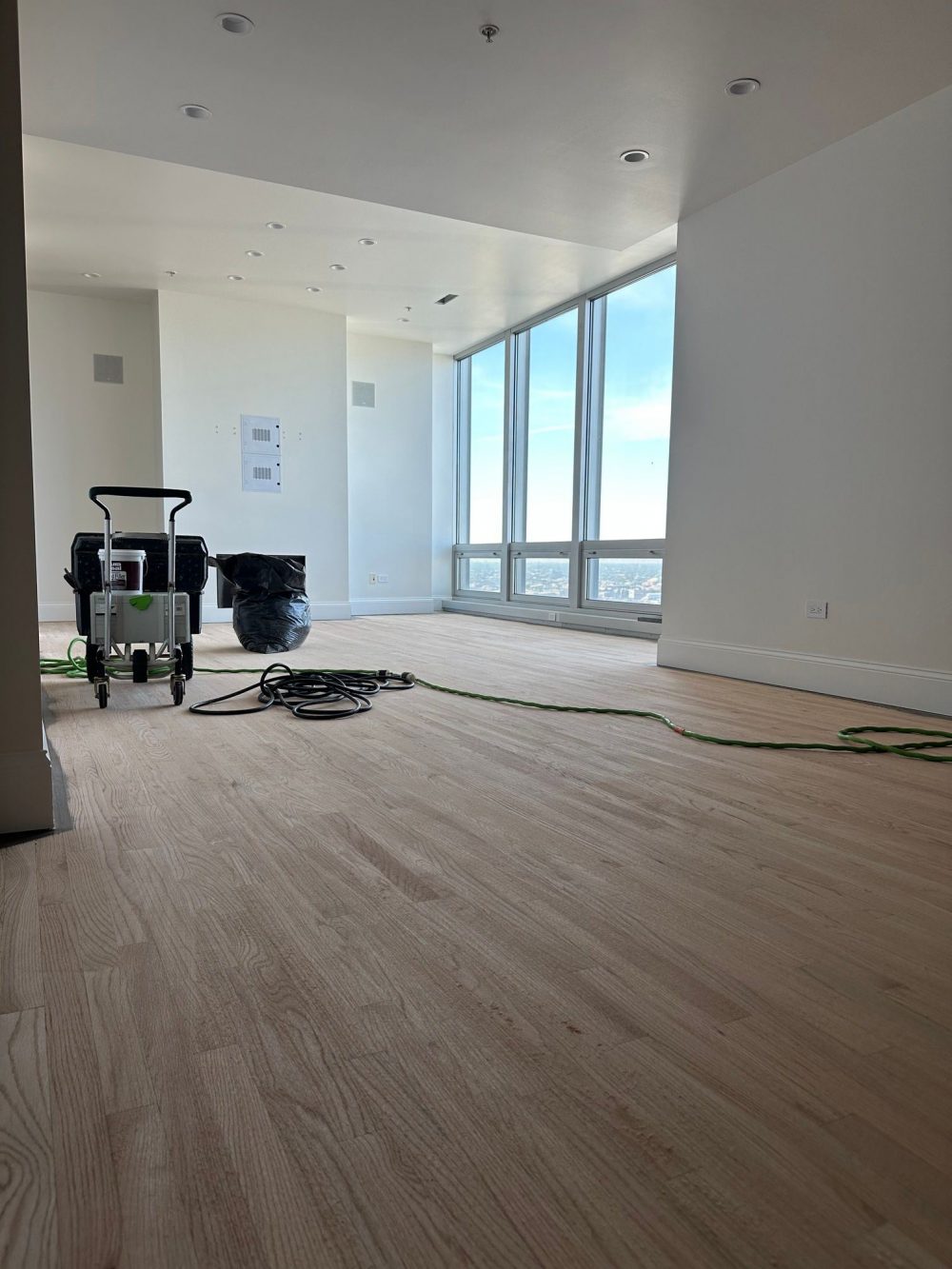
How We Hit A 5-Day Timeline Without Cutting Corners
Fast projects only work when the sequence is built to avoid rework and downtime. We planned each day around the reality of downtown access windows, because the clock starts the moment your tools leave the truck.
- Day 1: Access + protection + staging. We coordinated loading, got everything into the unit efficiently, protected common paths, and set the space up so work could run without constant stop-start interruptions.
- Day 2: Full sanding. We completed the main sanding phase and kept the surface clean so color work would lay down evenly on the red oak unfinished flooring state we created.
- Day 3: Detail sanding + stain blend. We finished the finer passes and applied the Bona White and Fruitwood mix with controlled technique so the tone stayed consistent across the full solid red oak flooring field.
- Day 4: First coat of finish. We applied the first coat of Loba Invisible Protect water-based finish and managed traffic carefully, because early protection sets the tone for how uniform the final red oak flooring finished surface will look.
- Day 5: Second coat + final walkthrough. We applied the second coat, checked reflection consistency, and confirmed the red oak floors read even in different angles of daylight before wrapping.
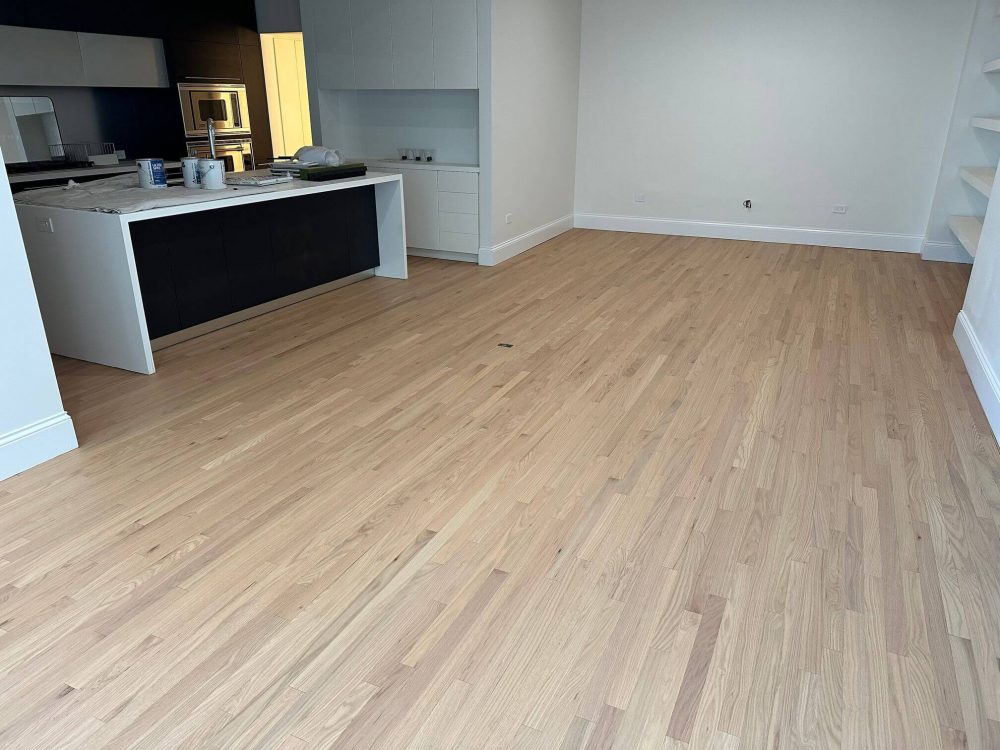
Why The Final Price Was Higher Than a Typical Refinish
Downtown high-rise work costs more because access, protection, and scheduling add real labor on top of the floor process. The floor can be the same, but the job isn’t the same.
- Access windows create downtime. Loading zones and contractor elevator slots are fixed, and missed timing burns hours that would be productive in a house.
- More setup and protection. We plan tighter staging and stronger dust control because common areas and neighbors are part of the environment.
- More coordination. Building association rules and approvals take time, and that time has to be managed by an experienced contractor.
- Short timelines cost more. A compressed schedule leaves less room for delays while still delivering refinishing red oak floors with consistent quality.
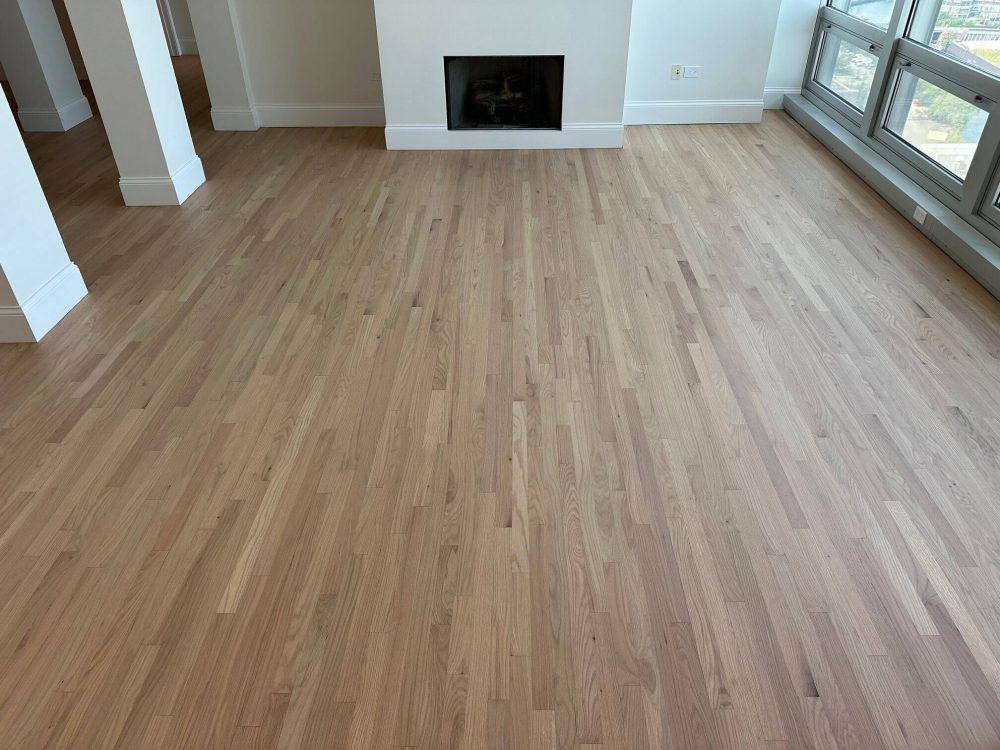
Results: A Balanced Finished Red Oak Flooring Look That Reads Clean in Daylight
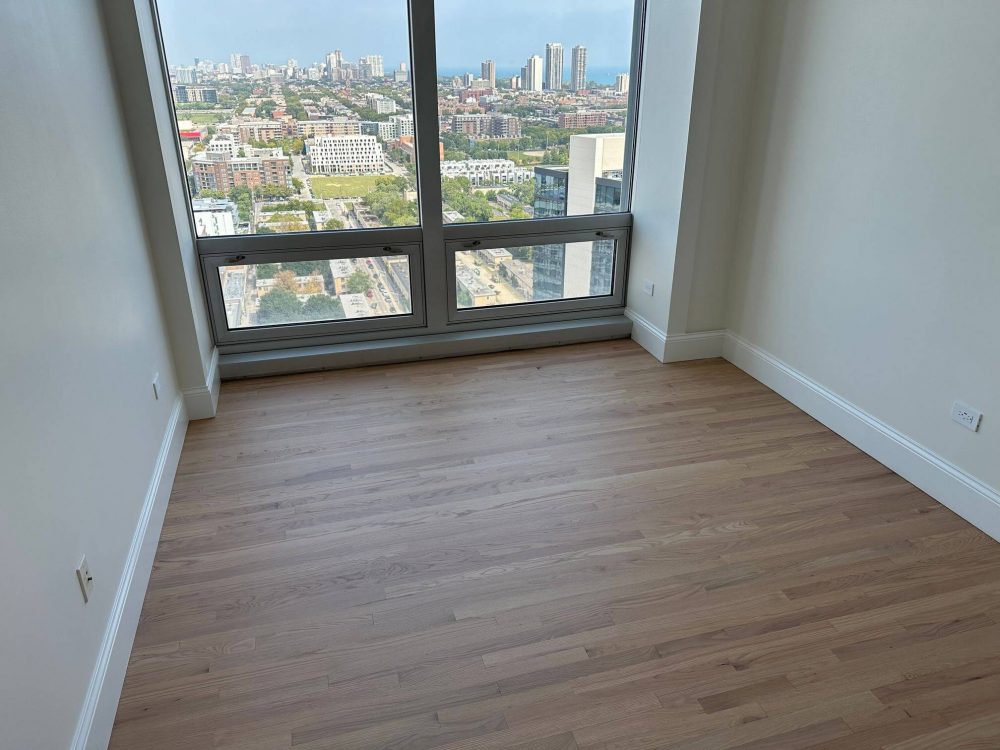
The final floor looks lighter, calmer, and more modern without losing the natural wood grain that makes red oak feel like real hardwood. The stain blend reduced the typical orange tones, so the space feels cleaner the moment you walk in.
- Old red oak flooring → refreshed surface. After full sanding, we rebuilt the look from clean wood and a controlled wood stain mix rather than trying to mask wear.
- Stain color that stays stable. The Bona White and Fruitwood blend helped prevent the hardwood floor from going overly orange or drifting into yellow in strong daylight, and we watched for unwanted green undertones that can show up when white is introduced.
- Light vs dark balance. This wasn’t a heavy dark stain, and it wasn’t a washed-out light stain either. It lands in a natural middle where the floor still feels warm, just not loud.
- Protection that doesn’t change the vibe. Two coats of a durable top coat gave a true natural look, so the red oak floor reads consistent in person and in pictures of red oak flooring.
Need Help with Your Red Oak Floors in Chicago?
If your hardwood floor feels too warm, too worn, or just not right for the space, we can take it from stressed-out to clean and intentional with a plan you can actually trust. We handle refinishing red oak floors and any other types of wood the way it should be done in Chicago: tight process, clean work, and clear communication.
- You’ll work with an experienced flooring installer team that’s set up for both houses and high-rise condos.
- We run stain samples on your floor so you can see how the color appears next to your lighting and layout before we commit.
- Our flooring professionals use dustless systems to keep disruption low while the work is happening.
- We help you choose the right stain so your red oak doesn’t swing hard into orange under daylight.
- We use certified, pet- and family-safe products from brands like Bona and Loba.
We can also align the hardwood floor tone with your cabinets and countertops, so the whole space feels matched instead of mixed.
Reach out and tell us what you’re working with, and we’ll help you map the smartest path forward. Share a few picture references of your space and your current floor tone, and we’ll recommend next steps, timeline, and the best way to get the look you want without surprises.
Final Thoughts
This wasn’t an easy hardwood floor refinishing project, and that’s exactly why we enjoyed it. Downtown high-rise work tests everything at once: planning, communication, and craftsmanship. When it all comes together, it’s deeply satisfying.
We treat every hardwood floor like it’s our own home. That means we don’t rush the details, we don’t disappear when the schedule gets tight, and we don’t settle for good enough. We show up, we solve problems, and we leave behind work we’re proud of.
frequently asked questions
How long do I need to stay off the floors after refinishing red oak floors?
For refinishing red oak floors, plan to stay off the hardwood floors until the last coat is dry to the touch, then use socks only and avoid furniture for longer while the finish hardens. The exact window depends on the product, temperature, and airflow, so we give you a clear timeline based on your unit, not a generic rule.
Can you refinish red oak floors without removing baseboards or shoe molding?
Yes, most red oak hardwood floors refinishing can be done with baseboards staying in place, and we remove and reinstall shoe molding only if it’s needed for a cleaner edge. Good edging and careful detail work matter more than ripping trim off the walls.
Will floor refinishing eliminate squeaks, gaps, or minor movement between boards?
Refinishing improves the surface, but it doesn’t “lock” the structure underneath. If movement comes from subfloor issues or seasonal expansion, refinishing floors won’t fully solve it, but we can often reduce noise and tighten minor areas during prep before the final top coat.
Can you blend new boards into existing red oak hardwood floors so repairs don’t stand out?
Usually, yes, but the goal is a repair that blends in real life, not one that disappears under a microscope. We select boards with compatible wood grain, then use stain samples to match tone and sheen across old and new sections so the repair doesn’t pop once everything is refinished.
How do you handle pets, air quality, and ventilation during a condo refinishing project?
We minimize dust with professional containment and run the job as a controlled zone, not a free-for-all workspace. For finish days, we manage ventilation carefully so odor doesn’t linger in the space, and we’ll tell you exactly when it’s safe for pets to return based on the finish system.
What should I do before your team arrives to prep the space for refinishing day?
Clear the unit as much as possible, especially breakables and small items, and plan where essentials will live during the job. If you’re in a condo, send a couple of picture shots of your elevator route and entry area so we can plan staging, protect traffic paths, and keep the process smooth from the first load-in.
Overall rating
5

(1 vote(s))
Comments