Local Hardwood Floor Repair in Elmhurst, IL


Big Bro Hardwood is an owner-operated hardwood floor repair company serving Elmhurst, IL. Most of what we do is save floors that do not need replacing. A long-standing squeak, boards that cupped after a leak, gaps that open every winter, scratches, dents, worn spots – these are all problems we fix without tearing out a floor that still has plenty of life left in it.
Elmhurst has a real mix of housing, from mid-century ranches and bungalows to newer infill construction, and the cause of a damaged floor is usually specific to the home. An aging supply line or radiator that leaked, a subfloor that has shifted over the decades, or dry winter heat shrinking boards apart are all things we see regularly here. We track down the source, address it, and match the repair to your existing wood so the fix blends in rather than draws the eye. If your floor is worth saving, we will tell you honestly, and we will not push a replacement you do not need. Free in-home estimate within 24 hours across Elmhurst and nearby suburbs.
Hardwood Floor Repair Service Highlights
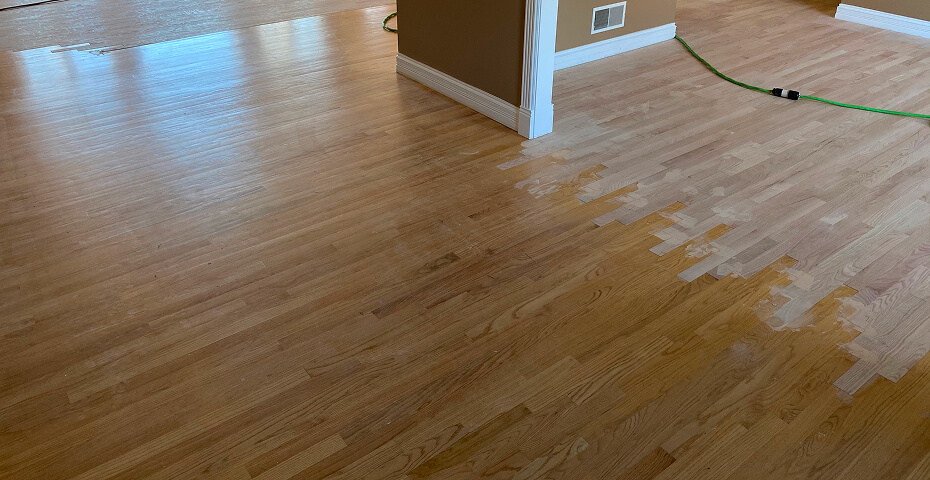
Repairs Near Walls and Doorways
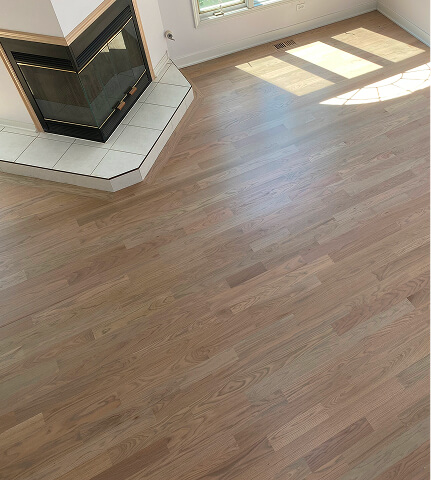
17+ Years of Local Expertise
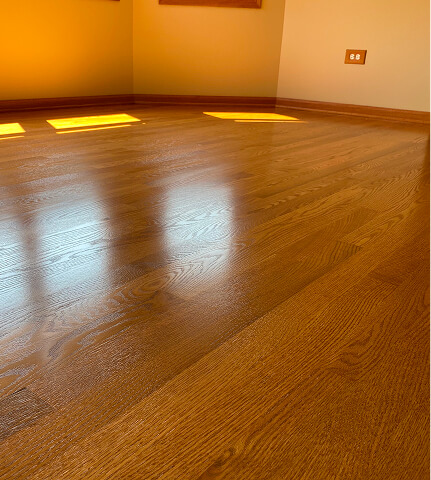
Water-Damaged Board Repairs
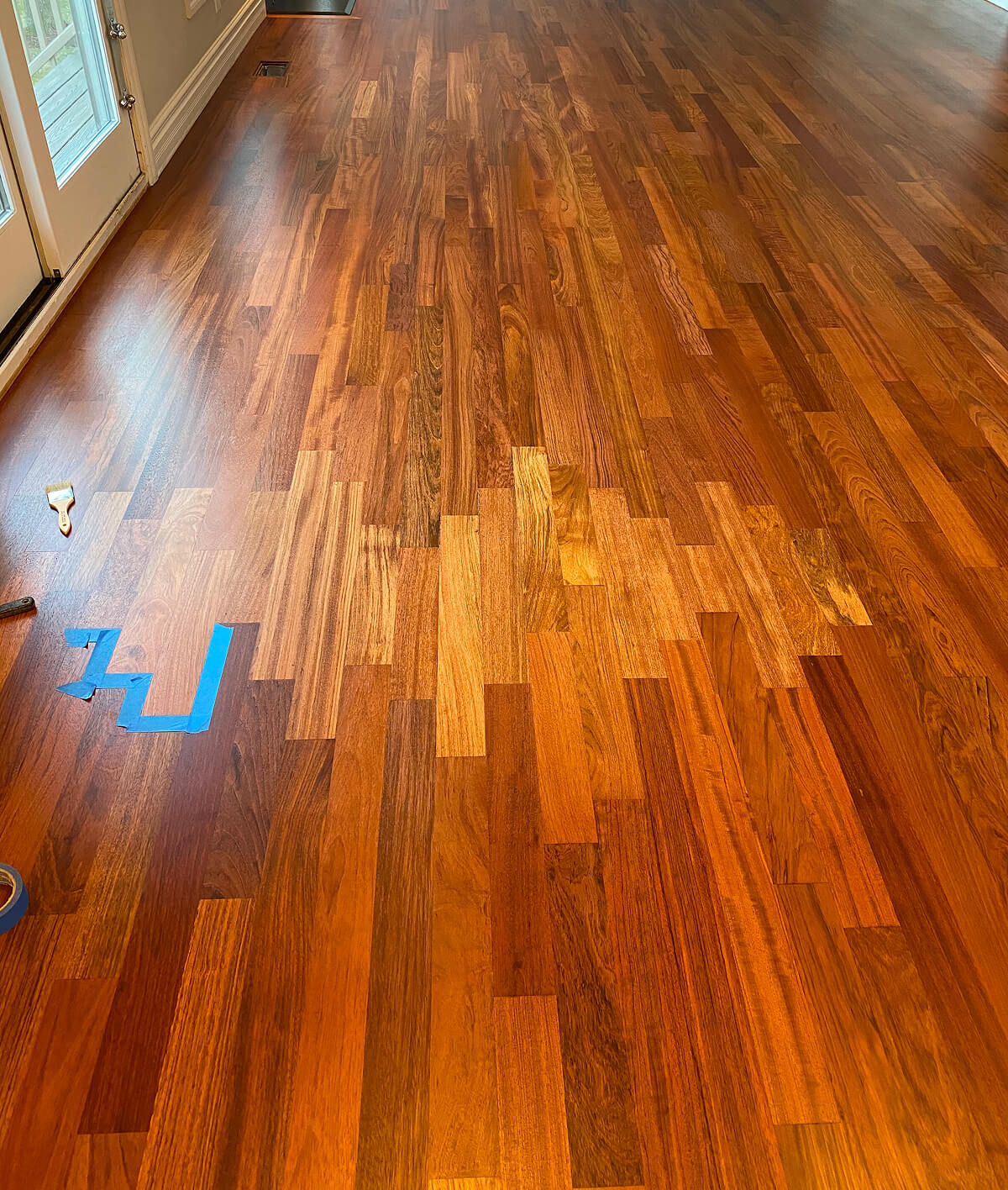
Most Floor Repair in 1 Day, Dust-Controlled*
* Timeline depends on repair scope and access; dust control minimizes, but doesn’t eliminate debris or odors. Moving furniture may be required for safe repairs.
Why Choose Hardwood Floor Repair in Elmhurst, IL, Instead of Full Replacement
Hardwood floors don’t need to be torn out the moment they show wear. In many Elmhurst homes, the smarter move is targeted hardwood floor repair: fix damaged areas, stabilize movement, and restore the surface where it matters, without sacrificing quality or the natural beauty of your wood floors.
At Big Bro Hardwood, our hardwood flooring repair services focus on practical solutions first. We inspect your floor’s condition, explain what’s realistic to match, and recommend repair, floor restoration, or hardwood floor refinishing only when the entire floor truly needs it.
- Save Money Without Sacrificing Quality — floor repair in Elmhurst is often a better value than full replacement. Repairing hardwood floors can avoid demolition, reduce material waste, and keep your budget on track at a competitive price.
- Preserve Original Wood Floors + Hard-to-Match Planks — Many existing floors are older wood types that are difficult to replicate. Repairing hardwood floors helps protect character, grain, and color, so new floors aren’t the default answer.
- Fix Problems Before They Become Structural Issues — Loose boards, squeaks, and water damage can spread and create structural issues. Early hardwood repair helps prevent serious issues and bigger flooring repairs later.
- Faster Timeline, Less Disruption — Most floor repairs take less time than replacement, with less mess and simpler moving furniture requirements. Many floor repairs can be completed within a day, depending on the room and scope.
- Better Results When You Plan Refinishing Later — Good floor repair and proper installation practices (where boards are replaced or re-secured) set up cleaner sanding, refinishing work, and a more consistent final product if you choose floor refinishing.
Our Professional Wood Flooring Repair Services Process in Elmhurst
Our floor repair process is built for consistent results, clean work areas, and a scheduled project you can actually plan around. We start by understanding the floor’s condition, then choose the simplest fix that protects your hardwood floors and wood floors long-term.
Timeline at a glance:
Small repairs (1 room)
1 day
Multiple damaged areas / board work
1–2 days
1
1. On-Site Inspection + Damage Assessment
We measure the work area, check the floor’s condition, and identify the cause of the problem—loose boards, squeaks, large cracks, gaps, deep scratches, cupping, or water damage. We’ll also look at existing floors and nearby sections to understand what we can realistically match.
2
2. Protect the Home + Dust Control Setup
Before any cutting, fastening, or sanding, we protect nearby surfaces and set up containment. dustless sanding and dust control minimize debris, but don’t eliminate it completely—especially along edges and tight spots. We also confirm access and moving furniture needs so the job stays safe and efficient.
3
3. Professional Hardwood Repair Work
We address the “why,” not just the symptom: re-secure loose boards, reduce movement that causes squeaks, and correct issues that can turn into structural issues if ignored. This is where a lot of hardwood repair wins happen.
4
4. Board Replacement + Patch Work (As Needed)
For broken boards, soft spots, or impact damage, we replace boards or patch sections in a way that blends with surrounding hardwood floors. We’ll confirm wood types and sizing so the repair doesn’t look like a random “new plank” stuck in the middle.
5
5. Blend the Surface: Spot Sanding + Finish (If Needed)
When a repair touches the surface layer, we may do spot sanding and blend the finish so the repaired area looks consistent. If a repair reveals bigger wear patterns, we’ll explain when broader refinishing makes sense, but the default is repair-first.
6
6. Final Walkthrough + Care Tips
We review the result together, confirm what to expect over time, and give practical care tips to protect your floors and prevent repeat damage. You’ll also get straight expert advice on what to watch for and when to call us back.
Hardwood Floor Repair Cost in Elmhurst, Illinois
Pricing for hardwood floor repair depends on the floor’s condition, the size of the damaged areas, the wood types involved, and whether the repair needs surface blending with sanding or light refinishing. Some floor repairs are quick and localized; others involve board replacement, water damage work, or stabilizing movement to avoid structural issues.
During your on-site visit, we’ll review your flooring needs, explain options, and give clear, itemized pricing, often avoiding full replacement when your hardwood floors and wood floors can be saved. You can use our hardwood floor repair cost estimator for a rough idea about the price.
| Package / Condition | Typical Use | Starting Price* | Includes | Notes |
| Small floor repairs (single room) | Minor damage, loose boards, finish wear, deep scratches | From $300–$650 | Localized repair, materials, cleanup | Moving furniture may affect scope |
| Squeak + movement stabilization | Squeaks, shifting boards, subfloor movement | From $200–$900 | Targeted stabilization + localized floor repair | Designed to reduce repeat issues |
| Board replacement + blend | Broken boards, impact damage, large cracks, soft spots | From $600+ | Remove/replace boards, patch work, spot sanding, blend | We aim to match tone/finish; exact match varies |
| Water damage repair | Swelling, cupping, staining, soft areas | From $750+ | Moisture check, stabilization, selective replacement | Drying time may extend the schedule |
| Repair + light refinishing | Worn areas around repairs | From $900+ | Spot sanding, finish blend, touch-ups | Not the same as full hardwood floor refinishing for the entire floor |
| Stairs / transitions | Treads, landings, thresholds | Per inspection | Targeted floor repair, prep, blend | Scope varies by layout and access |
Why Elmhurst Homeowners Trust Big Bro Hardwood for Floor Repair
Picking the right hardwood floor repair contractor in Elmhurst matters more than most people realize. A good repair starts with an honest look at what is actually wrong, not just what is visible on the surface. We diagnose the cause, keep the scope tight, and do the work cleanly so your floor looks right when we leave.
17+ Years, Owner-operated
Big Bro Hardwood has been repairing wood floors since 2008, and the business has always been owner-operated. When you hire us, the people who show up are the people who care about the outcome. That kind of accountability shapes everything from how carefully we cut a replacement board to how cleanly we leave the space. Over 500 projects completed across Elmhurst and nearby suburbs means we have seen nearly every repair situation a hardwood floor can throw at us.
Hidden Damage Explained Before Scope Changes
Pulling up a damaged board sometimes reveals staining, subfloor deterioration, or moisture that was not visible from the surface. In older Elmhurst homes, where basements can seep and first-floor wood sits close to the foundation, that kind of hidden damage is not unusual. We flag what we find and walk you through the options before any scope expands. You decide how to proceed with full information, not mid-project surprises.
Replacement Boards Matched Carefully
Elmhurst has a wide mix of housing ages, and the floors inside reflect that. Narrow-strip red oak from a 1950s ranch reads very differently from the wider engineered oak in a newer infill home. When we source replacement boards, we compare species, width, thickness, grain, and milling profile against what is already on your floor. We also account for how older wood absorbs stain differently than new material, so we can set honest expectations about how close the blend will get.
Clear Scope, Clean Work, Predictable Scheduling
Before we start anything, you will know exactly what the repair covers, what access we need, and how long the work should take. Many repairs are completed in a single day. Larger board work or repairs that lead into spot sanding and finish blending typically run one to two days. No open-ended timelines, no vague estimates. We treat your schedule with the same respect we give your floor, and we keep communication straightforward from the first call to the final walkthrough.
Surface and Structural Problems Treated Differently
A light surface scratch and a squeaking subfloor are not the same problem, and they should not get the same fix. We separate cosmetic damage from issues that affect how the floor actually moves and holds together. Squeaks in older Elmhurst bungalows, for example, usually trace back to movement in an aging subfloor, and masking it from above is not a real repair. We go to the source, whether that means re-securing boards, addressing subfloor fastening, or replacing planks that have gone past the point of patching.
Blending That Looks Natural
When a repair involves sanding and finish work, the goal is a result that reads as part of the floor rather than a visible patch. We use dust-controlled sanding and careful finish blending to bring the repaired section in line with the surrounding hardwood. We use low-VOC Bona and Loba finishes that hold up well and blend cleanly. We are also honest about limits: a floor that has aged for decades may not match perfectly, and we will tell you that upfront so the result is never a disappointment.
Common Hardwood Floor Repairs in Elmhurst Homes
When something goes wrong with a hardwood floor, it is hard to know right away whether you are looking at a straightforward fix or something more involved. Most of the time the floor is worth saving. Here is what we see most often in Elmhurst homes, based on the housing stock and conditions that are specific to this area:
- Water damage from basement moisture or plumbing leaks. Elmhurst’s full basements can seep at foundation walls, and sump pit overflows or sewer backups can wick moisture up to first-floor hardwood before a homeowner realizes it. Kitchens and laundry areas are also common leak points. We dry the source first, then replace swollen or cupped boards and blend the patch into the surrounding floor. If water reached the subfloor, that gets addressed before anything else.
- Matching older narrow-strip boards. A large share of Elmhurst’s housing dates to the 1940s through 1960s, and those floors are often narrow-strip red oak in widths or grades you cannot walk into a store and buy today. Rather than dropping an obvious new plank in the middle of a room, we track down the closest match and sometimes pull boards from inside a closet so the visible floor stays consistent.
- Seasonal gaps and summer cupping. Elmhurst winters are dry and cold, and forced-air furnaces push indoor humidity down fast. That shrinks boards and opens gaps that often close on their own when summer humidity returns. We tell you which gaps are seasonal and not worth touching, and which ones have grown permanent and need to be filled or re-laid. Summer cupping, especially on first floors over damp basements, follows the same diagnosis-first approach.
- Squeaks and movement in mid-century subfloors. Ranch homes and split-levels from the 1950s and 1960s are well represented in Elmhurst, and their subfloors can shift and loosen over decades. Squeaks in these homes usually trace to real movement at the subfloor, not just surface boards. We re-secure things at the source rather than masking the noise from above.
- Damaged engineered or prefinished boards in newer infill homes. Elmhurst has seen a steady wave of teardown-and-rebuild construction, and those newer homes often have engineered oak or plank flooring over concrete or sound-isolating underlayment. When individual boards get gouged, chipped, or scratched, the challenge is matching a factory finish. We assess whether a board swap or a localized finish repair is the right call.
- Scratches, dents, and gouged boards. Light surface scratches often buff out during a spot-sand. Deeper gouges and cracked boards get patched or swapped and then blended with finish. On a floor that has aged and darkened over the years, a repair can get very close, but we are straightforward about what is realistic before we start.
Not sure whether your floor is worth repairing or needs to be replaced? That is exactly what the free estimate is for. We look at the actual damage, tell you honestly what will hold up long-term, and will not push a full replacement when a targeted repair does the job.
Get your free estimate today
Contact Us
Other Hardwood Flooring Services in Elmhurst
Frequently Asked Questions
My Elmhurst home was built in the 1950s and has narrow-strip red oak floors. Can damaged boards still be matched?
Narrow-strip red oak from that era is still available, but the width and milling profile can vary enough to make a straight match tricky. We source the closest grain and width we can find, and when an exact match is hard to guarantee, we sometimes borrow boards from inside a closet or under a radiator cover so the visible floor stays consistent. After the swap, we spot-sand and blend the finish. The result is very close, though on an aged floor a perfect invisible match is not always realistic, and we will be upfront about that.
Elmhurst winters are dry and my hardwood floors develop gaps between boards every year. Do I need a repair?
Probably not. Forced-air gas heat pulls humidity out of the air through winter, and hardwood boards shrink and open small gaps in response. When summer humidity returns, those gaps typically close on their own. That is a normal seasonal cycle, not a structural problem. We do recommend looking at gaps that stay open year-round or keep widening, because those can point to a subfloor issue or a board that has shifted permanently. If you are unsure, a free estimate will tell you quickly whether filling makes sense or whether waiting is the right call.
We had a basement seepage event and water wicked up through the first-floor hardwood. What does the repair process look like?
Full basements and seasonal groundwater are a real factor in Elmhurst, so we see this kind of damage regularly. The first step is always the source – the seepage or drainage issue has to be addressed and the floor has to dry before any wood repair begins. Once moisture levels are stable, we assess which boards have cupped, buckled, or stained beyond recovery and replace only those. Then we sand the patched area and blend the finish to the surrounding floor. Water damage repairs start around $750 depending on how many boards are involved.
I live in a condo near downtown Elmhurst and a leak from the unit above damaged my engineered wood floor. Can it be repaired?
Yes, engineered wood can often be repaired rather than fully replaced, depending on how the planks are installed and how far the moisture spread. We identify the affected boards, confirm the subfloor or underlayment is dry, and then replace the damaged planks and blend the finish as closely as the product allows. In condo buildings, the building envelope and neighboring plumbing risers are common culprits, so we coordinate around whatever the association has already addressed on the source side. Use our cost calculator for a starting estimate.
How do you decide whether a hardwood floor in Elmhurst is worth repairing versus replacing entirely?
We look at how much of the floor is actually damaged, whether the subfloor underneath is sound, and whether the wood species and width can still be matched reasonably well. Most floors we see in Elmhurst have damage that is localized – a few cupped boards near a window, a scratched section near an entry, or a squeaky spot in a hallway. Repair almost always costs less than a full replacement, and we will tell you honestly if the floor is past the point where repair makes sense. We do not push replacement when a repair will do the job.
What causes squeaky floors in older Elmhurst homes and how do you fix them?
In homes from the 1940s through the 1960s, squeaks usually come from movement between the hardwood and an aging subfloor, or between the subfloor and the joists below. Humidity cycles over decades loosen fasteners and let boards shift slightly underfoot. We locate the exact source of the movement, then re-secure the subfloor and the hardwood at that point rather than masking the sound from the surface. Squeak and movement repairs start around $200, and we can often take care of several problem spots in the same visit.
A pet gouged several boards and scratched the finish across a wide area. Can that be fixed without refinishing the whole floor?
It depends on how deep the damage goes. Light surface scratches often buff out with a targeted finish touch-up. Deeper gouges that cut into the wood itself usually need a board patch or a board swap, followed by spot-sanding and finish blending over that section. If the scratches are spread across a large area, blending spot repairs into the surrounding finish gets harder, and we may recommend a screen-and-recoat or a partial refinish instead. We will look at the actual damage and give you a clear picture of what makes sense before any work starts.
How long does a typical hardwood floor repair take, and how much of the house needs to be cleared?
Many localized repairs – filling a few scratches, swapping a damaged board, or quieting a squeak – are done in a few hours or a single day. Repairs that involve spot-sanding and finish blending typically take one to two days, and water damage jobs add drying time before the wood work can begin. For a small repair, you only need to clear the immediate area. Larger jobs that run into refinishing need more room cleared, and we can phase the work around your schedule. We use dust-controlled sanding whenever spot-sanding and finish blending are part of the repair.


