

 5.0
5.0


Radiant Heat Under Hardwood Floors What to Know
04/28/2026
Reading Time ~ 16 minutes

Table of Contents
- Can Hardwood Floors Go Over Radiant Heat?
- Pros And Cons of Heated Hardwood Floors
- Best Wood Flooring for Radiant Heat
- Radiant Heat Systems for Wood Floors
- How To Install Hardwood Over Radiant Heat
- Common Problems with Hardwood Over Radiant Heat and How to Fix Them
- How Much Do Heated Hardwood Floors Cost?
- Final Thoughts
Radiant heat can go under hardwood floors, but it only works well when the flooring, subfloor, heat output, and indoor humidity are matched correctly. The safest results usually come from stable wood products, controlled temperatures, and a house that does not swing too far between dry and humid conditions.
Key Highlights
- Engineered hardwood is usually the safer choice because it handles heat and seasonal humidity changes better than most solid wood floors.
- System design matters as much as the flooring itself because tubing layout, subfloor build, insulation, and temperature control all affect performance.
- Most problems come from imbalance, not from heat alone because gaps, cupping, and stress usually trace back to moisture swings or overheating.
- Hydronic and electric systems are not equal for every project because new builds, remodels, and retrofits each have different limits.
- A good radiant floor feels simple in daily use but it takes careful planning before installation.
In this guide, we break down when heated hardwood floors make sense, which wood flooring works best over radiant heat, what type of radiant system fits a wood subfloor, how installation should be handled, which problems show up most often, and what heated hardwood floors typically cost.
Can Hardwood Floors Go Over Radiant Heat?
Yes, hardwood floors can go over radiant heat under hardwood, but the result depends more on control and assembly than on the idea itself. A wood floor over radiant heat performs well when the flooring is suitable for heated use, the subfloor is built correctly, and the house can hold steady temperature and relative humidity.
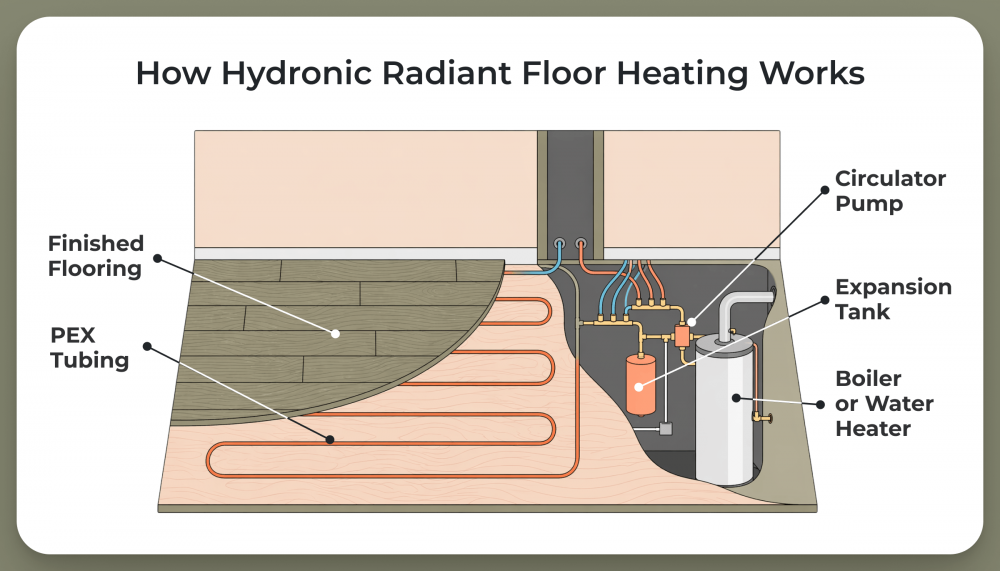
That’s really the biggest boundary for wood floor heating. The system has to be treated as one package: wood product, room conditions, tubing layout, and output. The Department of Energy says wood can be used over radiant floor heating, but also notes that wood insulates more than tile, which means less raw heat transfer and a smaller margin for bad design.
When Radiant Heat Works Well Under Hardwood
- Stable Indoor Humidity: The house stays fairly steady throughout the year, so the boards are less likely to open up, shift, or show seasonal stress. Board movement and gaps are directly tied to changes in temperature and humidity.
- Radiant-Approved Flooring: The product is clearly approved for radiant heat under hardwood floors, which gives you a much safer starting point than guessing based on species or looks alone.
- A Real Wood Assembly: The project has a solid wood subfloor and a planned layout for panels or tubing, so the system can move heat evenly without creating avoidable stress points.
- Reasonable Heat Demand: The room does not need extreme output to feel comfortable. That matters because wood slows heat transfer more than tile.
- Planned Installation: The floor is being designed with the heating system in mind from the start, which is why new builds and major remodels usually make heated hardwood floors better than improvised retrofits.
When Radiant Heat Is a Poor Fit
- Dry Or Swingy Indoor Climate: If the house gets very dry in winter or swings a lot seasonally, wood floor heating becomes less forgiving and visible gaps become more likely.
- Wide Solid Boards: With strip flooring, wider boards have greater potential for gaps as they contract with seasonal changes.
- No Clear Radiant Approval: If the flooring is not clearly rated for radiant floor heating under hardwood, you are taking on risk before the floor is even installed.
- Hard Retrofit Conditions: A between-joists or from-below retrofit can get tricky fast when access is limited and hidden tubing has to be protected from future fasteners.
- Rooms That Need More Heat Than Wood Can Easily Deliver: If the space loses heat too fast, the system may need to work harder than a wood-covered floor handles comfortably, because wood is still a more insulating finish surface.
| Project Type | Best Fit | Why It Usually Works Best | Budget Pressure | Risk Level |
| New build, large area | Hydronic radiant heat | Best for whole-house or multi-room coverage | High upfront, better long-term scaling | Low if planned correctly |
| Major remodel, floor already open | Hydronic or electric | Good access makes assembly and controls easier | Medium to high | Medium |
| Small bathroom, mudroom, or addition | Electric radiant heat | Simpler install in a limited space | Lower upfront | Low to medium |
| Existing hardwood staying in place | Limited case only | Retrofit is possible, but access and board condition matter a lot | Medium to high | High |
| Wide solid planks in a dry house | Usually not ideal | Higher movement risk and less forgiveness | High if problems develop | High |
Pros And Cons of Heated Hardwood Floors
Heated hardwood floors make sense when you want the look of real wood with quieter, more even comfort than many forced air systems can deliver. The tradeoff is that radiant heat under hardwood gives you less room for sloppy material choice, weak installation, or poor humidity control.
Main Benefits
The biggest advantage of wood radiant floor heating is comfort that feels steady instead of drafty. A good system also cleans up the room visually because the heat comes from the floor, not from registers, baseboards, or bulky emitters.
- More even warmth. Radiant heat wood floors warm the surface and the occupied part of the room more evenly, which helps reduce cold areas underfoot.
- No duct losses. Radiant heating systems are often more efficient than forced air because they do not lose heat through ducts.
- Quieter rooms. A heated wood floor runs without the airflow noise and vent cycling people often notice with conventional systems.
- Cleaner visual layout. Heated floors under hardwood remove the need for visible floor vents or wall radiators in many rooms.
- Better fit for comfort-led remodels. Radiant floor heating and wood floors are especially appealing in bedrooms, living spaces, and additions where warm flooring matters as much as raw heat output.
Main Drawbacks
The downside of radiant heat under wood floors is not that it cannot work. The downside is that wood is less forgiving than tile, so the wrong boards, the wrong climate, or the wrong assembly can create movement, visible gaps, and lower heat output.
- Wood transfers heat less efficiently than tile. A hardwood floor can work over radiant heat, but it insulates more than tile, so the system has less output headroom.
- Material choice is tighter. Best wood flooring over radiant heat usually means stable products, because wider boards have greater potential for seasonal gaps.
- Planning is stricter. Radiant floor heating under hardwood needs the right subfloor, safe fastener paths, and reliable temperature control before the floor is installed.
- Retrofits can get expensive or messy. To install radiant heat under an existing floor, you may need floor removal, access from below, or added assembly work that complicates the job.
- Dry houses create more risk. Heated wood flooring is more likely to show movement when indoor humidity drops and the boards contract.
Best Wood Flooring for Radiant Heat
The best wood flooring over radiant heat is the option that stays stable when the floor warms up and indoor air gets drier during the heating season. In most homes, the safest choice is the one that moves less, passes heat well enough, and is clearly approved for radiant heat under hardwood.
- Engineered Hardwood: This is usually the best choice for heated hardwood floors because the layered construction is more dimensionally stable than solid wood. That extra stability matters when the system cycles on and off through the season.
- Solid Hardwood: It can work, but it is less forgiving. A solid wood floor over radiant heat tends to react more to changes in temperature and humidity, so the risk of movement is higher.
- Stable Wood Species: Species choice matters because some boards handle seasonal movement better than others. The goal is not just hardness. The goal is stability under heat and dry winter air.
- Narrower Boards: Narrow boards are usually safer than wide planks. Wider strip flooring has more potential for visible gaps, which is exactly what homeowners notice first.
- Moderate Thickness: Thick flooring slows heat transfer. A more moderate profile usually works better for wood floor heating because the warmth reaches the room with less resistance.
- Quarter-Sawn or Rift-Sawn Boards: These cuts are often more stable than plain-sawn boards, especially across the width. That helps reduce seasonal movement in heated wood flooring.
- Radiant-Approved Products: Clear approval for radiant floor heating under hardwood matters more than assumptions based on species name or marketing language. If the product is not rated for radiant use, that is a red flag.
Be careful with unstable wide solid planks, very thick constructions, and products with vague approval for heated wood floors. Those choices leave less room for error once the floor is installed.
Radiant Heat Systems for Wood Floors
For most homes, hydronic radiant heating makes more sense under a hardwood floor when you are covering larger areas, while electric radiant heat usually fits smaller spaces, additions, or selective remodel work better. The right choice also depends on whether you are building new, opening the floor, or trying to install radiant heat below an existing wood floor.
| Wood Species | Relative Stability | Radiant Heat Fit | Short Note |
| White Oak | High | Very good | One of the safest and most common choices, especially in engineered construction |
| Red Oak | Medium to high | Good | Usually works well, but still depends on board width and product build |
| Walnut | Medium | Good | Stable enough in the right construction, often chosen for higher-end projects |
| Cherry | Medium | Good | Can work well, but needs the same climate control as any other species |
| Maple | Medium to low | Fair | Hard and popular, but can be less forgiving with movement and color change |
| Hickory | Low to medium | More difficult | Strong wood, but movement can be more noticeable |
| Beech | Low | Poorer fit | Usually not a first choice over radiant heat because it tends to move more |
Hydronic Vs Electric
Hydronic radiant heating is usually the better fit for bigger projects, while electric radiant heat is more practical when the heated area is small or extending other heating systems would be awkward. That is the simplest way to divide them.
- Hydronic For Larger Areas: Hydronic systems are the most popular and cost-effective radiant heating systems in heating-dominated climates. They move heated water through tubing loops under the floor.
- Electric For Smaller Jobs: Electric systems are usually only cost-effective in specific cases, but they can make sense in additions, or limited spaces where extending the main system is impractical.
- Hydronic Needs More Equipment: A hydronic setup usually depends on a boiler, heat pump, or sometimes a water heater to supply the warm water. That adds complexity, but it scales better.
- Electric Is Simpler to Install: Electric systems use heating cables or mats, so the wood floor installation can be easier in a single room. Running costs are the bigger question.
- Neither One Ignores the Flooring: With radiant heat under hardwood, the wood still limits heat transfer more than tile, so system choice has to match the room load instead of chasing maximum output.
New Installation Vs Retrofit
If you are planning the house or opening the whole floor anyway, radiant floor heating under hardwood is much easier to do well. Retrofits can work, but they usually leave less control over the subfloor, tubing layout, and fastener paths.
- New Builds Have the Advantage: You can design the full assembly around the finished hardwood, the room load, and the desired temperature from the start.
- Remodels Can Still Work Well: If the floor is already coming up, you have more freedom to choose the best method, adjust height, and build the right layers below.
- Retrofit From Below Is More Limiting: Dry systems suspended below the subfloor between joists usually need higher operating temperature because they are heating an air space.
- Existing Hardwood Is Not Always a Good Candidate: If the boards are unstable, very dry, very wide, or already showing movement, keeping them in place over new radiant heat under hardwood is a tougher bet. Be careful with strip flooring over 3 inches wide.
- Access Matters: A clean basement or open framing below helps. Tight cavities, unknown fastener paths, and hidden tubing routes make the job less forgiving.
Subfloor And Assembly Basics
With radiant heat under wood floors, the assembly below the finish floor matters almost as much as the flooring itself. A good subfloor helps spread heat, supports the boards, and reduces avoidable movement problems later.
- Use The Right Subfloor: Plywood and OSB are good candidates for a radiant subfloor, while particleboard is not recommended.
- Keep Tubing Away From The Flooring: AHIC says direct contact between the flooring and the tubing is not recommended. That extra separation helps protect the wood and the system.
- Heat Transfer Needs Help in Dry Systems: Tubing that runs below the subfloor often uses aluminum diffusers or grooved panel products, so the floor heats more evenly.
- Insulation Below Is Part of the Job: Suspended systems under floor joists need reflective insulation under the tubing to push heat upward instead of losing it into the cavity.
- Controls Protect the Floor: It’s recommended to have climate controls that monitor relative humidity and wood-floor temperature so the system can lower water temperature or cycle off to prevent overheating.
How To Install Hardwood Over Radiant Heat
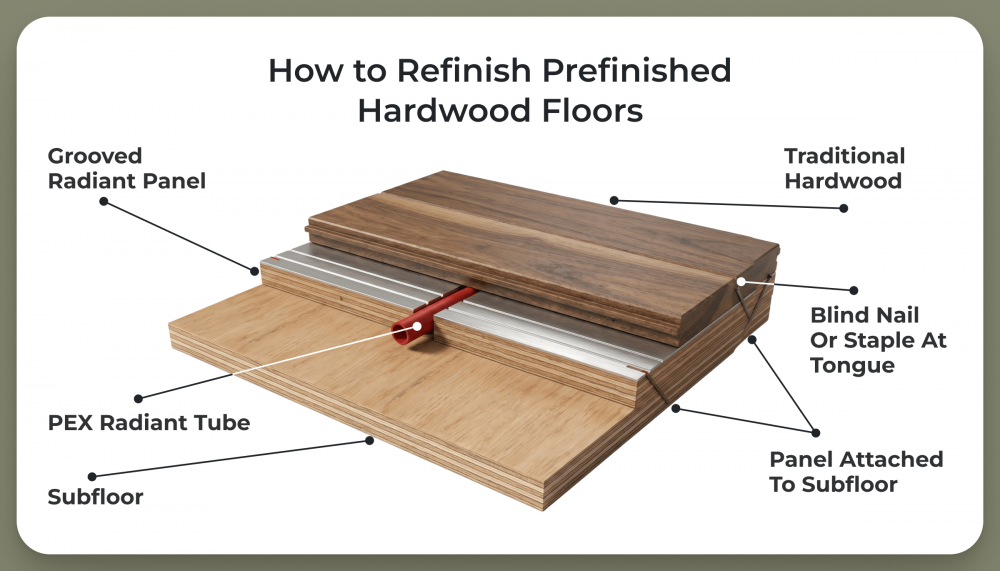
To install hardwood over radiant heat, do the job in a strict sequence: confirm the flooring first, build the right subfloor assembly, map and protect the tubing, stabilize the house, then install the hardwood floor only after the system has been running and conditions are steady. That order is what keeps radiant heat under hardwood from turning into a movement or overheating problem later.
Confirm The Flooring Before the System Is Finalized
Lock in the wood species, board width, thickness, and the target room temperature first. Those details affect required water temperature, heat output, and whether the floor is even a good fit for radiant floor heating under hardwood.
Build The Right Subfloor Assembly
Use a proper wood subfloor and keep the heating layer separated from the finished wood. Plywood and OSB are standard choices here; direct contact between the flooring and the tubing is not a good assembly, and dry systems below the subfloor often need reflective insulation or aluminum diffusers to push heat upward more evenly.
Map And Protect Every Tube Run
Before a single fastener goes in, know exactly where the PEX tubing runs. If the loops cross vulnerable areas, protect them with plates so future nails do not hit the system. This is one of the easiest ways to avoid an expensive mistake.
Get The Controls in Before the Flooring Goes Down
A good system needs more than warm water. You need control of wood-floor temperature and stable relative humidity, so the floor does not dry out, expand, or overheat during seasonal swings.
Condition The House Before Installation
Run the heating system for at least 72 hours before the floor is installed so the house, subfloor, and indoor air settle into normal operating conditions. Also avoid temporary unvented heaters during prep because they can dump extra moisture into the air and throw off humidity.
Install The Hardwood Last
Once the assembly, controls, and indoor conditions are right, install the floor using the correct method for that product. With heated hardwood floors, the wood should be the last layer to go in, not the thing you use to figure out whether the heating build was right.
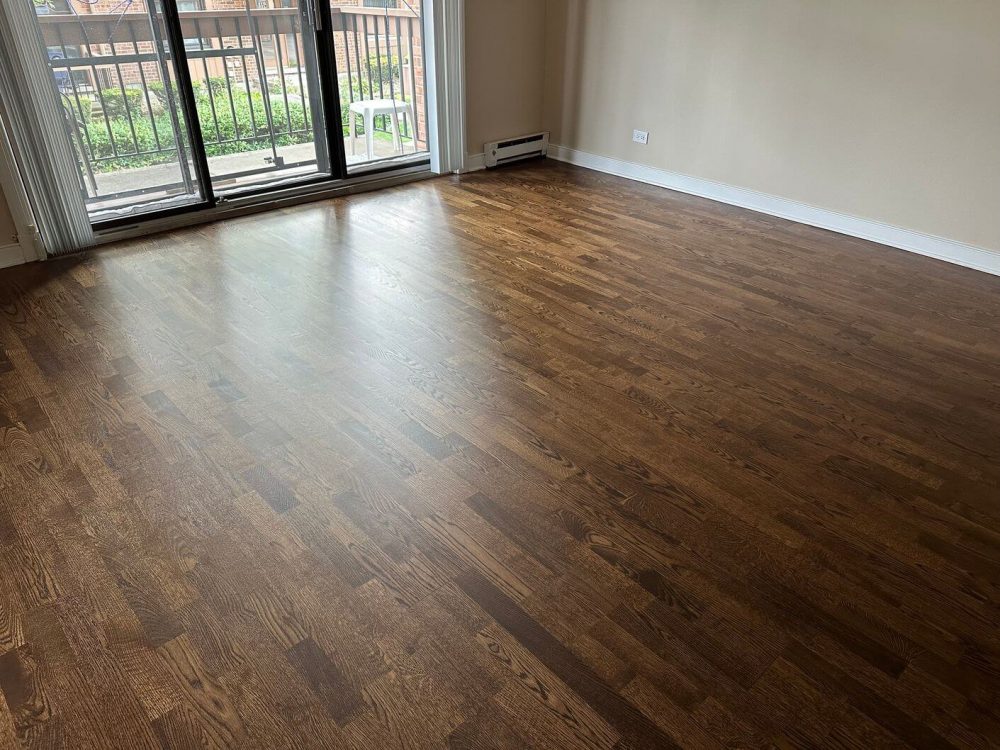

Hardwood Over Radiant Heat, Done Safely
Common Problems with Hardwood Over Radiant Heat and How to Fix Them
With radiant heat under hardwood, the same trouble spots tend to repeat: the floor gets too dry, moisture gets out of balance, heat gets trapped, or the assembly below the wood floor is not doing its job. In practice, the right answer is usually to correct the condition causing the movement, not to rush into cosmetic repair.
- Seasonal Gaps: Small gaps can be normal, but wide or lasting gaps usually mean low humidity, a floor that is running too warm, or boards that move too much for the space. The smart move is to steady indoor air, slow down hard temperature swings, and make sure the system is not over-drying the hardwood floor.
- Cupping Or Crowning: This is usually a moisture problem, not a radiant heat problem by itself. When one side of the boards takes on more moisture than the other, the shape changes. Start by finding where the imbalance is coming from, then let the floor settle before you decide whether any sanding is even appropriate.
- Checks, Face Cracks, Or Finish Stress: These show up when the wood gets too dry or the surface runs too hot for too long. Lower the stress on the floor by bringing the indoor climate back into range and keeping floor-surface temperature under control.
- Hot Spots Under Rugs or Furniture: Thick rugs, dense pads, and low-clearance furniture can trap heat instead of letting it move into the room. The answer is usually simple: uncover the area, switch to a more breathable rug or pad, and avoid blocking large heated sections of the floor.
- Uneven Warmth or Cold Spots: When one part of the room feels good and another feels cold, the problem is often below the hardwood, not in the boards themselves. Poor insulation, weak heat transfer, or a bad tubing layout are more likely causes than the finish floor. Look under the subfloor first.
- Trouble In Seasonal or Low-Use Homes: Vacation houses and rarely used spaces are harder on heated hardwood floors because the indoor environment swings more. The safer approach is a stable background setting, not long shutdowns followed by aggressive reheating.
- Fastener Or Tube Damage: This is one of the most expensive mistakes because it turns a flooring job into a system repair. If you are working over PEX tubing or other embedded loops, the tube map and protection details have to be locked in before any fasteners go down.
How Much Do Heated Hardwood Floors Cost?
Heated hardwood floors usually start around $15 to $25 per square foot for a full installed project, including materials and labor. More complex jobs, especially retrofits or projects with subfloor and mechanical upgrades, often cost more.
The price usually moves for just a few reasons:
- System type: Hydronic radiant heating usually makes more sense on larger areas, while electric radiant heat is often used in smaller rooms or selective remodels.
- New build vs. retrofit: It is cheaper to plan radiant heat under hardwood from the start than to open an existing floor or work from below.
- Subfloor work: Rebuilding the subfloor, adding panels, or adjusting floor height pushes the number up fast.
- Electrical or mechanical work: Electric systems need power and controls; hydronic systems may need a boiler, manifold, or other mechanical upgrades.
If the job is small and clean, the cost stays more manageable. If you are trying to add radiant heat under hardwood floors in a difficult retrofit, expect the number to climb.
As a hardwood flooring installation company in Chicago, we recently worked on a smaller home where the owners wanted radiant heat under hardwood across about 800 square feet. They were not looking for anything overly custom or high-maintenance, just a solid, dependable setup with good-quality engineered white oak, which is one of the safest choices for this kind of floor because it stays more stable over heat than many solid options.
Based on the scope, we quoted the project at about $20 per square foot, which brought the total to around $16,000 for the full wood and heating installation. The owners were very happy with the result. A warm wood floor has a different feel than tile or forced air heat. It makes the house feel quieter, softer, and more comfortable in a way that is hard to replicate with other heating systems.
Final Thoughts
Radiant heat under hardwood can work beautifully, but only when the flooring, subfloor, humidity, and heating system are planned together from the start. Get the wood choice and installation details right, and you get a floor that feels warm, stable, and comfortable for years. Get them wrong, and the problems usually show up fast.
At Big Bro Hardwood, we help homeowners choose the right setup for heated hardwood floors, from product selection and planning to full professional hardwood installation and heating.
If you are thinking about adding radiant heat under hardwood floors, we can walk you through the options, answer your questions, and provide a free estimate for the work.
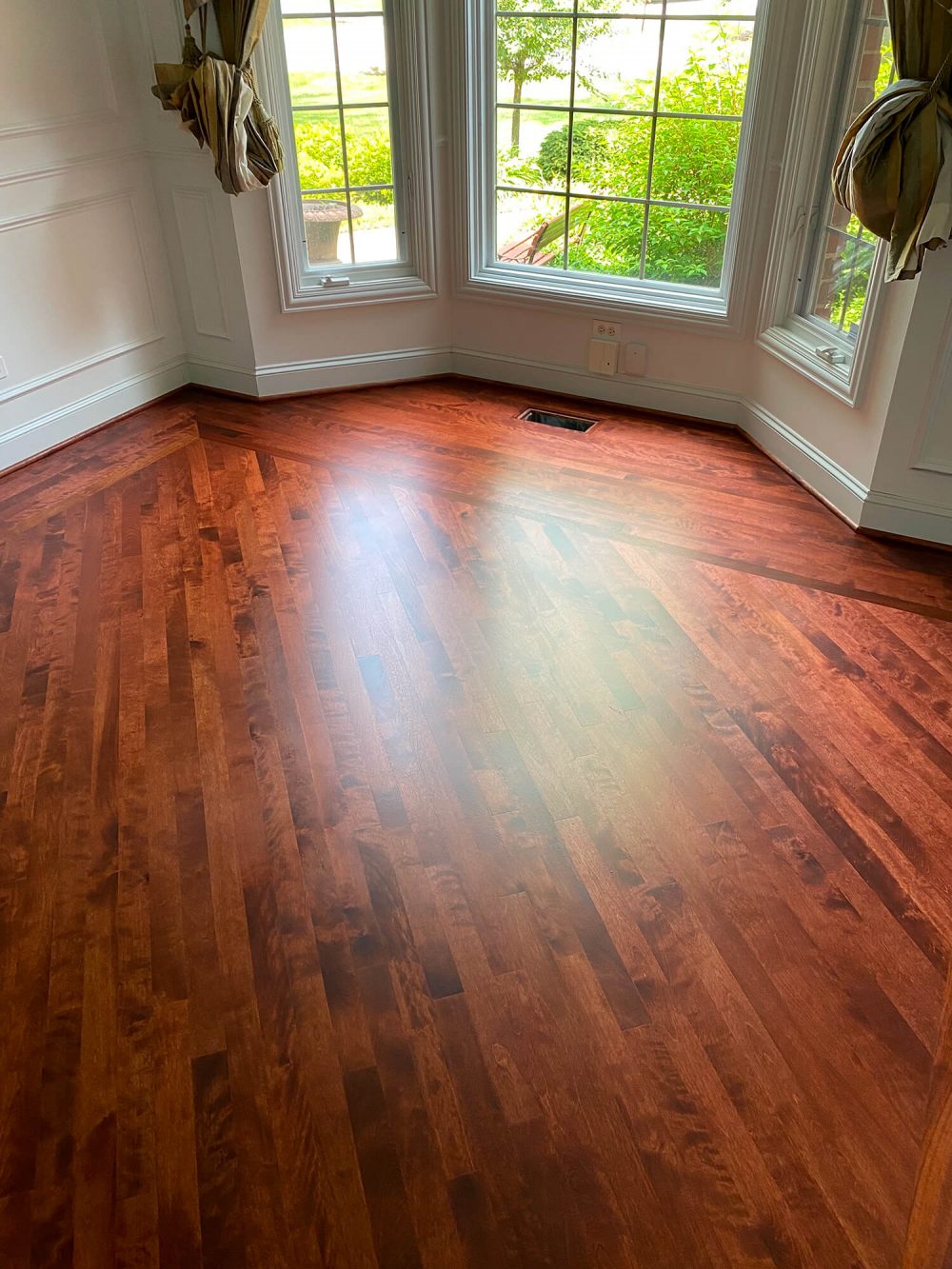

Planning a Heated Floor?
frequently asked questions
What Floor Temperature Is Too High for Hardwood Over Radiant Heat?
Asafe rule is to keep the wood-floor or subfloor surface at 85°F (about 29.5°C) or below, and many current wood-floor guidance summaries are even more conservative at around 80°F (about 26.5–27°C) on the installed wood surface.
Can Heated Hardwood Floors Be the Main Heat Source in a Room?
Sometimes, yes, but only if the room’s heat loss is low enough and the floor can deliver enough output without pushing the wood too hard. If the room needs more heat than the wood-covered floor can safely deliver, supplemental heat is still necessary.
Do You Need a Humidifier with Hardwood Over Radiant Heat?
Not in every house, but many homes do better with one during heating season. Most radiant-heat wood-floor guidance points back to keeping indoor relative humidity in the 35% to 55% range, and some installation guides say a whole-home humidifier is often needed in dry winter conditions.


Overall rating
5

(1 vote(s))
Comments